Anvil
Original · a dice-placement duel for two
Sums take tools, the hammer takes height, the file takes lows — and tied tools hang for nobody.
Ready to play now.
A demonstration of Anvil, played by the computer against itself.
Anvil — playing itself
Ways to play
Alone, against the computer
Your own pace, no arranging anything. Take a move back whenever you like.
Play alone5 opponents, weakest first
- The SorterPlays its biggest die on the richest open tool — and loses to placing at random, 188–12 over two hundred smithies. Every contest it enters, the rival can see coming; every die it saves, it saves nowhere. Racks 8.3 points off 1.6 tools a smithy, the lowest on the wall, and never takes a last hammer in two hundred tries.
- The DreamerAny legal placement, by the seed — and it measures ABOVE the Sorter, quoted. Spreading steel at random beats concentrating it where the rival is looking: 11.6 points a smithy against the Sorter’s 8.3.
- The ContestorPrices every placement by the swing on the wall the placement leaves standing — what it wins plus what it denies, the closing die included. It reads no reply at all, and that is still enough for 199–1 over the Dreamer.
- The ReaderThe Contestor with the rival’s best answer read: it takes the placement whose worst reply is least bad, two placements deep. Beats the Contestor 136–56 of two hundred with 8 shared, and the reading shows in the rack — 19.3 points off 4.7 tools against 13.3 off 3.1.
- The SmithNot another weight but another thought: the whole rest of the round solved exactly, every reply answered to the sixth die. Six placements and two open hands make the search complete, so it needs no clock. Beats the Reader 141–48 of two hundred with 11 shared, racks 20.8 points off 4.9 tools, and wins 177 of 200 against the Contestor.
Together, in the same room
2 players. One device goes round the table, or everybody plays off the same screen.
Play in the same roomOnline, at a table
A room code, joinable from anywhere. Pause tonight and pick it up next week from your device.
Play online
About
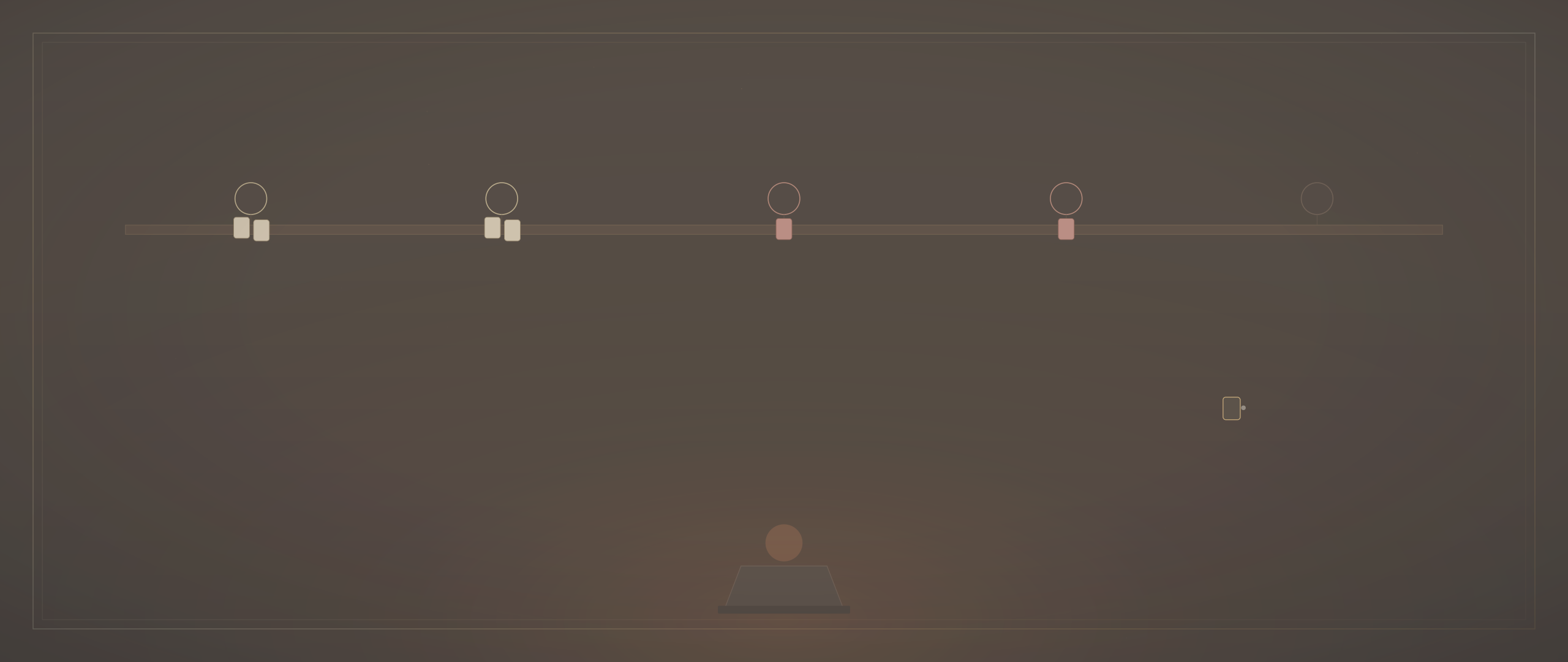
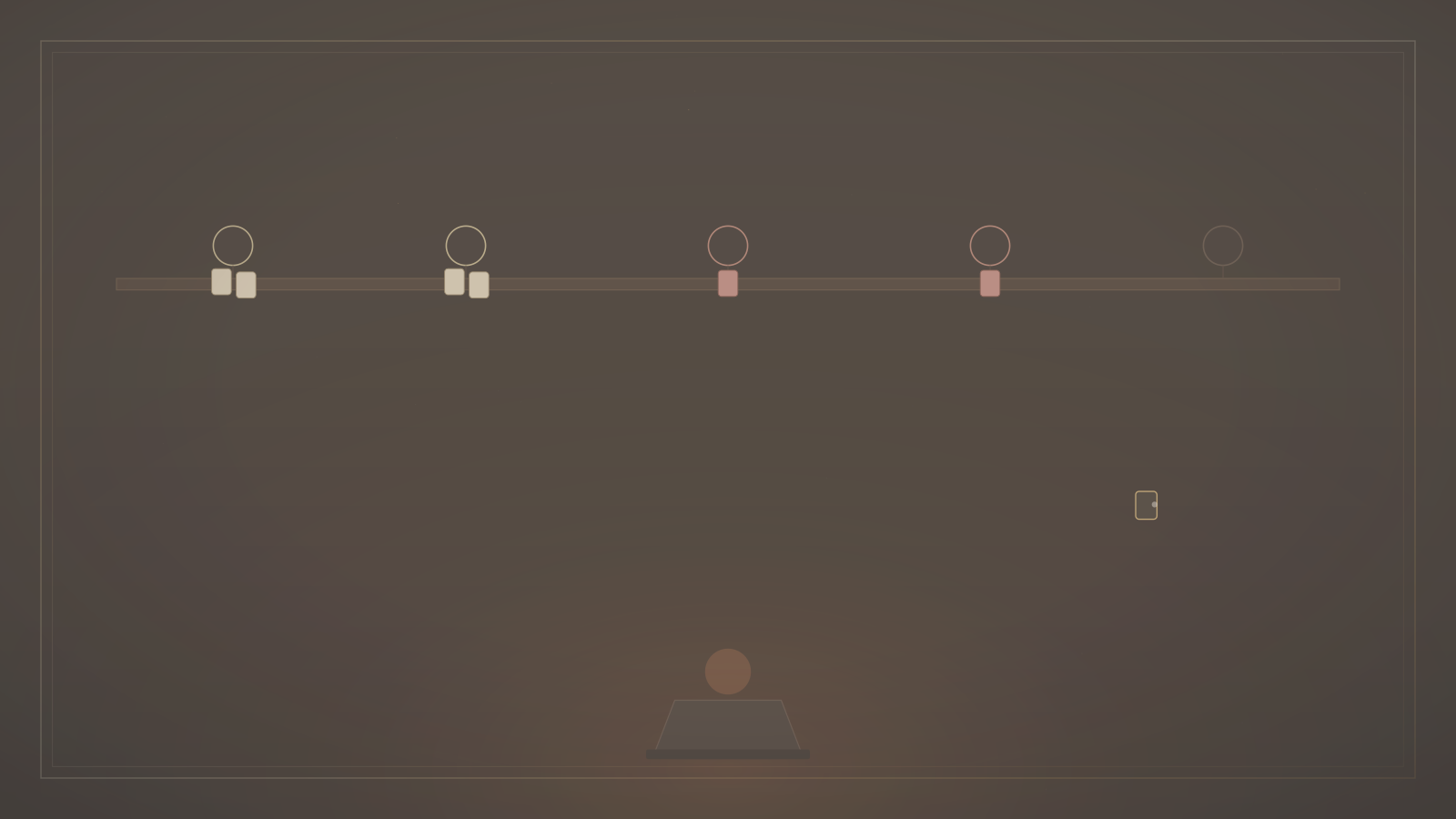
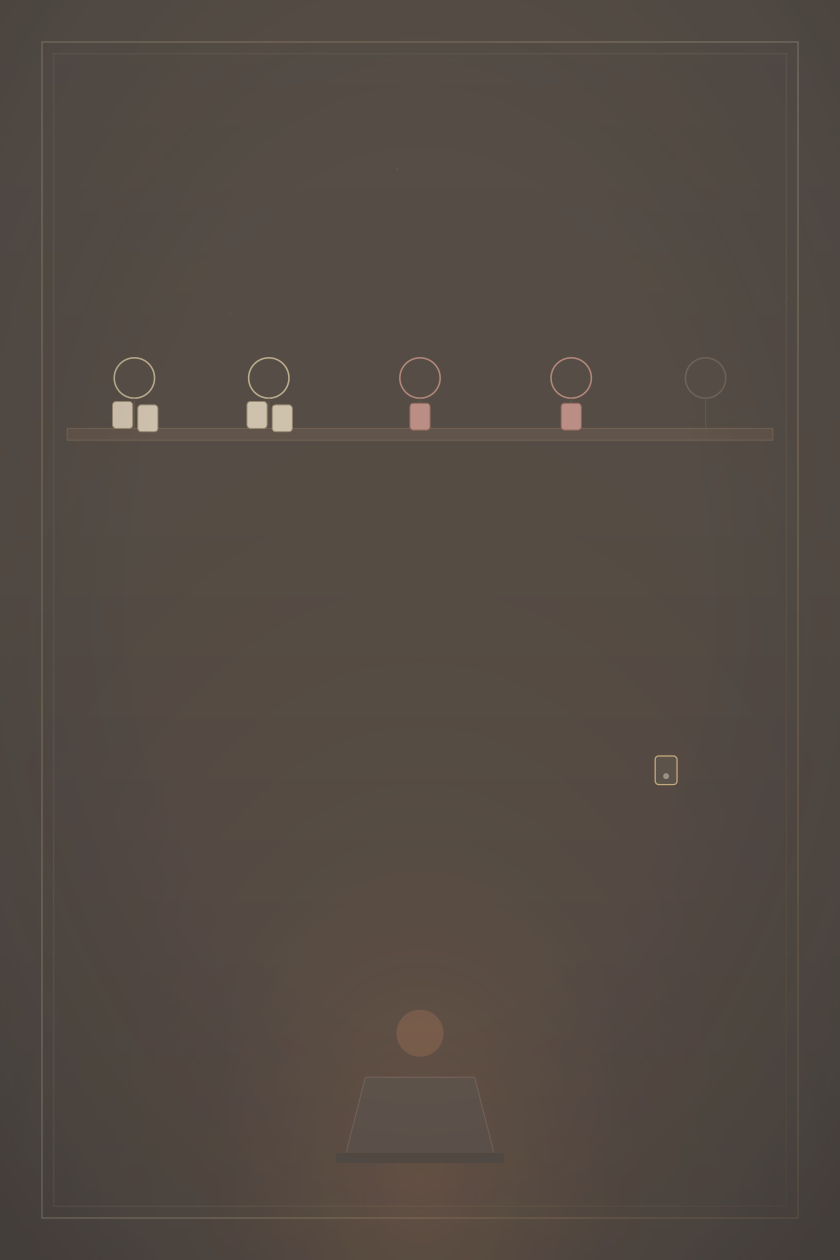
A smithy duel: three rounds, three dice each, five tools on the wall — hammer, tongs, punch, file, chisel — worth 3, 4, 5, 4 and 3. Alternate placing one die a turn on any tool; when all six hang, every tool goes to the smith whose dice on it sum higher, save the hammer (highest single die) and the file (LOWER sum). Tied tools hang unclaimed. Nothing is hidden and nothing rolls after the draft: the whole game is reading a wall both smiths can see whole.
How it feels
- A 1 that finally wins something
- The last die of the round
- A tool tied 7–7, worth nobody anything
What the design is for
Three laws on one wall
Every tool but the hammer goes to the higher sum. The hammer ignores sums entirely — the highest single die takes it, so one saved 6 claims a tool no accumulation touches. And the file is inverted: it rewards LOW sums, which is why a roll of 1s is a plan and not a whiff.
Ties hang unclaimed
A tool tied in sum — or in height, on the hammer — scores nobody. Denial is half the wall: sometimes the right placement is the one that ties the rival out of three points rather than the one that wins you two.
The last die is the loudest
Six dice a round, alternating, all public. The closer of a round sees every sum standing and takes the best line on the wall, which is why the lead alternates by round. It is also the placement worth the most: on the probe’s test position, one closing die flips a five-point tool for a ten-point swing — twice anything else on that wall.
A level rack goes to the busier wall
Equal racks are settled by the tools taken across all three rounds — nineteen points off three contests is not the same smithy as nineteen off five. Only a level rack AND a level count of tools shares it. Level racks are rare and the tiebreak rarer: of two hundred smithies between the top two rungs, fourteen racked level and four of those went to the tools taken.
Nothing hidden, nothing re-rolled
Both hands of dice are face up on the table from the roll; the view is the state. There is no luck past the draft — only reading, contesting and conceding.
Taught tool by tool
Six steps: the placement, the sum, the hammer, the file, the closing die on a tied tool — and then the whole smithy to yourself. Each one accepts the placement its words ask for and refuses the rest.
- Best at
- 2
- Kind
- Strategy
- Table
- Competitive
- Studio
- Board.game Originals
The opponents
The Sorter
Plays its biggest die on the richest open tool — and loses to placing at random, 188–12 over two hundred smithies. Every contest it enters, the rival can see coming; every die it saves, it saves nowhere. Racks 8.3 points off 1.6 tools a smithy, the lowest on the wall, and never takes a last hammer in two hundred tries.
The Dreamer
Any legal placement, by the seed — and it measures ABOVE the Sorter, quoted. Spreading steel at random beats concentrating it where the rival is looking: 11.6 points a smithy against the Sorter’s 8.3.
The Contestor
Prices every placement by the swing on the wall the placement leaves standing — what it wins plus what it denies, the closing die included. It reads no reply at all, and that is still enough for 199–1 over the Dreamer.
The Reader
The Contestor with the rival’s best answer read: it takes the placement whose worst reply is least bad, two placements deep. Beats the Contestor 136–56 of two hundred with 8 shared, and the reading shows in the rack — 19.3 points off 4.7 tools against 13.3 off 3.1.
The Smith
Not another weight but another thought: the whole rest of the round solved exactly, every reply answered to the sixth die. Six placements and two open hands make the search complete, so it needs no clock. Beats the Reader 141–48 of two hundred with 11 shared, racks 20.8 points off 4.9 tools, and wins 177 of 200 against the Contestor.
Achievements
0 of 5 earned
The Smithy Answers
Win a smithy of Anvil.
Hammer and Again
Take the hammer in two rounds of one smithy.
Won Low
Take the file with a sum of three or less.
A Hot Smithy
Win by three points or fewer.
The Wall Shut
Win while the rival racks under ten.
Key art
Key art — Board.game art system
More like this
 Board.game Original
Original · a commodity exchange for two
Bellwether
Every buy lifts the chalk for every lot on it — and two coins buys anybody a crash.
2 players5–10 minCompetitive
Playable Board.game Original
Original · a walling duel for two
Drystone
The fourth wall claims the paddock — and pays you one more lay, which you must spend.
2 players5–10 minCompetitive
Playable Board.game Original
Original · a loading duel for two
Quay
One line of crates, both ends open to both ships — and a cargo pays its worth times the margin.
2 players5–10 minCompetitive
Playable Board.game Original
Original · a balance duel for two
Steelyard
Your pan is your ledger — every weight you cannot put on the rival’s, you carry.
2 players5–10 minCompetitive
Playable Board.game Original
Original · a placement duel for two, played for the last light
Beacons
No beacon may stand beside a rival’s — and the keeper who cannot light, loses.
2 players5–10 minCompetitive
Playable Board.game Original
Original · a cutting duel for two, misère
Peat
Cut any number from one bank — and whoever cuts the LAST sod of the bog loses.
2 players5–10 minCompetitive
Playable Board.game Original
Original · a pentomino duel for two
Marquetry
Twelve veneers, five cells each, sixty cells for sixty-four — and every piece lies as drawn, never turned.
2 players5–10 minCompetitive
Playable Board.game Original
Original · a push-your-luck dice duel for two
Knuckle
Five faces pay and one burns the whole pot — first tally to forty takes the fire.
2 players5–10 minCompetitive
Playable