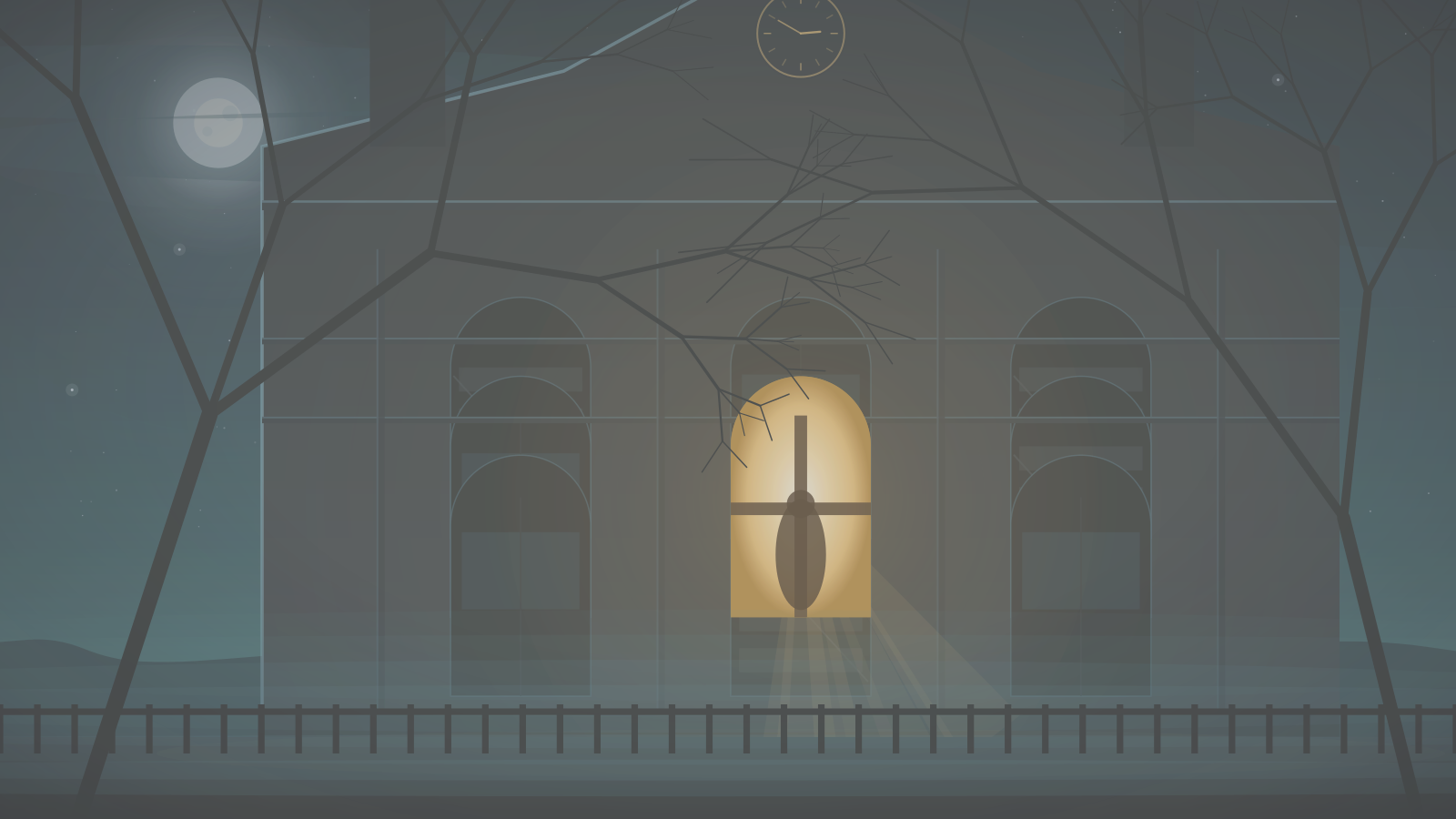
50 games made here, for this platform, and nowhere else. They are the reason Board.game exists rather than the things filling it up.
Made here
Designed and built by Board.game. Not licensed, not ported.
Built for a table
Every Original is designed for people playing together, in a room or not.
Finished when it is finished
No Original ships to fill a slot in a calendar.
01
Board.game OriginalPlayable
Hollowreach
Co-operative descent
Everything worth having is further down than you want to go.
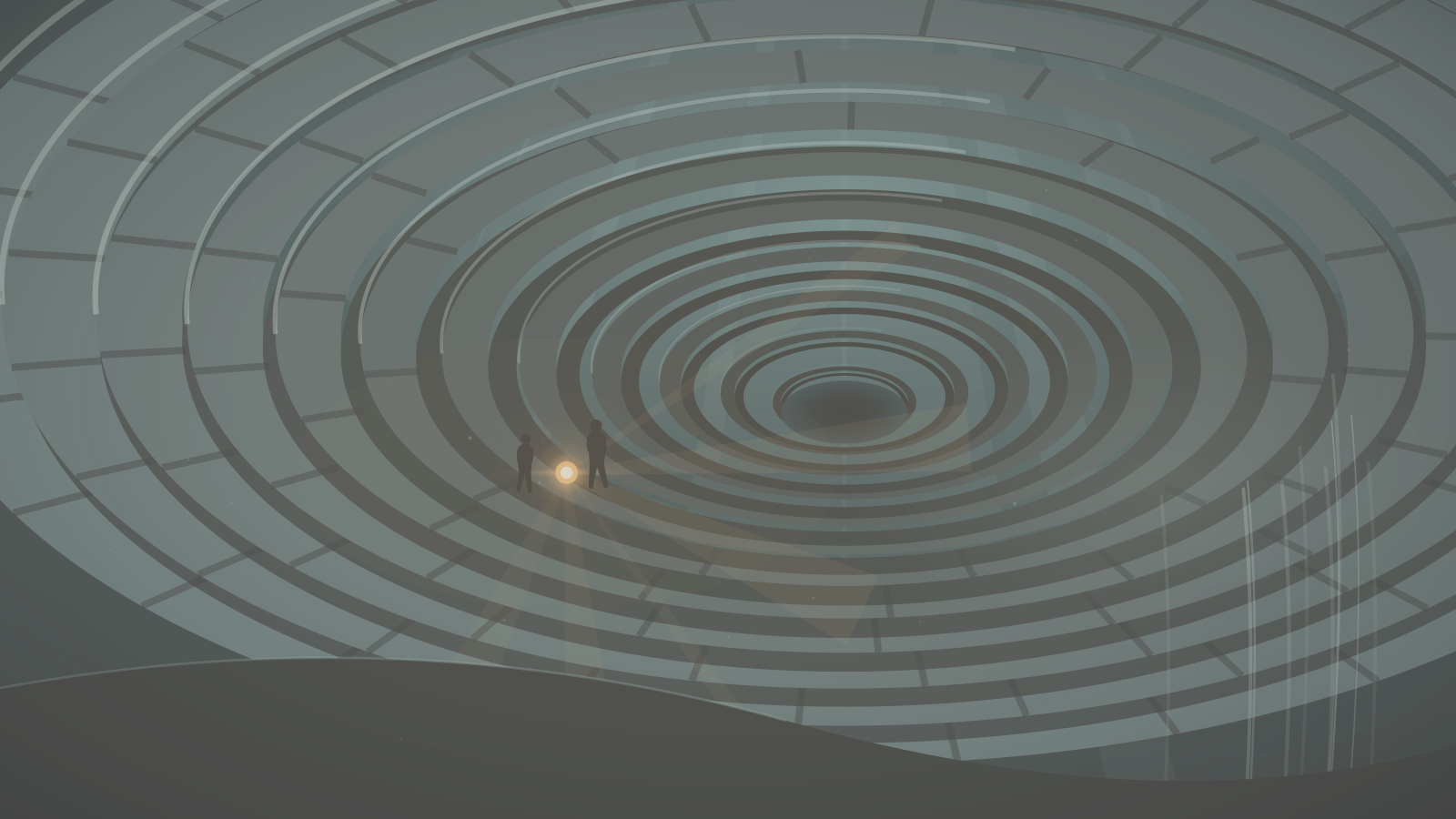
A vertical ruin, flooded from the bottom, with one lantern between you. Every level down is worth more and costs more, and the only real decision in the game is when to turn around.
Nine of you came down. The station only has power for eight.
A research station four hundred metres under an ice shelf, and a rota that no longer adds up. Every watch you pick a module and a job, nobody says what they chose, and at dawn the ledger publishes exactly who was where and exactly what the heat did — and never who did what.
Thirteen arcana are documented. Players keep finding a fourteenth.
A trick-taking game played with a deck that is missing something, and a table that keeps insisting it is not. Win tricks, read the room, and try to be holding the right card when the deck decides what it wants.
Somebody at this table is about to be crowned for the wrong reason.
A crown nobody asked for, three reasons in your hand, and everybody claiming it at once, in private — then the claims go up with the names off and you vote for one that is not yours. Nobody waits for a turn. Grudges last considerably longer.
A shore of wet sand, one shell a turn, and a sea that rises one row every seventh shell. When the water comes to a row it keeps every shell with a neighbour of its own colour and sweeps the rest — and what it kept stays under the water as the reef the next row clings to. Thirty-five pieces of sand, thirty-five shells, five floods: the most kept wins, and a level shore goes to the seat that answered.
A paper lantern needs two hands, and nobody will tell you whose.
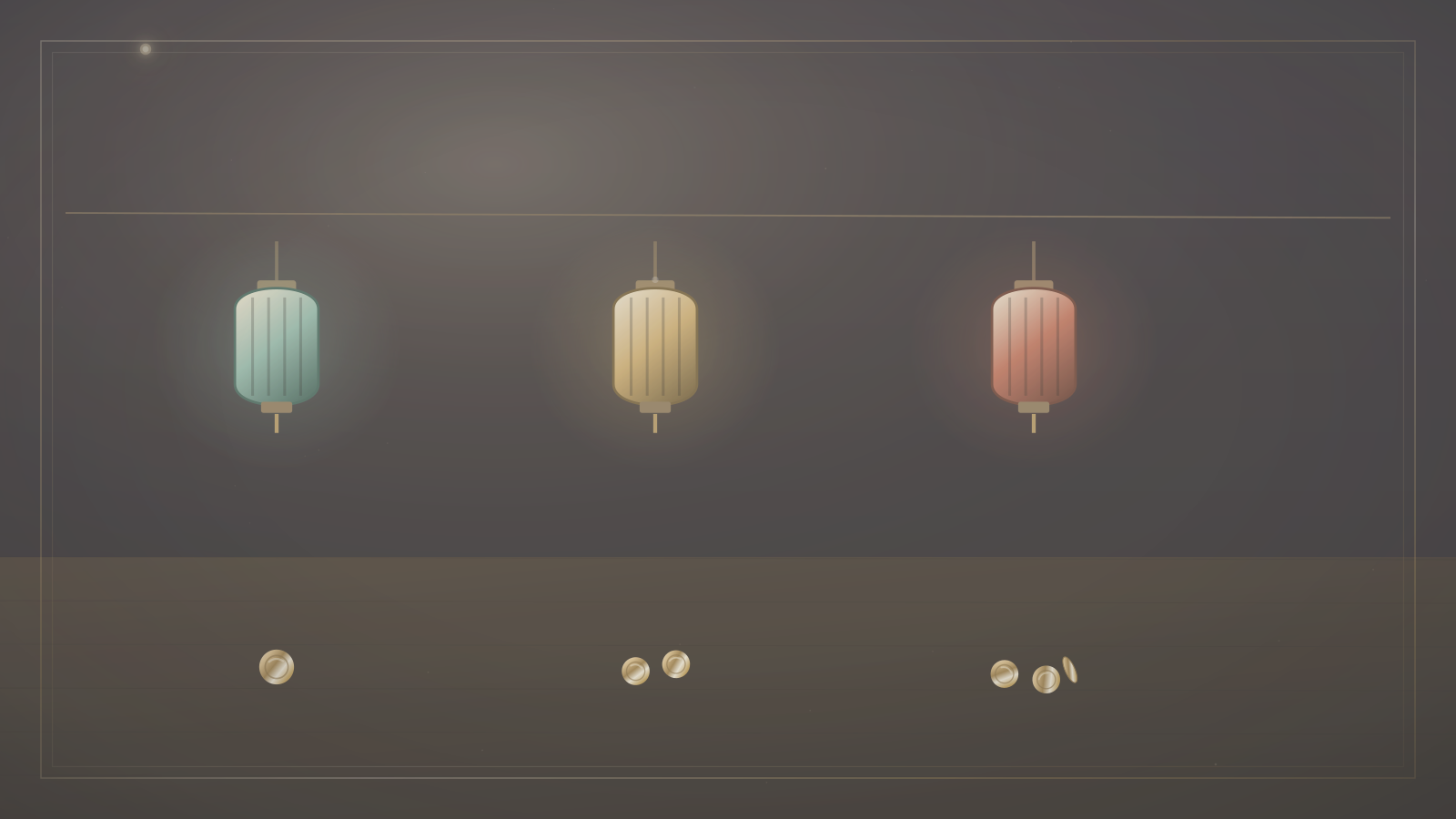
A night fair, five bells, three lanterns. Every visitor secretly chooses one, the bell rings, and the lanterns are raised by whoever is standing under them. A paper lantern needs two hands: alone you cannot lift it and it pays nothing, a pair takes three coins each, three share the light for a coin each, and four or more is a crush where nobody is paid and everyone drops a coin in the mud. You cannot be paid alone and you cannot be paid in a mob, so the whole night is a search for exactly one accomplice — and one of the three lanterns is secretly the one you came for, which is worth no coins and every tie.
Seven nights, one lamp, and everybody can read the wind.
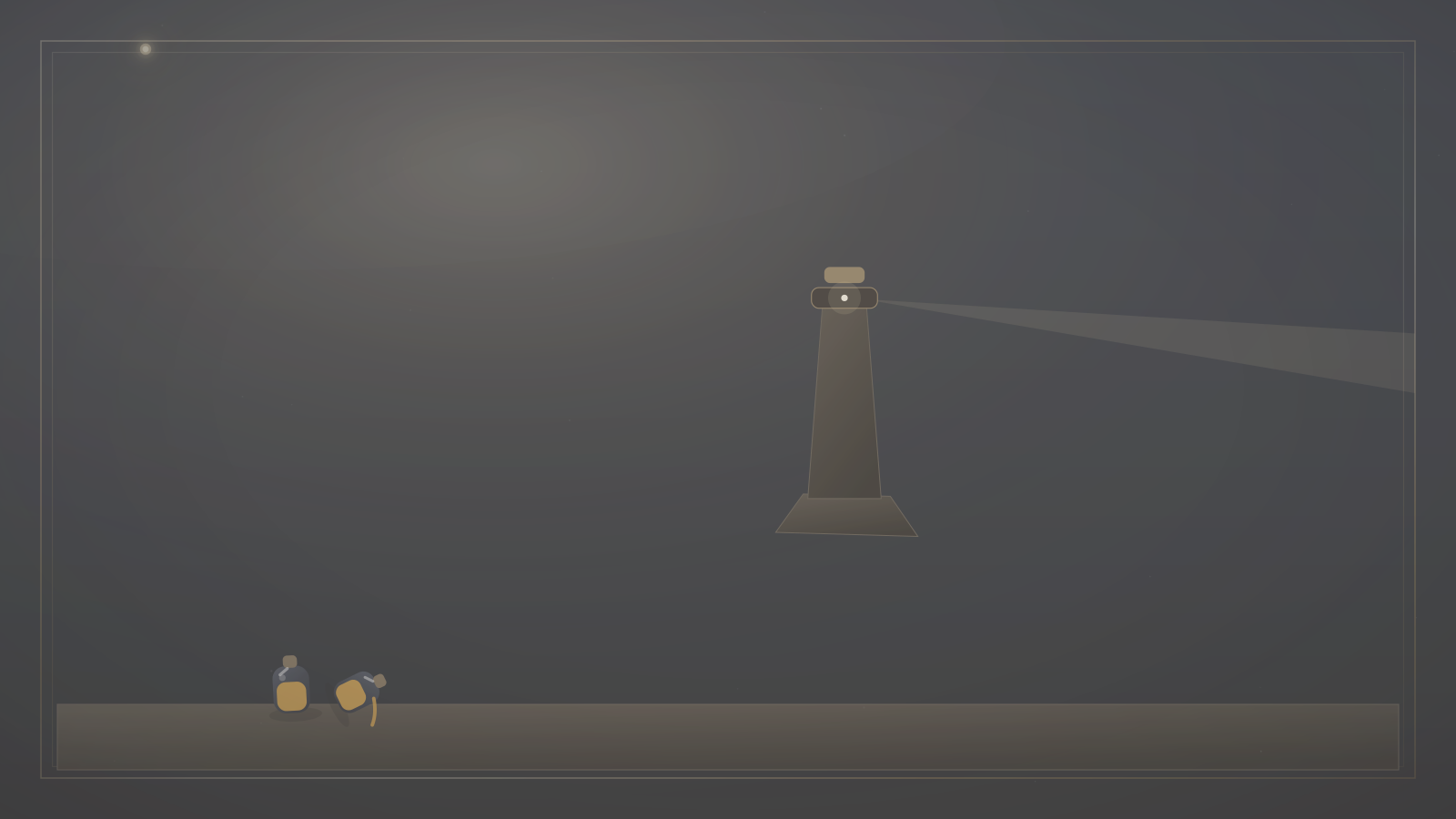
The keepers of a lighthouse play seven nights against a forecast dealt face up: each night’s wind says how much oil the lamp must burn. Every keeper secretly pours what they will; the lamp is one lamp and the failure is everybody’s. Oil poured is spent, oil kept carries — and a keeper who empties their hands into the lamp entirely is left two flasks by the relief boat, which comes once a watch. Hold at least six of the seven nights.
Every stride you will ever take is lying face up between you.
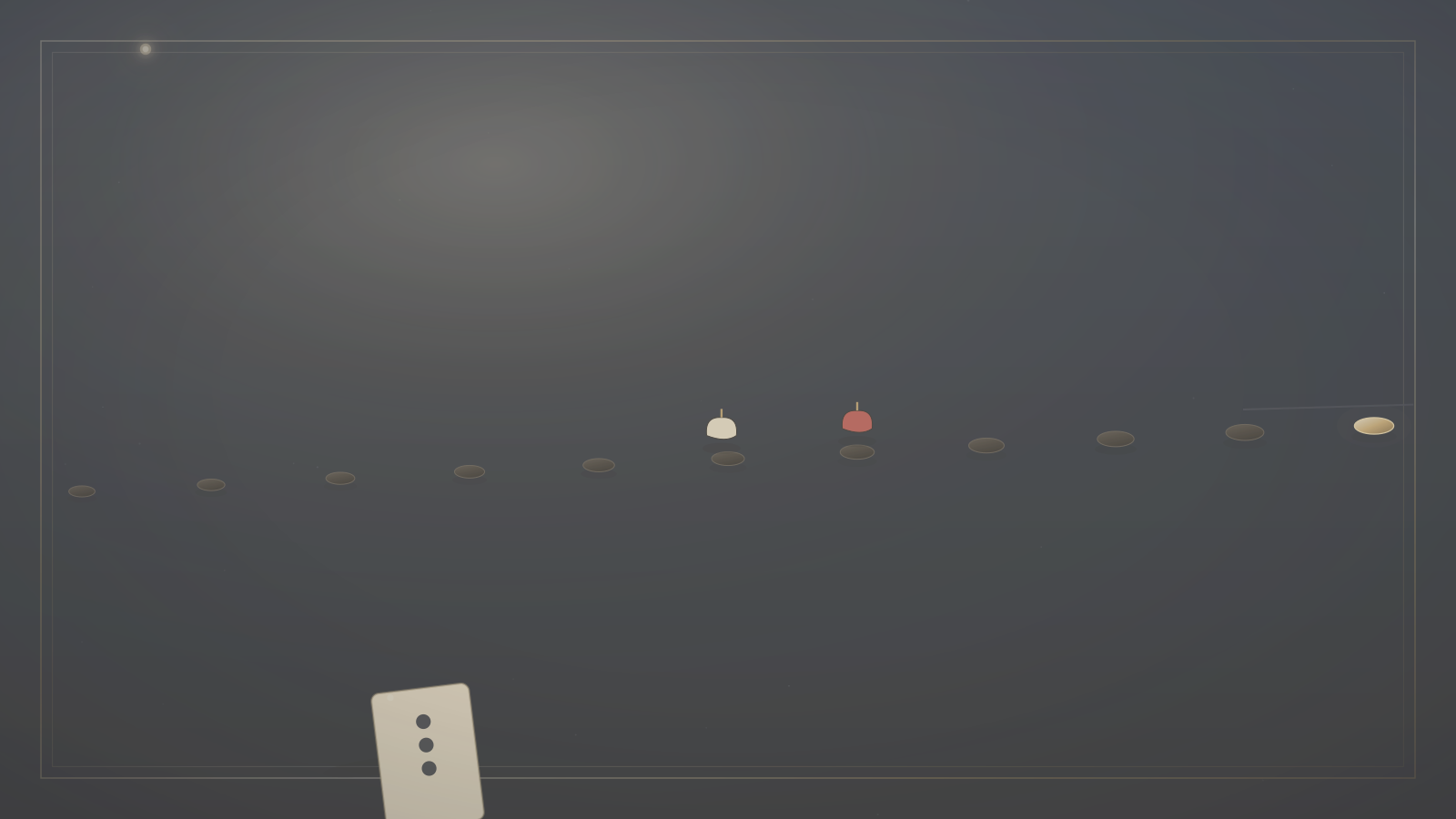
Two couriers, one road of twenty-four stones, and a shared row of stride cards drawn from a finite bag. On your turn you take any card and walk it. The last stone must be taken exactly — stride past it and you bounce back by the excess. Land on the other courier and you take their stone while they take yours. When the bag is spent, whoever stands further along wins the road; there is no dead heat, because two couriers can never share a stone.
Every coin you spend is a point you no longer have.
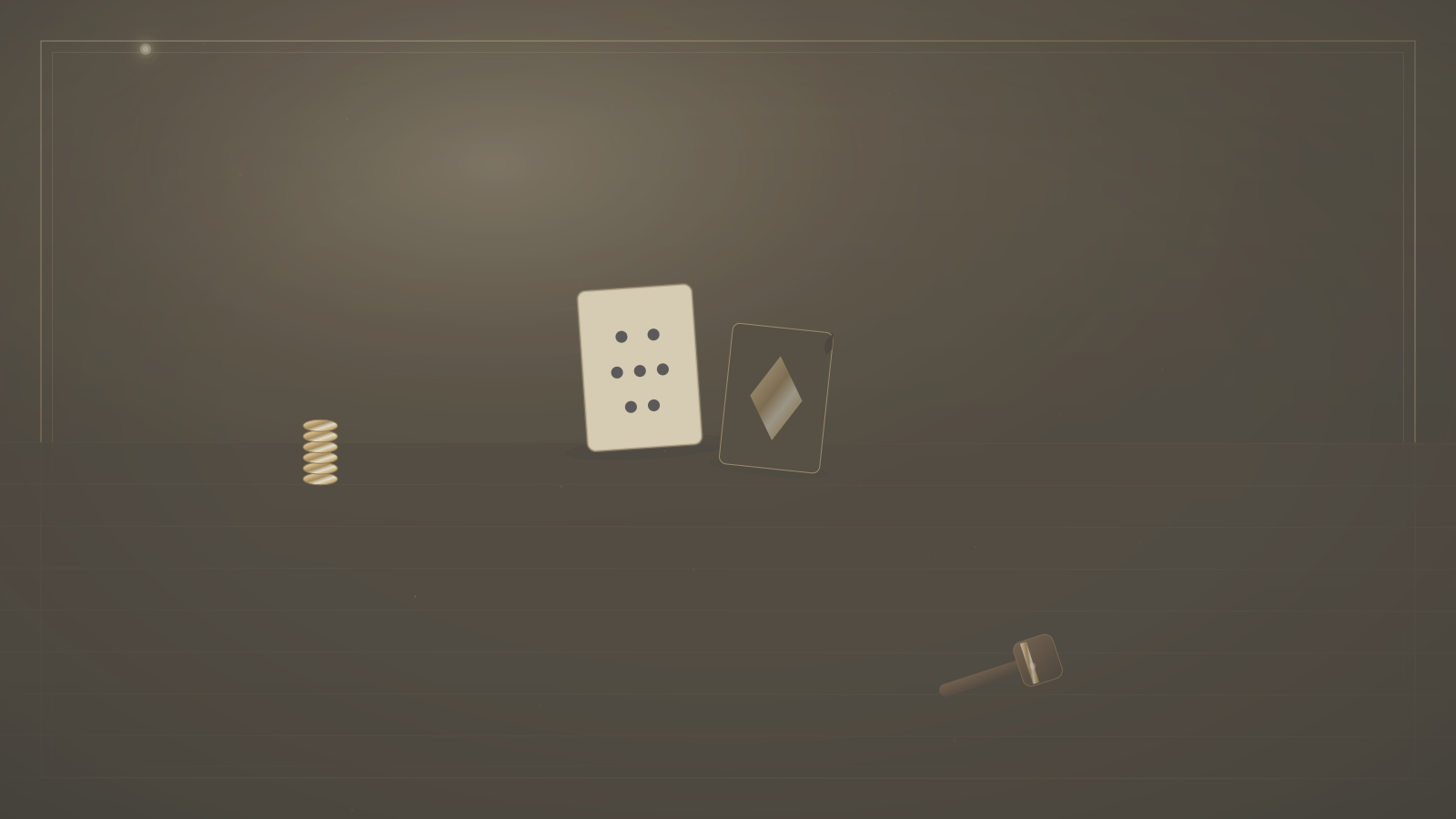
Six lots from a public bag, three to five purses, and one hammer. Each lot has a base value anybody can count — and a private premium your own client pays you on top, dealt face down, so nobody in the room values the same lot the same. Raise or pass for good; the last bidder standing pays their bid and opens the next lot. At the hammer, lots won count their base, your client’s premiums are revealed and counted, and every coin left counts one.
Three steps to the water, and something standing in it.
A six-by-six fell. The heron starts at the bottom and must reach the water at the top; the fox starts IN the water, between her and it, and must catch her or wall her out. Both move three orthogonal steps a turn, turning as they please, and every step either runner takes is closed to both for ever — so a runner with nowhere to step loses, walled in by the chase’s own history. Three endings, none of them a draw.
Eight frosts in the deck, and every one of them is yours if you push.
A shared deck of dry wood and frost. Flip cards to your sled; after each, push or stack. Frost takes the whole sled; dry wood banks by colour; and a pile five high FREEZES and scores nothing — the drift buried it. First to twenty-one lights the stove. Every flip is public, so the count is the whole game: how much frost is left, how much of each colour, and how deep the drift already sits on your piles.
The lead is not dealt. It is bought, at the top of the ladder.
A deck of one to twenty-four, twice over. Ten cards dealt to each hidden hand, one card risen face up as the tower, the rest is the sky. Climb the tower with a higher card — any margin — or pass and draw. The twenty-four is the moon: playing it caps the tower, the pile goes onto the table’s ledger, and you lead from any card. When the sky is spent a pass is only a hold, and two holds clear the tower to the last climber. First empty hand takes the night.
The picking happens the moment a tree is full — not a moment before.
Six trees — capacities three, three, four, four, five, five — and baskets that always hold exactly enough to fill every one. Hang an apple a turn in any tree with room. The instant a tree is FULL it is picked: strictly the most apples takes it, worth its capacity; a tie pays nobody. Most points when the baskets are empty. Complete the trees you are winning before the mob arrives; starve the trees you are losing one apple short for as long as the baskets hold.
Two locks, two thieves, sixty codes. Each lock holds three distinct digits of one to five, dealt in secret. On your turn you enter a guess at theirs: the tumbler answers in pins, out loud — gold for a right digit in its slot, dark for a right digit misplaced, nothing for a digit that is not in the code. First guess to turn all three pins gold springs the lock. The deduction is solitary; the clock is shared.
Original · trick-taking with a sealed bid, for three
Bid what you will take. Take exactly what you bid.
Four hands of growing size — three cards, four, five, six — from a deck of four suits × six ranks. The card after each deal is turned for trump, in the open. Before a card is played, every jackdaw seals a bid of how many tricks they will take; the bids stay sealed until the hand is over. The play is plain trick-taking: follow suit, highest of the suit led takes it, trump beats everything. And the score is all or nothing — EXACTLY your bid earns ten plus the bid; anything else earns nothing. Highest total after four hands takes the perch.
The air belongs to everybody. The gold belongs to whoever turns back.
A flooded passage of twelve chambers, drawn fresh for every dive — none worth less than the one above it, the mouth worth one and the bottom worth twelve — and one tank that holds everybody’s air. Each round every diver still in SECRETLY seals one word: BACK, surfacing with the deepest chamber they crossed, or ON, breathing to cross deeper. The words land together. A chamber two divers leave in the same round is split between them, and the deep costs four times what the mouth costs, so the passage is bought rather than walked into. When the tank runs dry, whoever is still in loses everything they carry.
Twenty prints hang face-down on a line, ten pairs of one to ten, under one safelight. Turn two a turn: a pair comes off the line onto your rack and you go again; a miss turns both back — exactly where they were — and passes. Every flip is public, both of you see identical information from the first turn, and the game is what you keep. When the line is empty, the higher rack has developed it.
Two skiffs, one lake going dark, and every fare is the distance you row for it.
Eight landings around a small lake at dusk, and a passenger at each of them bound somewhere two to four hops away — the hop is the fare. One leg a turn, and the one twist with teeth: a leg that reaches a landing where your skiff can lift or land somebody keeps the turn for that one act. Row, then take. Row, then set down. Twelve passengers, thirty-five points, an odd number — when the last one is ashore, the race has a winner by arithmetic.
The stack belongs to its top stone, whatever it is standing on.
A 5×5 hillside of stacked stones, dealt fresh from the seed — twelve stones a walker, so the six kept stones that win are exactly half of what the other one brought. One law with teeth: a stack belongs to whoever’s stone sits on top of it, however deep it stands. Carry the top stones of a stack you own — one, two, three, four — in one straight jump EXACTLY as many squares as stones you carry, and set them down on anything. No stack stands higher than four: the shoulder sheds the BOTTOM, an enemy stone that falls is yours to keep, a stone of your own is lost to the scree. Let TWELVE plies pass with nothing falling and the shoulder is owed: a walker who can shed must, and the quiet carries stop being legal. Buried with nothing to carry, you dig. First to keep six enemy stones has the hill.
Every neighbouring pair swings to the heavier bell, and the difference is the score.
A tower with thirteen hours in its ring and twelve bells to hang in them — six each, weights dealt from one pool, so the hands match and nobody can blame the deal. Hang one bell a turn on any empty hour; when the last bell goes up the peal goes round: every neighbouring pair swings to the HEAVIER side and scores the difference. One hour is left silent all evening and its two edges never pay anybody, so the last hang is choosing what never gets counted. Put your heavies beside their lights, keep your lights at home, and watch a tower that stayed quiet all evening count everything at once.
Every pass costs a coin, every take costs a demand, and runs of demands count once.
A customs list of twenty demands, numbered one to twenty-four — the clerk burned four before play began, and nobody knows which. One demand at a time lies on the table with a pot of coins beside it: pay a coin into the pot and send it on, or take it, coins and all, onto your ledger. Ledgers are weighed in RUNS — consecutive demands count only their smallest, so a demand the run below already carries weighs nothing and one that UNDERCUTS a run makes the ledger lighter — and coins weigh against the ledger. When the clerk runs out, the lighter ledger keeps the harbour.
Every edge that agrees with its neighbour pays the setter who placed it.
A five-by-five field, a bag of twenty-five tiles, and three glazes — gold, slate, rust — on every edge. Both setters hold three tiles in OPEN hand; the bag is the only secret. Set a tile on any empty square that touches the mosaic and score a point for every edge that matches a neighbour. When the field is full, every tile of yours sealed on all four matched sides pays two more; ties go to the setter with more sealed tiles. The whole game is which tiles you spend where, knowing the tile you leave on the table is the one they can see.
I split, you choose — and a matched pair split in two is worth nothing extra to either baker.
A bakery counter and sixteen pastries: matched pairs of ones to sixes, one lone seven, and three burnt ones worth less than nothing — two at minus three and one at minus four. Each morning brings four to the counter and one baker DIVIDES them onto two plates — any split at all — while the other CHOOSES a plate and leaves the divider the rest. Matched pastries on one plate pay their value again, so a pair broken across plates goes plain on both sides. Four mornings, the dividing turns alternate, and the richer plate keeps the shop — or, if the plates weigh the same, the baker holding the seven.
Two threads a round: draft one, and the other is woven by your rival.
A four-by-four cloth apiece, and a shuttle that throws two dyed threads — numbered one to six — to the middle each round. The active weaver drafts one and weaves it into their cloth; the rival weaves the leftover in theirs, wherever they choose. Sixteen rounds, the draft alternates. Every row and column scores the sum of its DISTINCT dyes — duplicates count once — and a line that finishes with four different dyes pays eight more. And no two threads of the same dye may lie edge to edge, so a thread does not go just anywhere and a cloth can run out of room for a dye it already has too much of. The draft is a double move: the thread you leave is the thread they weave, and it has to go somewhere.
One light hiding in a night meadow, and every answer it gives goes stale.
A five-by-five meadow at dusk, and one firefly on a secret square. Sweep a square and the light answers with its DISTANCE — "the glow is two away" — then flits to a neighbouring square, any of the eight, and never holds still. Catch it in fourteen sweeps or the light is out at fifteen. Two innings, each player hiding once and sweeping once, and both innings run the same way round; the lower count takes the jar. Every answer is at least one flit out of date the moment it is given, so the whole hunt is triangulation against a target that has already moved.
The rank one, played off-suit, rings the vesper — and steals the trick whole.
Twenty-four cards in four suits of six ranks; ten dealt to each hand and four laid aside in an offertory nobody sees. Lead anything and follow suit if you can; the highest card of the suit led takes the trick — unless a rank ONE played off-suit rings the vesper and steals it whole, and then the lowest card on the table owns the highest. Ten tricks, the winner leads next, and at the last bell every suit your captures out-number theirs scores you its count — tied suits score nothing. The tricks are the vehicle; the suits are the treasure.
Seven wards, twelve cubes each, majorities score — and a ward that comes out level answers to whoever walked in first.
A surveyor’s map of seven wards around a keep, each worth three, four or five at the reckoning — dealt onto the ring by the seed, so every feoff has its own geography. Place one cube a turn in any ward; when both stores stand empty, every ward scores its worth to its strict majority, a ward that comes out LEVEL answers to whoever raised the first cube in it, and two adjacent held wards chain for one extra each. The writ — once a game, in place of a placement — strikes one enemy cube out of any ward, and a writ that takes the last cube out forgets who came first.
The par is the pin — a stroke for every point you finish short of it, and a stroke for every point past.
A card duel of golf: nine holes of par three to five and one shared shoe of sixty. On your stroke, press — draw the top card onto your hole — or, once you have drawn, lay up where you stand. The par is the PIN: the hole costs par plus one stroke for every point you finish away from it, short or past alike, and reaching the pin holes you out. Each hole goes to the lower card and a level hole is halved; strokes break a tie on holes. Every card drawn lies face up for both to see, and so does the card your rival has already holed out for.
Match the size, raise the value, or pass — and the first empty hand wins the ladder.
Twenty-seven cards — values one to nine in three suits — nine dealt to each hand and nine set aside unseen. The leader plays a set to the table: a single, a pair or a triple of one value, and may not pass. To answer, match the size and raise the value, or pass. Two passes take the rung, the table clears, and the taker leads anew with any set at all. First hand empty wins the ladder; the rungs taken are the story, the shed is the result.
Sums take tools, the hammer takes height, the file takes lows — and tied tools hang for nobody.
A smithy duel: three rounds, three dice each, five tools on the wall — hammer, tongs, punch, file, chisel — worth 3, 4, 5, 4 and 3. Alternate placing one die a turn on any tool; when all six hang, every tool goes to the smith whose dice on it sum higher, save the hammer (highest single die) and the file (LOWER sum). Tied tools hang unclaimed. Nothing is hidden and nothing rolls after the draft: the whole game is reading a wall both smiths can see whole.
Every buy lifts the chalk for every lot on it — and two coins buys anybody a crash.
A harbour exchange: four goods — barley, salt, timber, tar — each chalked on the wall between 1 and 7, the opening chalk dealt by lot: one good at 1, two at 2, one at 3, so a floor has a shape before anybody trades. Both traders hold three cards of every good, face up, and spend one a turn. BUY pays the chalked price onto your purse, takes a lot, and lifts the price by one. SHORT burns the card, pays two, and sinks the price by two. At settlement every lot pays its good’s final price and your floor is the book clear of your purse — so a lot only earns where the price rose after you bought it. No chalk climbs past seven: the good that would reach eight bursts, crashes to one, and the bell rings while the floor trades on. Empty hands close it; the clearer floor takes it.
The fourth wall claims the paddock — and pays you one more lay, which you must spend.
A hillside of nine paddocks on a three-by-three grid: the corners worth 4 stones, the edges 2, the cramped middle 1 — twenty-five in all, a number that never splits even. Twenty-four walls stand open between the pegs, every one of them shared ground. Lay one wall; whoever lays the FOURTH wall of a paddock claims it, whatever else the wall touches, and is paid ONE more lay — which must be used, and which pays nothing itself however much it closes. One extra lay, never two. When the last wall stands every paddock has closed, and twenty-five stones leave no tie to break.
Both houses act at once, in the dark — and the letters are identical, down to the last 8.
A courtly duel for two. Eight decrees — worth 1 through 8, shuffled once at the deal — come to the table one at a time. Both houses hold the SAME eight letters of influence, 1 through 8, and each round both seal ONE letter under wax. The vellum opens together: the higher letter takes the decree, equal letters cancel and the decree waits beside the next one, the whole pot going to the next round’s winner. Letters are spent forever and both ledgers of spent letters lie open. Eight rounds, then the ledger is read — and an even ledger stands even, said plainly.
One line of crates, both ends open to both ships — and a cargo pays its worth times the margin.
A loading duel for two. Seventeen crates stand in one line along a stone quay — four each of slate (2) and brick (3), three each of rope (4), copper (5) and oyster (6) — dealt from a single seeded shuffle. On your turn, load ONE crate onto your ship from EITHER end of the line; nothing else in the game moves. When the line empties, each cargo pays whoever holds more of it, its worth times the margin — and cargoes held equally pay nobody, which is why forcing an even slate is a weapon. Ivory loads nine, Coral eight; equal tallies stand even, said plainly.
Your pan is your ledger — every weight you cannot put on the rival’s, you carry.
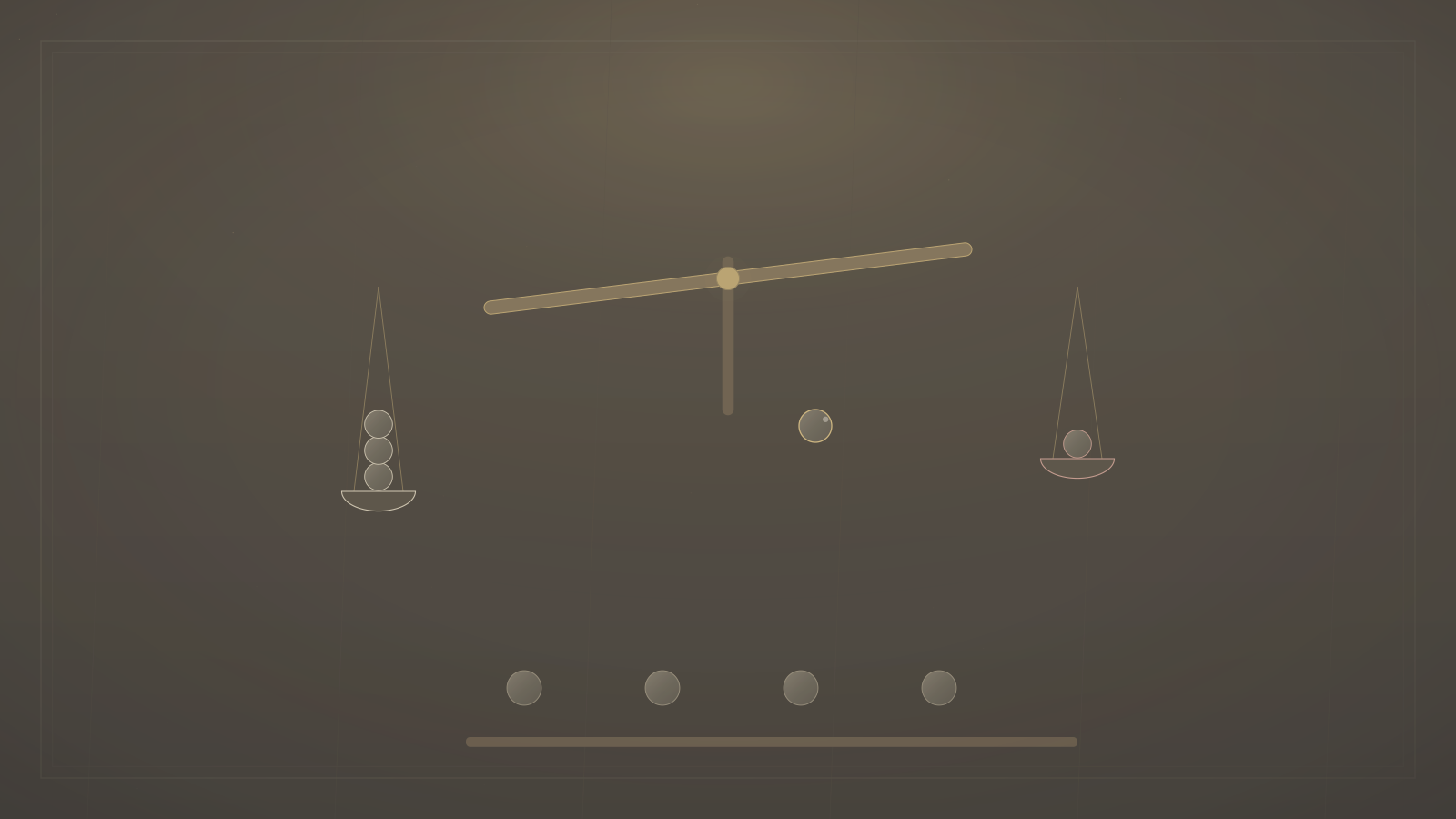
A balance duel for two. Eight weights — drawn by lot from the nine iron ones, 1 through 9 — hang on the rack. Ivory owns the left pan, Coral the right, and on your turn you set ANY remaining weight on EITHER pan, yours or your rival’s, under one law: the beam may not swing past six. A placement that would is refused outright. With nothing legal, the hand passes, and two passes in a row — or an empty rack — close the yard. The beam then settles: the owner of the LIGHTER pan takes the yard by the difference, and a level beam splits nothing, said plainly.
Original · a placement duel for two, played for the last light
No beacon may stand beside a rival’s — and the keeper who cannot light, loses.
A placement duel for two, played for the last light. Seventeen to nineteen rocks of a five-by-five chart stand off a dark coast, drawn by lot, and ONE of them is already burning for the second keeper — the old keeper’s lamp, the compensation for going second. On your turn, light one dark rock as your beacon; the coast’s single law forbids a beacon standing orthogonally beside a RIVAL’s, while your own cluster crowds freely. There are no scores and no sweep: the keepers light until one cannot, and that keeper loses the coast outright. Somebody always runs out first — the coast never stands even, and the rules say so out loud.
Cut any number from one bank — and whoever cuts the LAST sod of the bog loses.
A cutting duel for two, played misère. Four banks of peat stand in the bog, their sizes drawn by lot against a coin: half the bogs are already lost for the house that cuts first, and half are already won, so the reading comes before the spade. On your turn, CUT any positive number of sods from a single bank, or SEED exactly one sod from one bank onto another — a transfer, never a take, and only twice a game each. Whoever cuts the last sod of the whole bog loses the village’s favour outright. Seeds never empty the ground, so the bog cannot loop and cannot tie: somebody always cuts last, said plainly.
Three gears wound in secret, a march played in the open — and the rival does not stop you, it MOVES you.
A programming duel for two — the shelf’s only one. A three-by-six workshop floor with a vise bolted shut at c2; two clockwork couriers, Ivory bound right and Coral bound left. Each round both houses WIND three gears in secret (up, down, left or right each); the springs then run down in public, houses alternating one step at a time. Which spring runs down first is drawn when they are let go, and the board says whose it is before the winding. A step into the wall or the vise burns the gear; a step into the rival PUSHES them one square your way and you follow — and a shove onto their own bench delivers for THEM. Reaching your far column wins mid-march; nobody can deliver together, so there is no draw, ever, said plainly.
Twelve veneers, five cells each, sixty cells for sixty-four — and every piece lies as drawn, never turned.
An inlay duel for two. A blank eight-by-eight panel; the twelve classic pentominoes — F, I, L, N, P, T, U, V, W, X, Y, Z — shuffled by lot into an offer of three. On your turn glue ONE offered piece to empty cells AS IT LIES (no rotations, no reflections — the drawer shows one way only, said plainly); the cells become yours. When the offer and bag run dry, or both houses pass with nothing fitting, the panel is judged: most cells wins, a cell tie goes to the larger connected stretch, and an exact tie of both is an even panel, said plainly — which a third of them are.
Five faces pay and one burns the whole pot — first tally to forty takes the fire.
A push-your-luck dice duel for two — the oldest one there is. On your turn ROLL the knucklebone: every pip adds to the pot, and you may keep rolling as long as you dare. An ACE — the single pip — spills the whole pot into the fire and ends your turn with nothing banked. Say BANK and the pot moves to your tally, safe, and the bone passes — and an empty pot has nothing to bank, so the only verb over nothing is the roll. First tally to forty wins outright; the turns alternate, so nobody crosses together — there is no tie, ever, said plainly.
Lead a card, and the rival answers at sight — the difference moves the knot, and no single pull can reach the mark.
A tug-of-war for two, played wholly in the open. A hawser spans the harbour gap with a knot at its middle: Ivory pulls west, Coral east. Each rail holds nine of the same ten cards, face up — the harbour master strikes one off each at the deal, so no two ropes are the same rope. Each round the lead lays one card; the responder answers AT SIGHT; the higher card pulls the knot its way by the DIFFERENCE, and equal cards cancel. The crew the rope is DRAGGING leads the next round, so a lead has to be earned and then held. Past the twelfth segment either way the harbour is taken outright — further than any single pull can reach; empty rails go to the lean, and a rope dead centre is a shared harbour, said plainly.
Five runners, ranks 1 to 5, set in secret — and every rank hidden until steel meets steel.
A hidden-deployment duel for two. Thirteen stones cross the river: five are your home ground, five the rival’s, and three between are nobody’s water. Each host secretly deploys five runners with the ranks 1 through 5, once each, one to a home stone. Then alternate moving ONE runner a single stone: forward or back into empty water, onto your own runner beside it — a PASS, and the two change places — or FORWARD into the rival, an ASSAULT. The ranks show for good, the higher holds the stone, equal ranks drag both under. A host with no runners, or no march, loses the ford; a mutual last strike shares it, and so do forty marches with no steel drawn.
Every gate holds what its neighbourhood allows — and the spill claims whole gates.
A cascade duel for two — the shelf’s first. A five-by-five rack of gates, each holding as many drops as it has orthogonal neighbours: two at a corner, three on an edge, four within. Start with one drop on your corner; each turn pour ONE drop of your water into any empty or already-yours gate. A gate at capacity OPENS: it empties, one drop spills to each neighbour and claims those gates — their drops run your colour now, and a claimed gate at capacity opens in the same cascade, which runs to its end. One water swept from the rack loses outright: no score, no draw but the both-empty sweep, said plainly.
Every mismatch marks its letters for the whole table — what one compositor has seen, both have seen.
A memory duel for two, the shelf’s only one. A compositor’s case holds sixteen sorts face down — eight PAIRS of letters, a through h, each worth its place (a 1 … h 8), dealt where the shuffle shook them. On your turn turn TWO sorts, one then the other: a MATCH claims the pair and pays its worth to your stick, and a match you FOUND — either sort unmarked when you turned it — lets you turn again; a match of two sorts that already stood marked is bookkeeping, and bookkeeping passes the turn. A MISMATCH marks BOTH sorts for the whole table — they stay face down but read their letters — and passes the turn. The case ends empty: the richer stick takes the work, and equal sticks stand shared, said plainly.
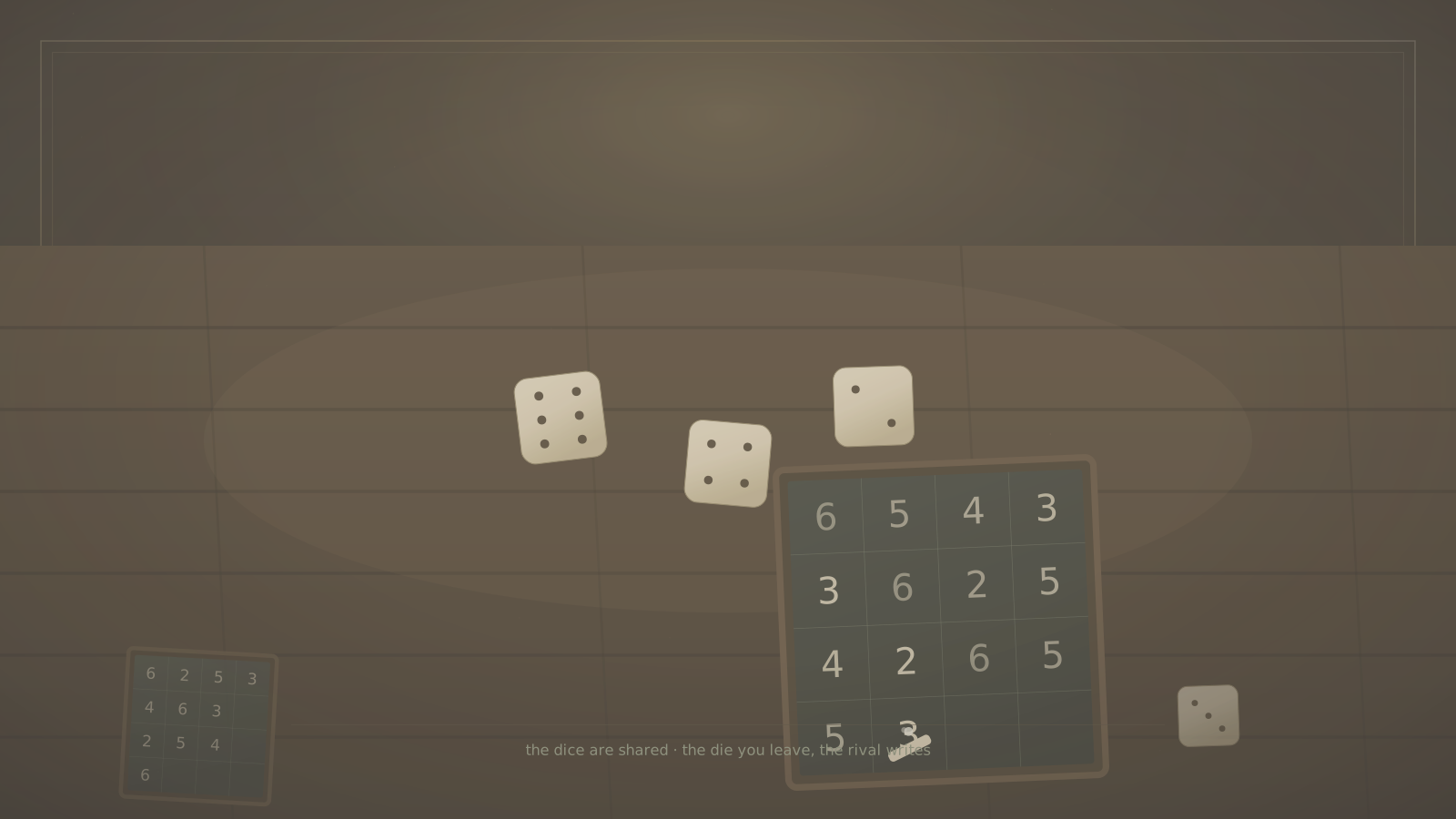
Three dice on the table, one chalk between you — the die you leave, the rival writes.
A roll-and-write duel for two — the shelf’s only one. Each round three dice come up public; the clerk with the chalk writes one into any empty cell of their own 4×4 slate, the other takes one of the two that remain, the third is discarded, and the chalk changes hands. Sixteen rounds fill both slates. The lines pay: four rows and four columns, each its sum, plus eight for four different faces — four sixes pay 24, a 6-5-4-3 pays 26. The richer slate takes the tally, and equal slates stand shared, said plainly.
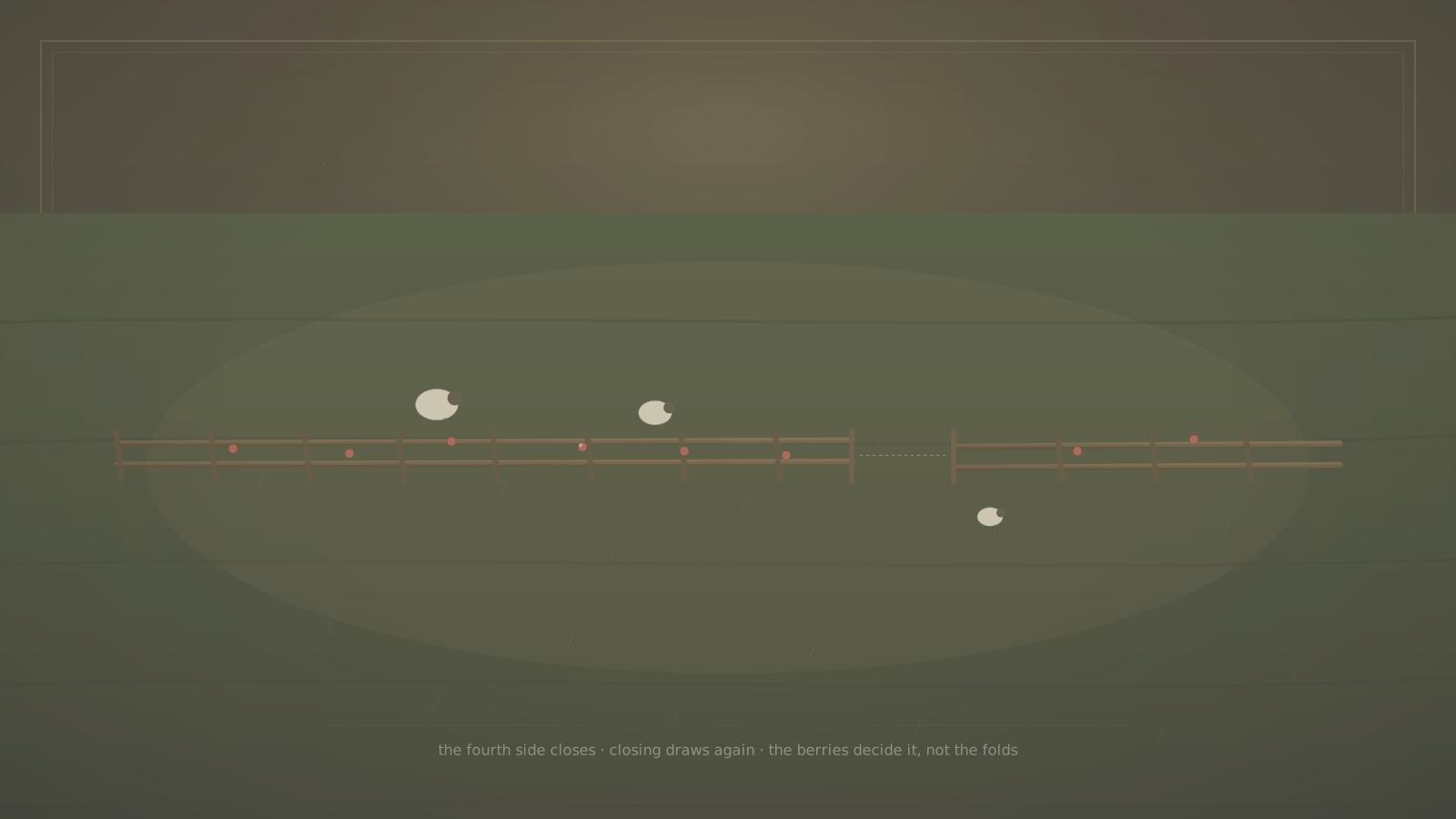
A meadow of sixteen folds — the fourth hedge closes one, and closing never passes the hand.
An enclosure duel for two — the shelf’s only one. A 4×4 meadow of folds, each bearing berries in the open: ones, twos and threes, twenty-nine in all. On your turn you set one hedge on any undrawn edge; the fourth hedge of a fold closes it, and its berries are yours — and closing does not pass the turn: you set another hedge at once, for every fold you close. The meadow is read when all sixteen folds are shut, and the berry count decides it — three folds of one lose to one fold of three. Equal baskets stand level, the meadow shared, said plainly.
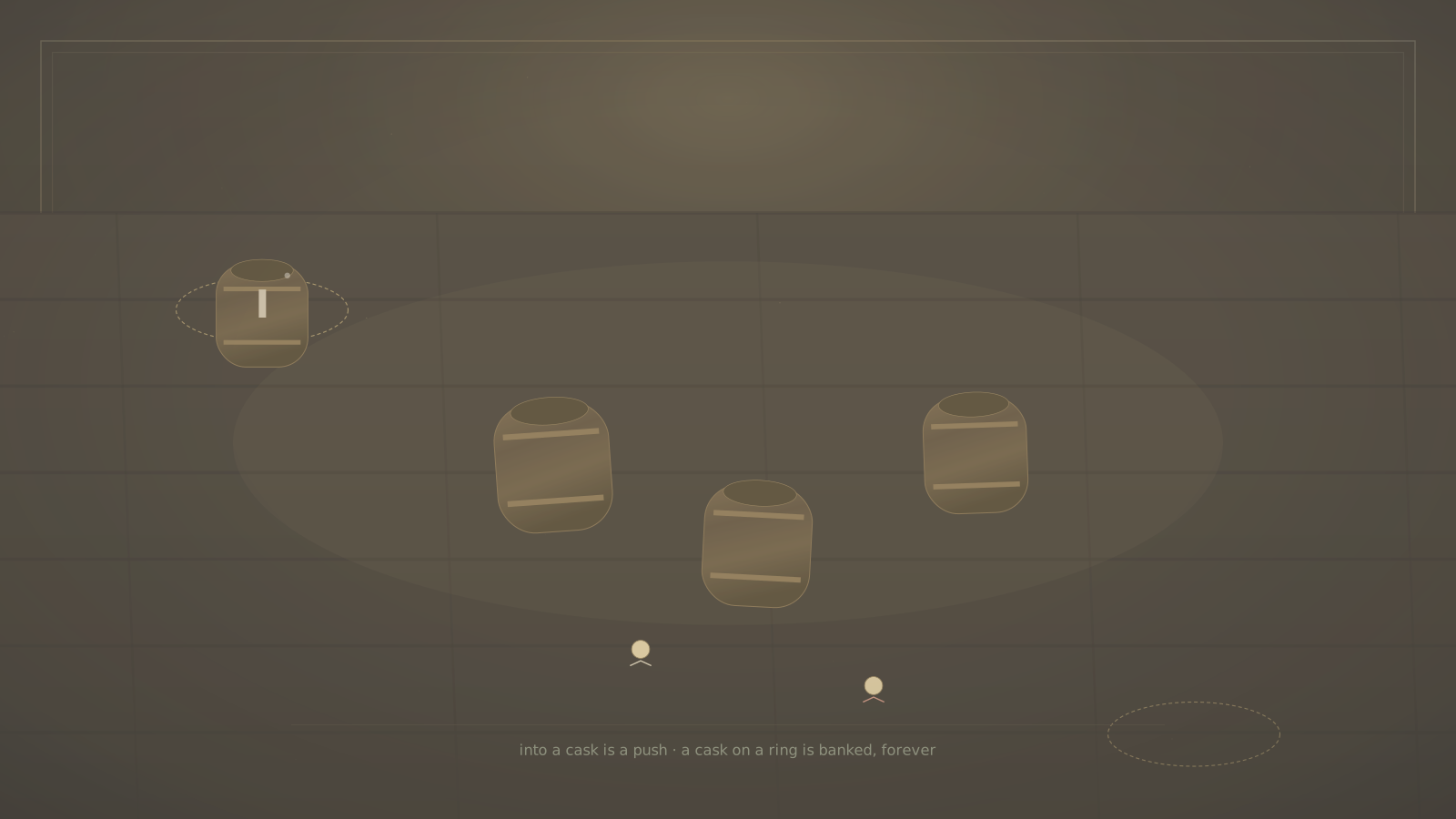
Four casks, four chalk rings, and a push needs the square behind you.
A pushing duel for two — the shelf’s only one. A 7×7 cellar floor dealt fresh from one of 154 symmetric floors, four casks standing on it, and four chalk rings drawn at the middle of each wall, shared by both. On your turn your porter moves one square: into an empty square a step, into a cask a PUSH, and the cask rolls one square the far side — refused by wall, porter or cask. A cask rolled onto a ring is BANKED by its pusher and never moves again. All four banked and the cellar is read; twenty-four quiet plies close the dock; a hundred and forty burn the lantern out; and a porter with no step at all is WALLED IN, the cellar read against him. A level tally goes to the last hand on a cask — standing still holds a lead, it never wins one.
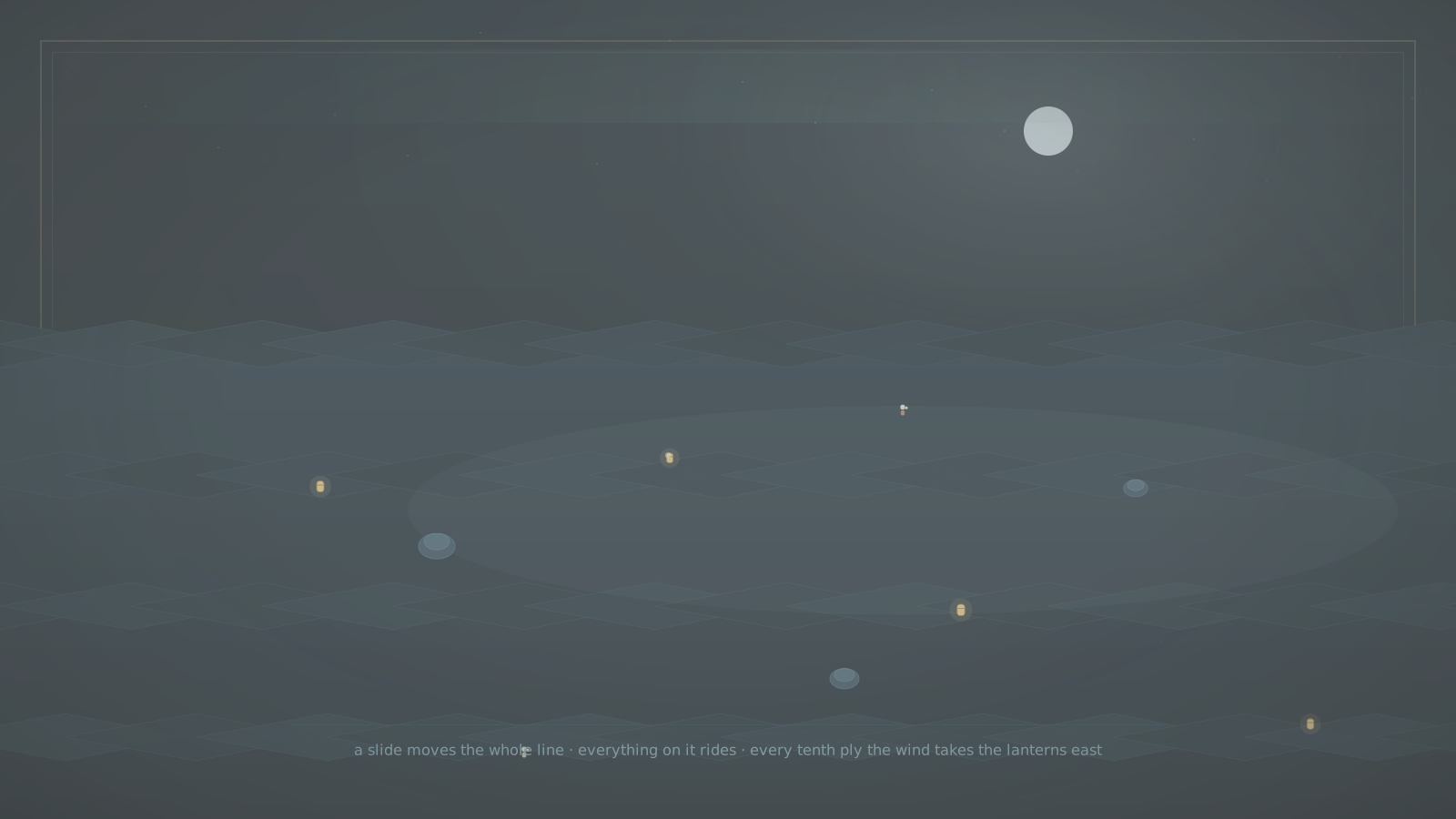
Two lamplighters on ice that will not hold still — slide a whole line, or step, and the wind takes the lanterns east.
A shifting duel for two — the shelf’s only one. A 5×5 floe of ice, dealt fresh every game in mirror pairs so neither post gets the better ice: four lanterns standing in the open, three hummocks (the ridge in the middle and a pair beside it), and two lamplighters. On your turn, STEP your lighter one square (onto a lantern takes it; hummocks and the rival refuse), or SLIDE one whole row or column one square — lanterns, hummocks and BOTH lighters ride, wrapping around the edge. And the floe drifts: every tenth ply the wind takes every standing lantern one square east — it stops at piled ice rather than burying a lantern, and a lantern blown under a lighter is taken by the hand standing there. First to hold three of the four lanterns wins; at ninety plies the light goes, the hands are read, and level hands go to whoever stands nearer the ice that is left. No field is ever shared: 0 of 1200 measured fields ended even.
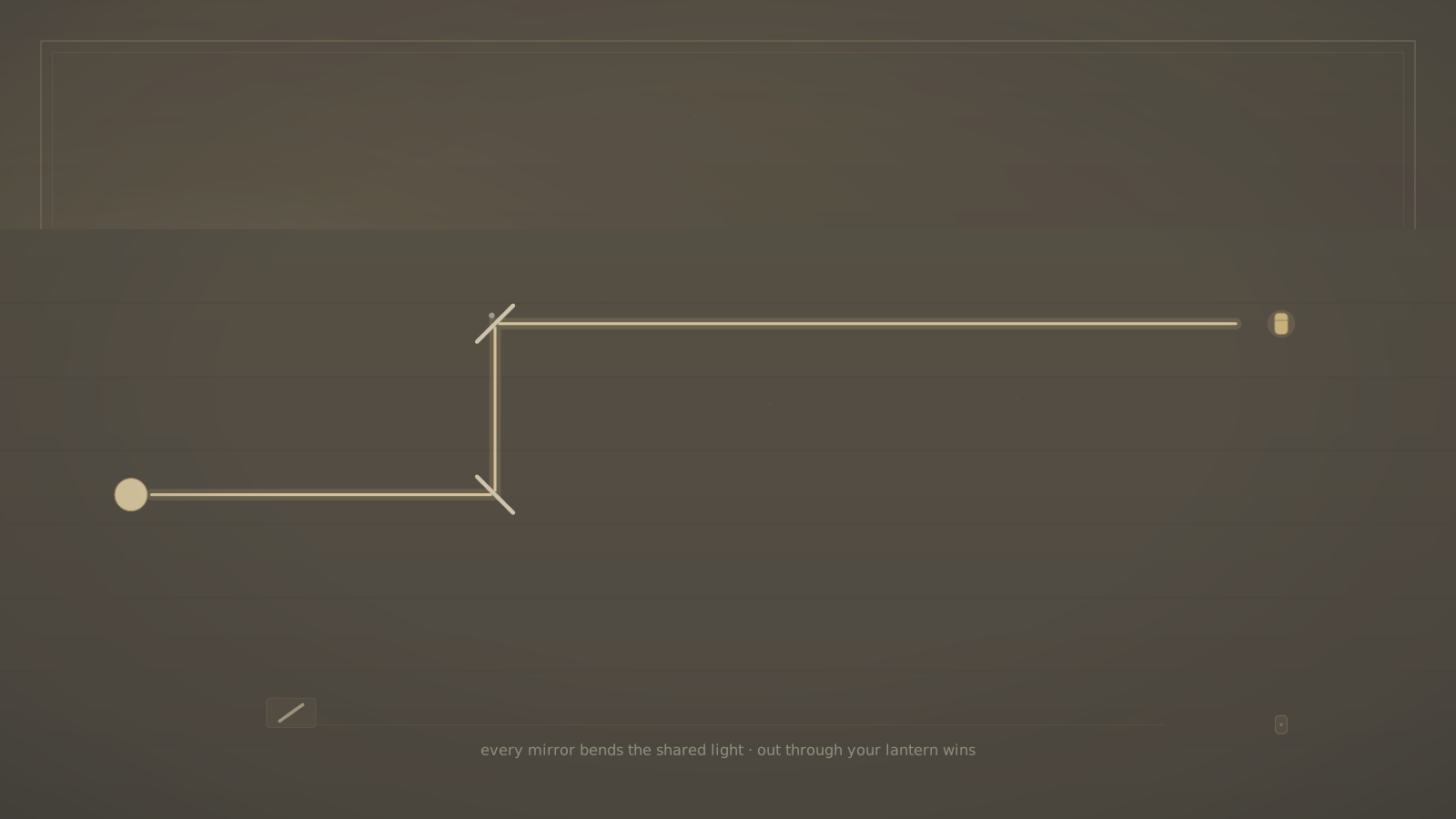
One lamp, one bench of mirrors, and a beam that serves whoever bent it last.
A beam-routing duel for two — the shelf’s only one. A 7×7 bench of optics; a lamp enters from the west, row four, heading east. Ivory’s lantern stands high on the east wall, Coral’s low — route the beam out through YOURS and the bench is lit in your name. On your turn: place one of six mirrors on any empty cell (tilted / or \), turn one of your mirrors to its other tilt, or slide one square. Every mirror bends the light, whoever owns it — out any other edge the light is lost, and no arrangement of mirrors can hold it on the bench. At eighty plies the oil burns out and the beam’s last cell is read by nearness, equal distances shared, said plainly.
The house has been waiting for someone to ask the right question.
Nine rooms, one hour, and one question in three parts: who is still in the house, which room is keeping them, and what they want. Everything the house tells you, it tells you alone — and saying it out loud costs two ticks of the hour and shuts the room that told you it. At the end the house asks its three questions and only counts the ones all of you answer the same way.