
Bailiwick
Original · an area-majority duel for two
Seven wards, twelve cubes each, majorities score — and a ward that comes out level answers to whoever walked in first.
Ready to play now.
A demonstration of Bailiwick, played by the computer against itself.
Bailiwick — playing itself
Ways to play
Alone, against the computer
Your own pace, no arranging anything. Take a move back whenever you like.
Play alone5 opponents, weakest first
- The DreamerAny legal move, by the seed — and it spends the writ in every one of 200 feoffs. A reckoning of 9.0 and one win in two hundred: striking cubes at random is donating turns.
- The ClaimerFirst through the door of the richest ward nobody has entered, because a ward entered first is a ward held on a level count. It never contests a ward the rival holds — its flaw, and the reason a reckoning takes it apart. Beats the Dreamer 121–79.
- The ReckonerThe marginal arithmetic of one cube and no answer read at all: the ward it flips or holds, the chain it opens, the level ward it takes by being first. Beats the Claimer 134–66, and books the best reckoning of the three bottom rungs at 20.4.
- The BailiffThree plies deep: the rival’s best answer is priced before the cube goes down. It serves the writ when the search says the strike is the best turn available — 184 writs in 200 feoffs — rather than because a constant told it to. Beats the Reckoner 143–50 with 7 feoffs divided.
- The StewardFive plies of the same search, and it reads two answers further than the Bailiff can. Beats the Bailiff 157–39 with 4 divided, books 22.0 a feoff — the best on the map — and takes 178 of 200 from the Reckoner. In the answerer’s chair it is the hardest thing on this shelf to take a ward from.
Together, in the same room
2 players. One device goes round the table, or everybody plays off the same screen.
Play in the same roomOnline, at a table
A room code, joinable from anywhere. Pause tonight and pick it up next week from your device.
Play online
About
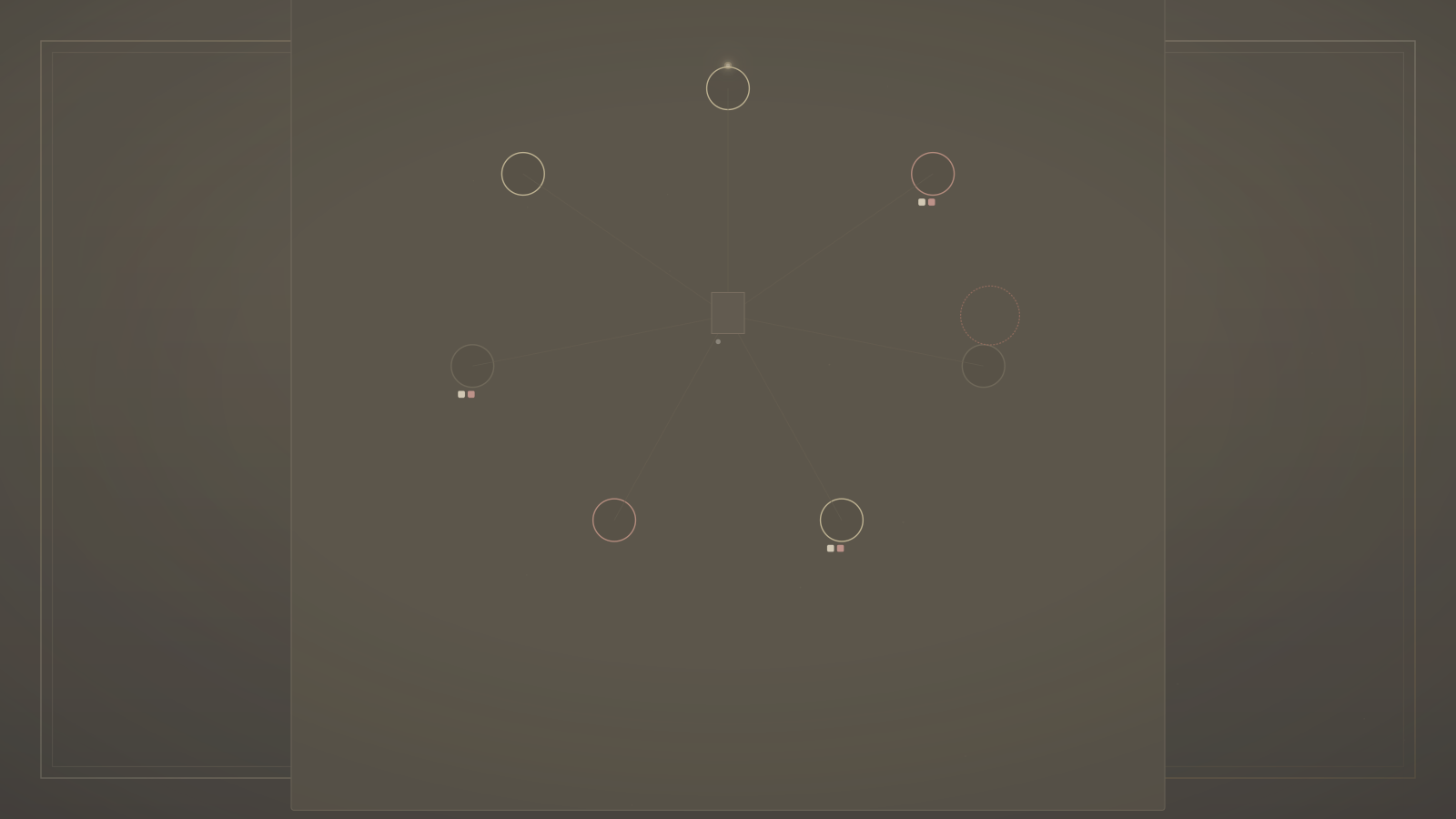
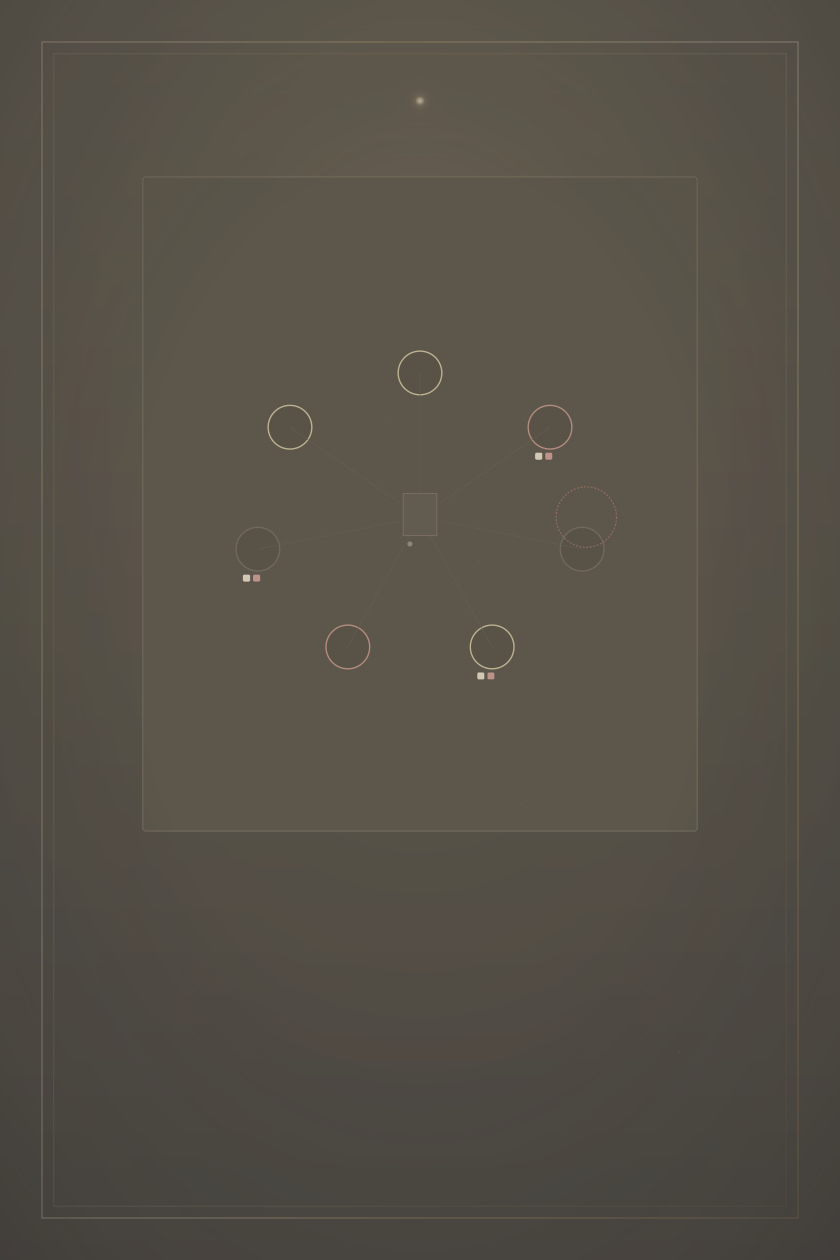
A surveyor’s map of seven wards around a keep, each worth three, four or five at the reckoning — dealt onto the ring by the seed, so every feoff has its own geography. Place one cube a turn in any ward; when both stores stand empty, every ward scores its worth to its strict majority, a ward that comes out LEVEL answers to whoever raised the first cube in it, and two adjacent held wards chain for one extra each. The writ — once a game, in place of a placement — strikes one enemy cube out of any ward, and a writ that takes the last cube out forgets who came first.
How it feels
- A map that changes every feoff
- Walking into a ward first and daring them to pay double
- Spending the writ on the ward that mattered
What the design is for
A level ward answers to whoever came first
A ward goes to its strict majority; a ward that comes out LEVEL goes to the steward who raised the first cube in it; a ward nobody entered scores nobody. So matching a rival cube for cube buys nothing — to take a ward they opened, you have to spend MORE on it than they did, and spending more somewhere is spending less everywhere else.
The rule that unsolved this game
That tie rule is a repair, and the repair is the interesting part. A tied ward used to score nobody, and the second steward had a strategy that never lost: copy the first. Same ward, same writ, every ward level, nobody holding anything — and a level reckoning went by rule against whoever spoke first. Measured, the copy took 100 feoffs of 100 against every rung of the ladder. It now takes 0 of 200 against every rung, and the probe re-runs it every time it runs.
The chain
Two ADJACENT held wards — around the ring, the Churchyard touching the Mill — pay one extra EACH, so a held pair is worth two points between them on top of both worths, and three in a row are worth four. A ward beside a ward you hold is worth more than its printed worth, so the map reads as routes, not islands.
The writ
Once a game, in place of a placement: strike ONE enemy cube from any ward. A whole turn for one cube — and now that being first matters, a writ that takes the LAST cube out of a ward erases the arrival too, which is the only way an opened ward is ever open again. The reading rungs spend it in 184 of 200 feoffs; the rung below them cannot see what the turn would have bought and holds it.
A map dealt, not drawn
The worths — three, three, four, four, five, five, five — are dealt onto the ring by the seed, and so is the ward the keep’s GATE opens onto. The first draft pinned them, and two-thirds of some pairings drew: mirror maps breed mirror stewards.
The chair, and the gate
A board that can always answer favours the answerer: measured between two stewards who think exactly alike, the second seat took better than three feoffs in four. So the speaker is paid two points for speaking first — a whole extra CUBE overcorrected to every feoff of two hundred, which is why the compensation is priced in points. Level on points, then on wards, the feoff goes to whoever holds the gate; level with a gate nobody ever entered, it stands divided.
- Best at
- 2
- Kind
- Strategy
- Table
- Competitive
- Studio
- Board.game Originals
The opponents
The Dreamer
Any legal move, by the seed — and it spends the writ in every one of 200 feoffs. A reckoning of 9.0 and one win in two hundred: striking cubes at random is donating turns.
The Claimer
First through the door of the richest ward nobody has entered, because a ward entered first is a ward held on a level count. It never contests a ward the rival holds — its flaw, and the reason a reckoning takes it apart. Beats the Dreamer 121–79.
The Reckoner
The marginal arithmetic of one cube and no answer read at all: the ward it flips or holds, the chain it opens, the level ward it takes by being first. Beats the Claimer 134–66, and books the best reckoning of the three bottom rungs at 20.4.
The Bailiff
Three plies deep: the rival’s best answer is priced before the cube goes down. It serves the writ when the search says the strike is the best turn available — 184 writs in 200 feoffs — rather than because a constant told it to. Beats the Reckoner 143–50 with 7 feoffs divided.
The Steward
Five plies of the same search, and it reads two answers further than the Bailiff can. Beats the Bailiff 157–39 with 4 divided, books 22.0 a feoff — the best on the map — and takes 178 of 200 from the Reckoner. In the answerer’s chair it is the hardest thing on this shelf to take a ward from.
Achievements
0 of 5 earned
The Feoff Answers
Win a bailiwick.
The Whole Ring
Win holding all seven wards.
Writ Still In Hand
Win without spending your writ.
On the Wards
Win level on points, ahead on wards held.
A Rich Feoff
Win with twenty or more points of reckoning.
Key art
Key art — Board.game art system
More like this
 Board.game Original
Original · an asymmetric duel
Fell Run
Three steps to the water, and something standing in it.
2 players5–10 minCompetitive
Playable Board.game Original
Original · a deduction duel for two
Tumbler
Every pin is public. Only the code is not.
2 players5–15 minCompetitive
Playable Board.game Original
Original · a placement duel for two
Toll
Every neighbouring pair swings to the heavier bell, and the difference is the score.
2 players5–10 minCompetitive
Playable Board.game Original
Original · a dice-placement duel for two
Anvil
Sums take tools, the hammer takes height, the file takes lows — and tied tools hang for nobody.
2 players5–10 minCompetitive
Playable Board.game Original
Original · a commodity exchange for two
Bellwether
Every buy lifts the chalk for every lot on it — and two coins buys anybody a crash.
2 players5–10 minCompetitive
Playable Board.game Original
Original · a walling duel for two
Drystone
The fourth wall claims the paddock — and pays you one more lay, which you must spend.
2 players5–10 minCompetitive
Playable Board.game Original
Original · a loading duel for two
Quay
One line of crates, both ends open to both ships — and a cargo pays its worth times the margin.
2 players5–10 minCompetitive
Playable Board.game Original
Original · a balance duel for two
Steelyard
Your pan is your ledger — every weight you cannot put on the rival’s, you carry.
2 players5–10 minCompetitive
Playable