Bellwether
Original · a commodity exchange for two
Every buy lifts the chalk for every lot on it — and two coins buys anybody a crash.
Ready to play now.
A demonstration of Bellwether, played by the computer against itself.
Bellwether — playing itself
Ways to play
Alone, against the computer
Your own pace, no arranging anything. Take a move back whenever you like.
Play alone5 opponents, weakest first
- The PedlarAny legal spend, by the seed. It stands 13–185 under the Collector over two hundred dealt floors, with two floors settling even — the cheapest lesson on this exchange is watching what a random hand does to a purse.
- The CollectorBuys the good it holds most of, always buying, never shorting — and pays for it: minus 16.2 points a trading day against the steady Broker, the worst book on the wall, and it bursts its own top chalk in 137 floors of 200. It beats the Pedlar 185–13 and the Broker takes it 172–28.
- The BrokerPrices every card by the settle-now swing, purse counted: what the spend moves on both floors, honestly resolved. It takes the Collector 172–28 — once you price a chalk, buying blind has nothing left — and it rings the bell in 1 floor of 200 rather than 137.
- The BearThe Broker with laws: one cheap lot of every good to keep the crash alive, no lot bought at six and up, and a forced short under any chalk the rival’s book leans on. It takes the Broker 191–8 with one floor even, wins 191 of 200 against it, and never once bursts its own chalk — 0 bells in 200 floors.
- The Market-MakerThe Bear, plus the last ten cards of every floor solved exactly — every line to both settlements. It takes the Bear 200–0 and the Pedlar 200–0; its book clears minus 4.0 a day, the best on the wall by seven points, and it rings the bell in 46 of 200 floors. Every rung on this wall books a NEGATIVE floor against a competent rival, which is the exchange being honest: a lot only earns where the chalk rose after you bought it, and a rival who is reading will not lift it for you.
Together, in the same room
2 players. One device goes round the table, or everybody plays off the same screen.
Play in the same roomOnline, at a table
A room code, joinable from anywhere. Pause tonight and pick it up next week from your device.
Play online
About
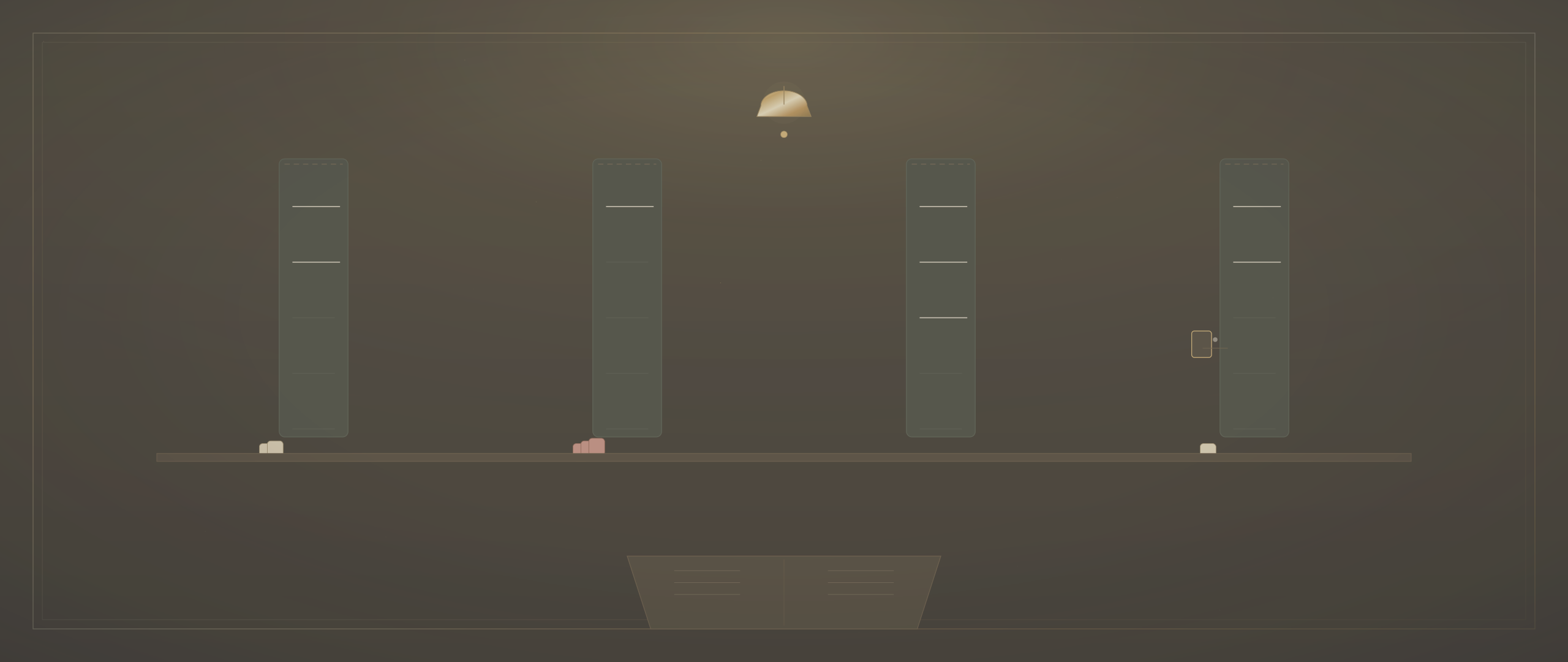
A harbour exchange: four goods — barley, salt, timber, tar — each chalked on the wall between 1 and 7, the opening chalk dealt by lot: one good at 1, two at 2, one at 3, so a floor has a shape before anybody trades. Both traders hold three cards of every good, face up, and spend one a turn. BUY pays the chalked price onto your purse, takes a lot, and lifts the price by one. SHORT burns the card, pays two, and sinks the price by two. At settlement every lot pays its good’s final price and your floor is the book clear of your purse — so a lot only earns where the price rose after you bought it. No chalk climbs past seven: the good that would reach eight bursts, crashes to one, and the bell rings while the floor trades on. Empty hands close it; the clearer floor takes it.
How it feels
- The lot you bought at two, paid for by your rival’s buys
- A short landing on somebody’s fat chalk
- The bell bursting a chalk you hold none of
What the design is for
The purse pays the chalk
A buy costs the price chalked when you make it, and the lot pays the FINAL price — so profit lives only where the price rose after you bought. Every lift pays the rival’s lots exactly what it pays yours, which is why the obvious habit, buying what you already hold, measures so badly.
Two coins buy a crash
You need not hold a good to hurt it: a short burns a card, costs two, and sinks its chalk by two. The counter to a fat book is cheap, public, and priced — the whole question is which chalk is worth the coin.
Eight bursts the chalk
No price climbs past seven. The good that would reach eight bursts — it crashes to one, the bell rings, and the floor goes right on trading. The buyer at the top pays seven for a lot of the crashed good: a weapon you aim at a book fatter than yours.
Nothing hidden, everything owed
Both hands, both books, both purses — all face up from the first card. The only thing the lot decides is the opening chalk: after that the floor is pure reading, pricing and tempo, and equal floors settle even, said plainly.
A floor dealt, not printed
One good opens at 1, two at 2, one at 3, shuffled onto the four by the seed. The first draft chalked all four at 2 and took no seed at all, which made every floor the same floor: the cheap good nobody can short yet, and the dear one already worth crashing, are what give a floor its own opening question.
Taught chalk by chalk
Six steps: the buy and its purse, the shared lift, the short, the floor at one, the burst — and then the whole exchange to yourself.
- Best at
- 2
- Kind
- Strategy
- Table
- Competitive
- Studio
- Board.game Originals
The opponents
The Pedlar
Any legal spend, by the seed. It stands 13–185 under the Collector over two hundred dealt floors, with two floors settling even — the cheapest lesson on this exchange is watching what a random hand does to a purse.
The Collector
Buys the good it holds most of, always buying, never shorting — and pays for it: minus 16.2 points a trading day against the steady Broker, the worst book on the wall, and it bursts its own top chalk in 137 floors of 200. It beats the Pedlar 185–13 and the Broker takes it 172–28.
The Broker
Prices every card by the settle-now swing, purse counted: what the spend moves on both floors, honestly resolved. It takes the Collector 172–28 — once you price a chalk, buying blind has nothing left — and it rings the bell in 1 floor of 200 rather than 137.
The Bear
The Broker with laws: one cheap lot of every good to keep the crash alive, no lot bought at six and up, and a forced short under any chalk the rival’s book leans on. It takes the Broker 191–8 with one floor even, wins 191 of 200 against it, and never once bursts its own chalk — 0 bells in 200 floors.
The Market-Maker
The Bear, plus the last ten cards of every floor solved exactly — every line to both settlements. It takes the Bear 200–0 and the Pedlar 200–0; its book clears minus 4.0 a day, the best on the wall by seven points, and it rings the bell in 46 of 200 floors. Every rung on this wall books a NEGATIVE floor against a competent rival, which is the exchange being honest: a lot only earns where the chalk rose after you bought it, and a rival who is reading will not lift it for you.
Achievements
0 of 5 earned
The Clearer Floor
Win a floor of Bellwether.
Heard Across the Harbour
Win a floor on which the bell rang.
Paid to Crash
Win after shorting twice or more.
One Good, Whole
Win with a single good worth eighteen or more of your book.
A Thin Margin
Win by three points or fewer.
Key art
Key art — Board.game art system
More like this
 Board.game Original
Original · a tug-of-war for two
Hawser
Lead a card, and the rival answers at sight — the difference moves the knot, and no single pull can reach the mark.
2 players5–10 minCompetitive
Playable Board.game Original
Original · a walling duel for two
Drystone
The fourth wall claims the paddock — and pays you one more lay, which you must spend.
2 players5–10 minCompetitive
Playable Board.game Original
Original · a sealed-bid duel for two
Vellum
Both houses act at once, in the dark — and the letters are identical, down to the last 8.
2 players5–10 minCompetitive
Playable Board.game Original
Original · a loading duel for two
Quay
One line of crates, both ends open to both ships — and a cargo pays its worth times the margin.
2 players5–10 minCompetitive
Playable Board.game Original
Original · a balance duel for two
Steelyard
Your pan is your ledger — every weight you cannot put on the rival’s, you carry.
2 players5–10 minCompetitive
Playable Board.game Original
Original · a placement duel for two, played for the last light
Beacons
No beacon may stand beside a rival’s — and the keeper who cannot light, loses.
2 players5–10 minCompetitive
Playable Board.game Original
Original · a cutting duel for two, misère
Peat
Cut any number from one bank — and whoever cuts the LAST sod of the bog loses.
2 players5–10 minCompetitive
Playable Board.game Original
Original · a pentomino duel for two
Marquetry
Twelve veneers, five cells each, sixty cells for sixty-four — and every piece lies as drawn, never turned.
2 players5–10 minCompetitive
Playable