Cask
Original · a pushing duel for two
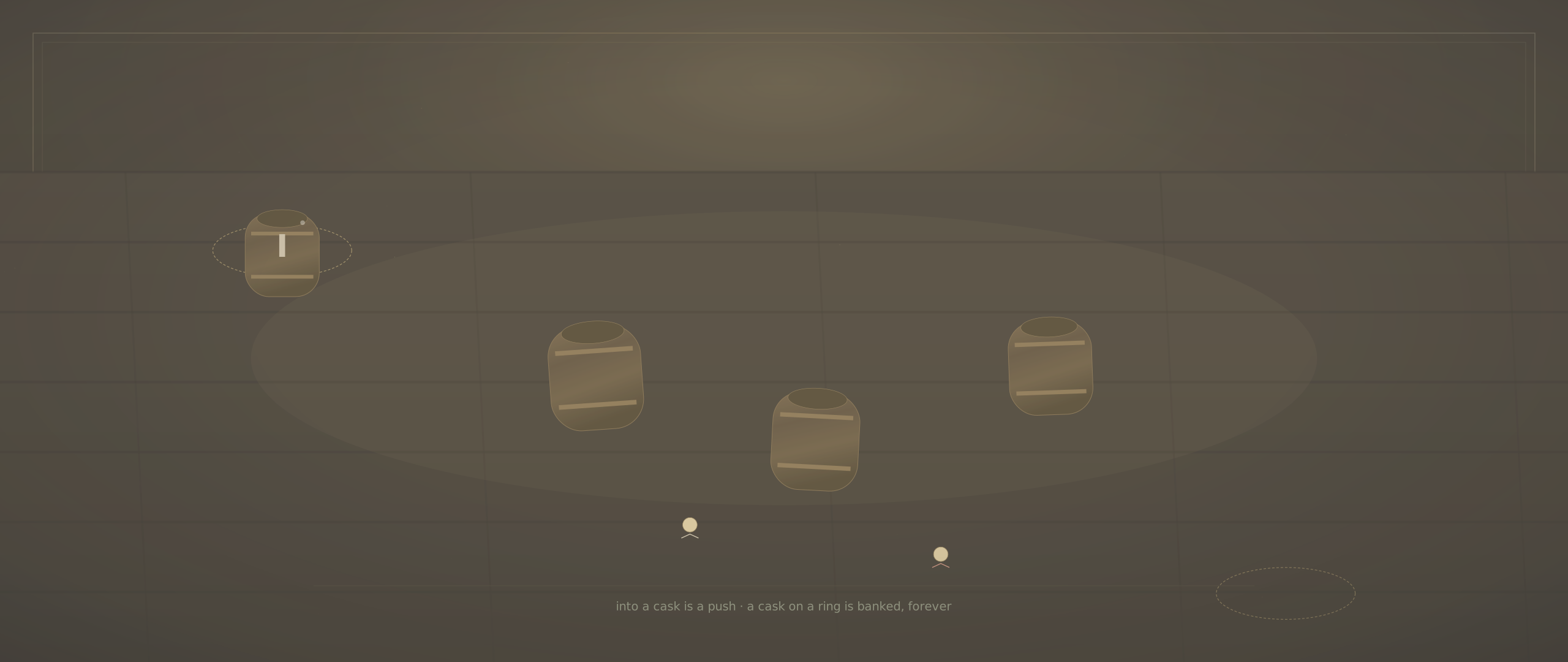
Four casks, four chalk rings, and a push needs the square behind you.
Ready to play now.
A demonstration of Cask, played by the computer against itself.
Cask — playing itself
Ways to play
Alone, against the computer
Your own pace, no arranging anything. Take a move back whenever you like.
Play alone4 opponents, weakest first
- The GreenhornAny legal step, by the seed. 0.09 casks a cellar and 8 of 240 won against the Hauler — random feet in a cellar bank for whoever is watching.
- The RoustaboutPushes when a push stands, any push; wanders otherwise. It has found the one thing down here that scores and nothing else about it. 177-47 over the Greenhorn, 8.7 sigma — and then 38-196 under the Hauler, because a push without a road is a gift to the walked mile.
- The HaulerLocal greed: the bank standing right here, then the adjacent push that shortens a road, then a step toward the nearest pushing square. No plans past its own two hands. 196-38 over the Roustabout, 10.3 sigma, and 1.54 casks a cellar.
- The CellarmanIt READS — six plies of negamax over the whole floor: the tally, the roads, and the room each porter has left to stand in, instead of an opinion about the push in front of it. 191-46 over the Hauler (9.4 sigma) and 235-0 over the Greenhorn (15.3 sigma). The heaviest tally on the shelf’s cellar floor: 1.80 casks a cellar, 215 of 240, and the quickest about it at 51 plies.
Together, in the same room
2 players. One device goes round the table, or everybody plays off the same screen.
Play in the same roomOnline, at a table
A room code, joinable from anywhere. Pause tonight and pick it up next week from your device.
Play online
About
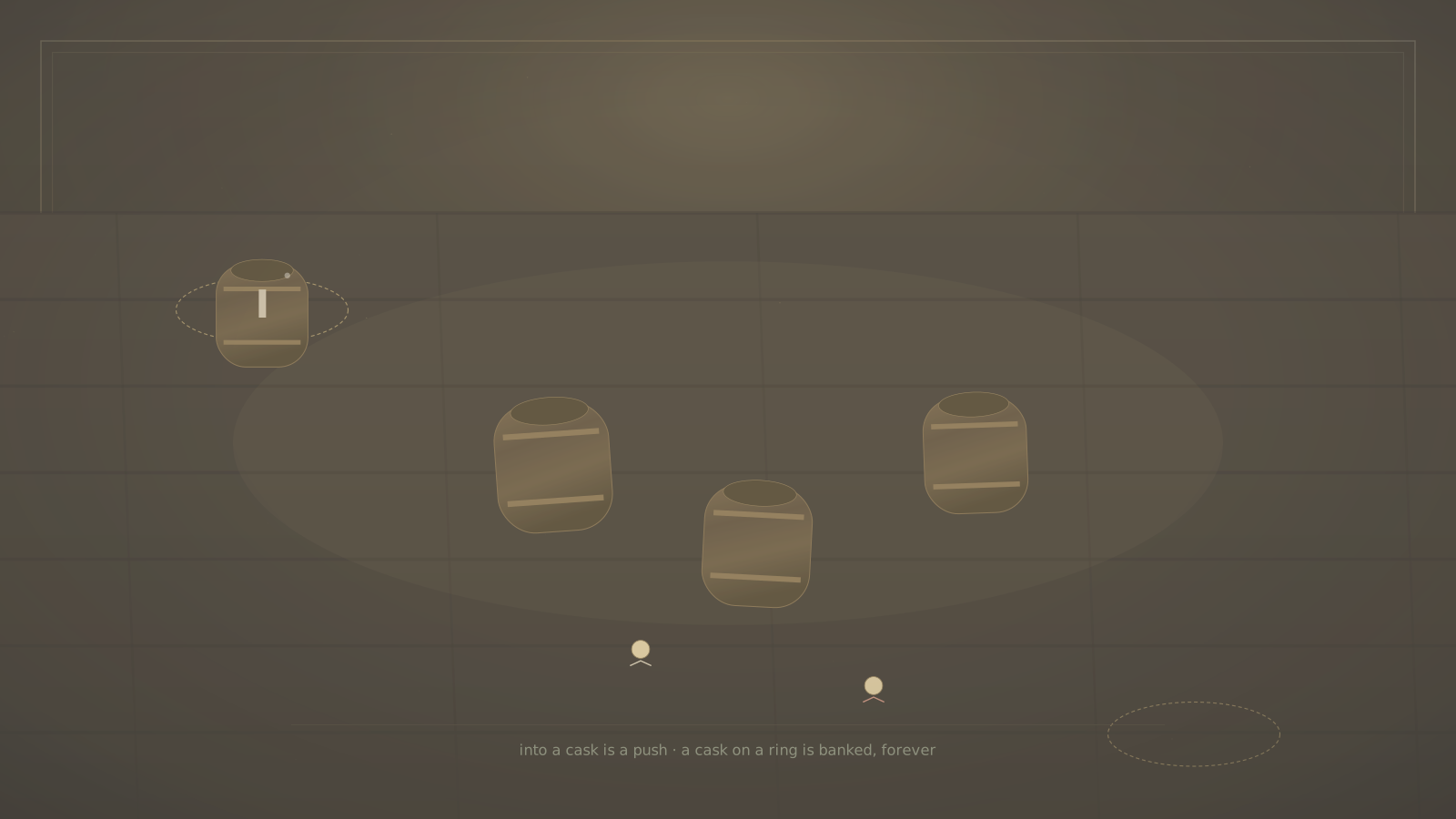
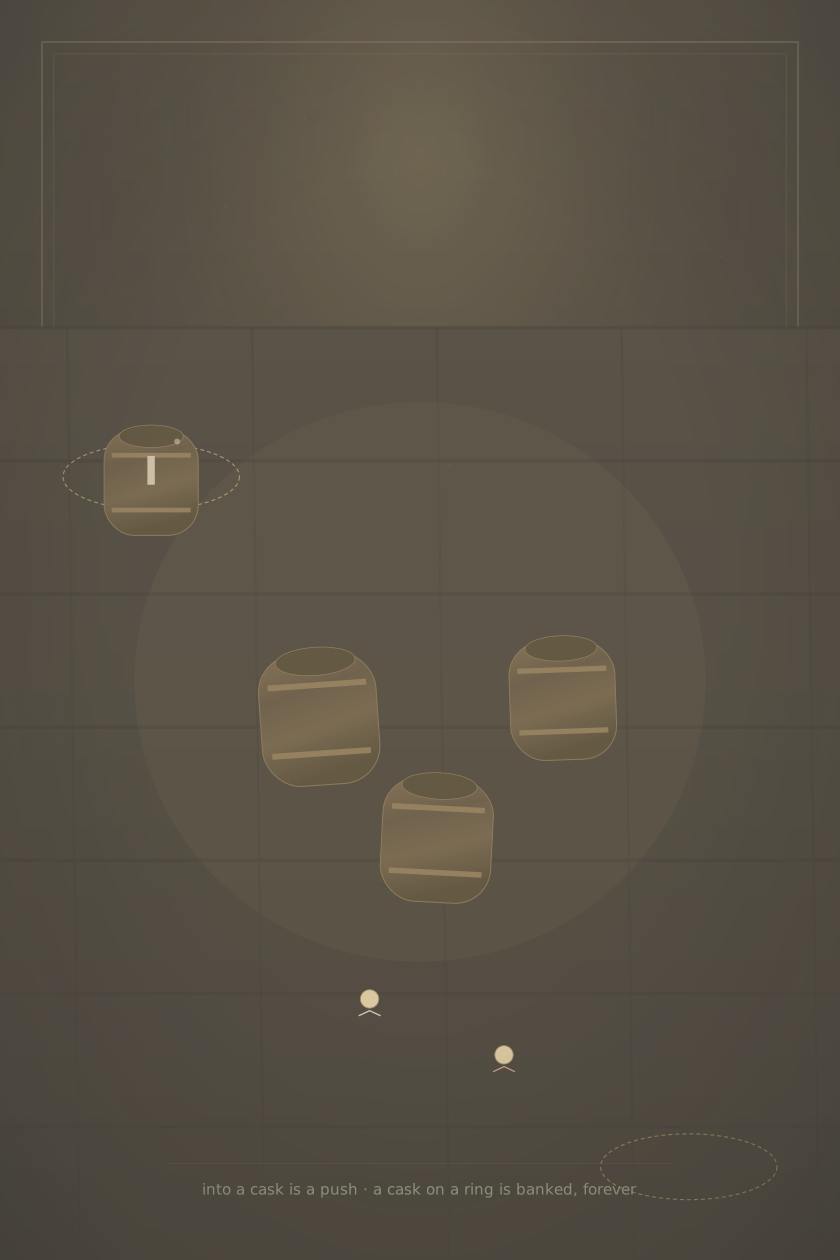
A pushing duel for two — the shelf’s only one. A 7×7 cellar floor dealt fresh from one of 154 symmetric floors, four casks standing on it, and four chalk rings drawn at the middle of each wall, shared by both. On your turn your porter moves one square: into an empty square a step, into a cask a PUSH, and the cask rolls one square the far side — refused by wall, porter or cask. A cask rolled onto a ring is BANKED by its pusher and never moves again. All four banked and the cellar is read; twenty-four quiet plies close the dock; a hundred and forty burn the lantern out; and a porter with no step at all is WALLED IN, the cellar read against him. A level tally goes to the last hand on a cask — standing still holds a lead, it never wins one.
How it feels
- The cask that rolls one square and not one more
- A porter standing exactly where you wanted to push from
- The last cask, four rings, and the dock clock ticking
What the design is for
The shelf’s first pusher
Moving into a cask IS the move: it rolls exactly one square, you follow, and the square beyond had better be clear. Sokoban’s law, worn here as a duel.
A push needs the square behind you
Every cask you want is a cask you must stand behind — and the rival knows it. A porter parked on your pushing square has stolen your barrel as surely as if it were banked.
Banked is banked, forever
A cask on a ring is locked: no push moves it, no porter walks through it, and it wears its banker’s colour in the wood. The floor narrows as the cellar fills.
The dock clock, and one number for it
Twenty-four quiet plies and the dock closes, the tally read as it stands; a hundred and forty burn the lantern out. A leading porter can live on the clock — a trailing one had better keep rolling. The number is a single constant every reader imports: the prose, the tests, the honour and the probe used to disagree about whether it was sixteen or twenty-four, which is the kind of thing a card should never be able to get wrong.
Walled in, and no shared cellar
A porter whose every push is refused by the cask behind it has no move at all — the corner at a7 behind casks at b7, c7, a6 and a5 — and the cellar is read against him. And a level tally is not a shared cellar while anybody has rolled: it goes to the last hand on a cask. Of 240 cellars between the top two rungs, 2 stood shared.
Taught roll by roll
Six steps: the step, the push, the bank, the lock, the porter walled in — and then a whole cellar to yourself.
- Best at
- 2
- Kind
- Strategy
- Table
- Competitive
- Studio
- Board.game Originals
The opponents
The Greenhorn
Any legal step, by the seed. 0.09 casks a cellar and 8 of 240 won against the Hauler — random feet in a cellar bank for whoever is watching.
The Roustabout
Pushes when a push stands, any push; wanders otherwise. It has found the one thing down here that scores and nothing else about it. 177-47 over the Greenhorn, 8.7 sigma — and then 38-196 under the Hauler, because a push without a road is a gift to the walked mile.
The Hauler
Local greed: the bank standing right here, then the adjacent push that shortens a road, then a step toward the nearest pushing square. No plans past its own two hands. 196-38 over the Roustabout, 10.3 sigma, and 1.54 casks a cellar.
The Cellarman
It READS — six plies of negamax over the whole floor: the tally, the roads, and the room each porter has left to stand in, instead of an opinion about the push in front of it. 191-46 over the Hauler (9.4 sigma) and 235-0 over the Greenhorn (15.3 sigma). The heaviest tally on the shelf’s cellar floor: 1.80 casks a cellar, 215 of 240, and the quickest about it at 51 plies.
Achievements
0 of 6 earned
The Heavier Tally
Win a cellar.
Three on the Rings
Win with three or four casks banked.
A Clean Sweep
Bank all four casks yourself.
The Cold Cellar
Win after banking nothing while the rival had banked.
On the Shut Dock
Win with the dock closed on the read.
Walled In
Win because the rival had no step left anywhere.
Key art
Key art — Board.game art system
More like this
 Board.game Original
Original · a walling duel for two
Drystone
The fourth wall claims the paddock — and pays you one more lay, which you must spend.
2 players5–10 minCompetitive
Playable Board.game Original
Original · an enclosure duel for two
Quickset
A meadow of sixteen folds — the fourth hedge closes one, and closing never passes the hand.
2 players5–12 minCompetitive
Playable Board.game Original
Original · a commodity exchange for two
Bellwether
Every buy lifts the chalk for every lot on it — and two coins buys anybody a crash.
2 players5–10 minCompetitive
Playable Board.game Original
Original · a loading duel for two
Quay
One line of crates, both ends open to both ships — and a cargo pays its worth times the margin.
2 players5–10 minCompetitive
Playable Board.game Original
Original · a balance duel for two
Steelyard
Your pan is your ledger — every weight you cannot put on the rival’s, you carry.
2 players5–10 minCompetitive
Playable Board.game Original
Original · a placement duel for two, played for the last light
Beacons
No beacon may stand beside a rival’s — and the keeper who cannot light, loses.
2 players5–10 minCompetitive
Playable Board.game Original
Original · a cutting duel for two, misère
Peat
Cut any number from one bank — and whoever cuts the LAST sod of the bog loses.
2 players5–10 minCompetitive
Playable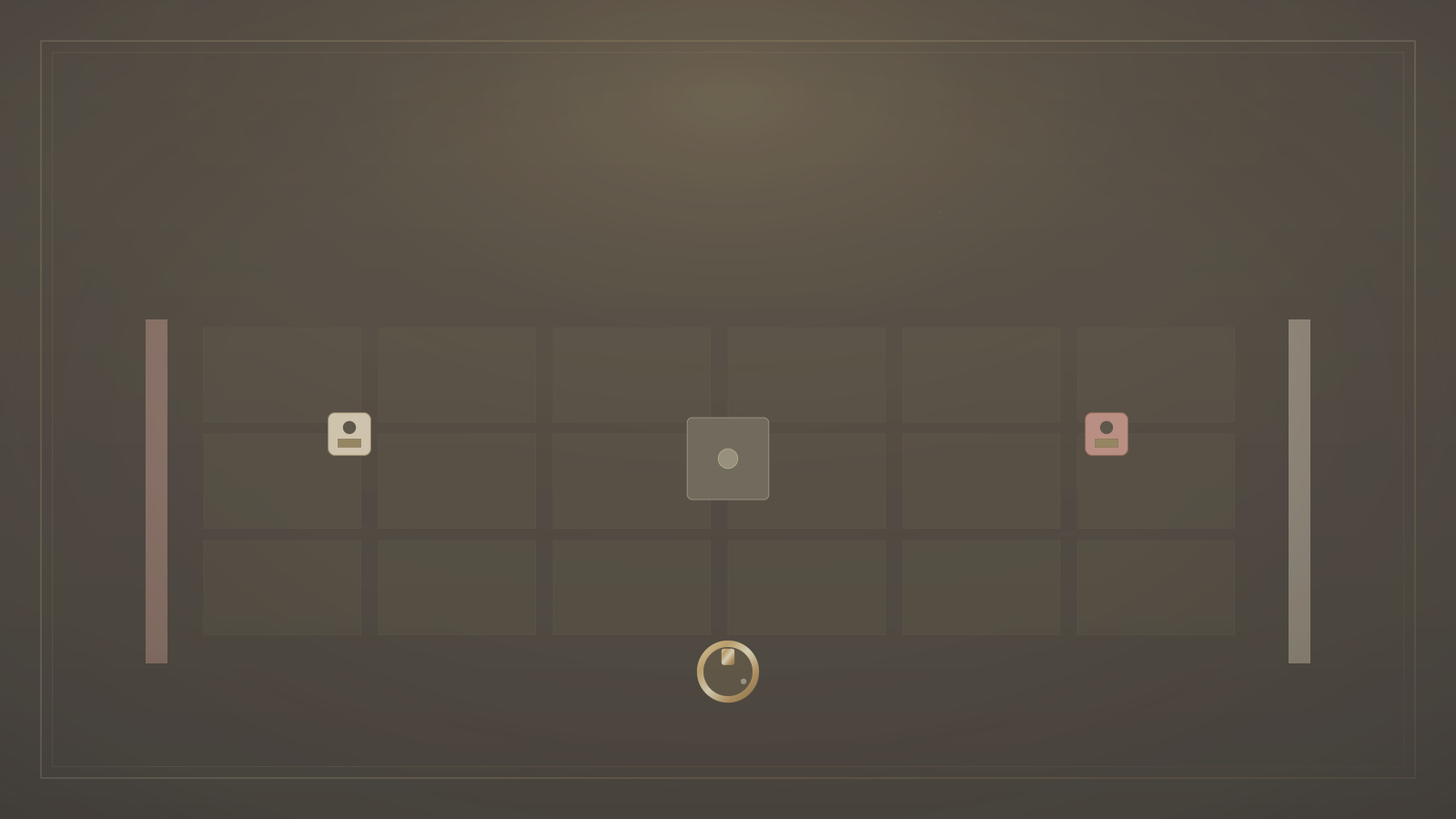 Board.game Original
Original · a programming duel for two
Mainspring
Three gears wound in secret, a march played in the open — and the rival does not stop you, it MOVES you.
2 players5–10 minCompetitive
Playable