Darkroom
Original · a memory duel for two
The only thing hidden is where anything is.
Ready to play now.
A demonstration of Darkroom, played by the computer against itself.
Darkroom — playing itself
Ways to play
Alone, against the computer
Your own pace, no arranging anything. Take a move back whenever you like.
Play alone4 opponents, weakest first
- The SafelightSees only what is burning in front of it this instant — no memory at all between turns, so it can never name a pair before its probe lands on one. 2.0 points a line against a full notebook, and 4 lines won in two thousand.
- Four Prints BackRemembers the last four prints the table turned, then the dark closes over. It names the pairs still in the doorway. 1997-3 over the Safelight (z=44.6), 16.9 points a line, 504 lines of two thousand.
- The NotebookThe whole public history, and it never forgets a print — which alone is most of this game. 1530-470 over Four Prints Back, z=23.7. 26.8 points a line, and it holds the other photographer under ten on 287 lines of two thousand.
- The DenierThe same total memory, and one thought about the second flip: when its probe pairs with nothing it can name, the flip is already a miss, so it spends it on a print the table has ALREADY seen instead of turning a fresh one. A miss is a miss either way — but the rung below hands you a brand-new value on the way down, and this one hands over nothing. 1065-935 over the Notebook, z=2.9: a real edge, and a thin one. 28.7 points a line, and the other rack under ten on 359 lines.
Together, in the same room
2 players. One device goes round the table, or everybody plays off the same screen.
Play in the same roomOnline, at a table
A room code, joinable from anywhere. Pause tonight and pick it up next week from your device.
Play online
About
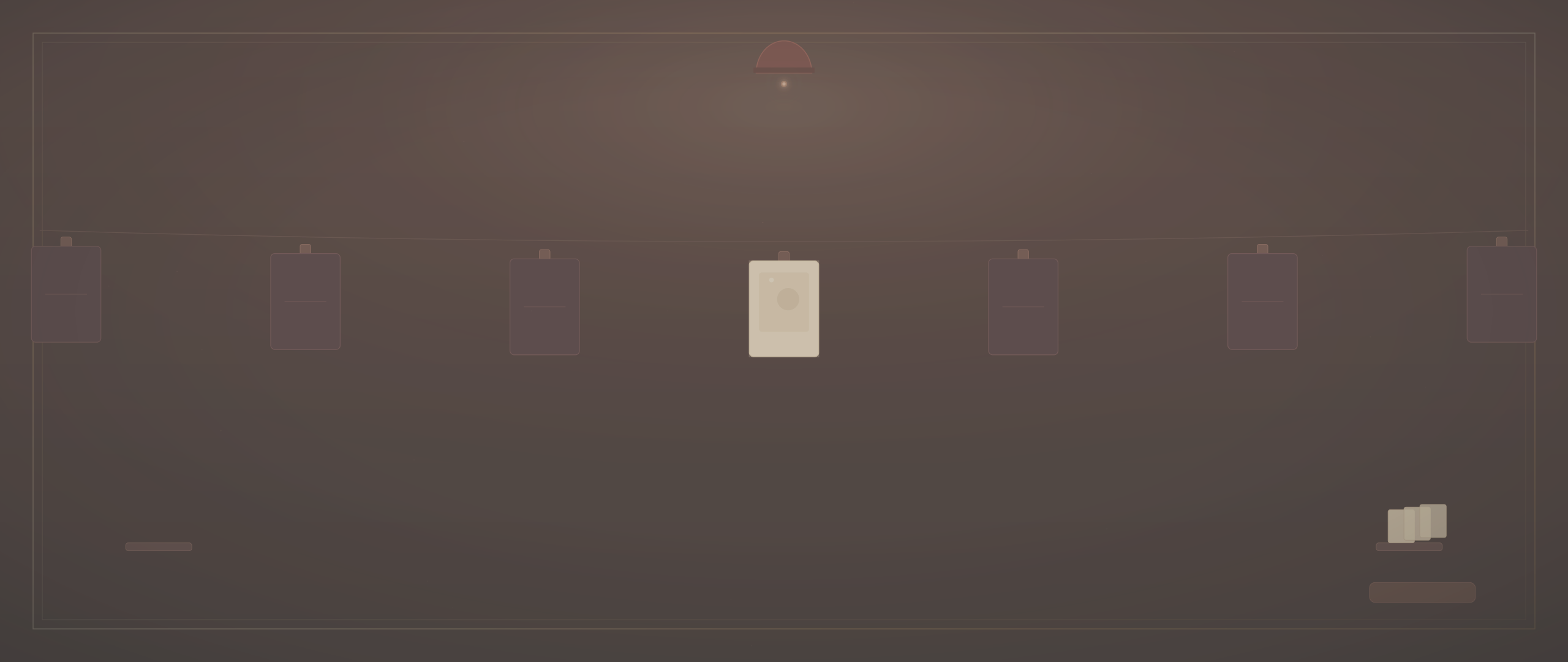
Twenty prints hang face-down on a line, ten pairs of one to ten, under one safelight. Turn two a turn: a pair comes off the line onto your rack and you go again; a miss turns both back — exactly where they were — and passes. Every flip is public, both of you see identical information from the first turn, and the game is what you keep. When the line is empty, the higher rack has developed it.
How it feels
- Red light on wet paper
- A pair you cannot quite place
- Watching them remember your miss
What the design is for
Every flip is public
There is no hand and no secret order of play — the only secret on the table is where anything is. Both photographers see every value the moment it turns, and the view the table carries says so: face-up tiles, the taken line, the racks, and never the layout. The projection test exists to keep failing the day that leaks.
The chain
A pair takes both prints and the turn holds — a run of pairs is how a rack is built in one sitting. A miss turns both prints back, exactly where they were, and passes; the values stay where everyone saw them, which is the whole game.
Fifty-five points, no draws
Ten pairs of one to ten: fifty-five points, always, split across two racks. An odd number cannot split evenly, so a line of Darkroom always has a winner — the rack decides it and arithmetic guarantees it.
A duel of notebooks
Nothing is hidden from either of you after the first flip — the duel is retention. The opponent ladder is exactly that: the weakest rung sees only what is face-up this instant, the next remembers four prints back, the third never forgets, and the fourth spends a doomed second flip on a print the table has already seen rather than gifting it a fresh value. The notebook is public, so it lives in the position — the opponent keeps nothing between calls and reads the same projection the wire carries.
Taught flip by flip
Five steps: the first print, the pair that comes off the line, the miss that goes back, the chain — and then the whole darkroom to yourself.
- Best at
- 2
- Kind
- Party
- Table
- Competitive
- Studio
- Board.game Originals
The opponents
The Safelight
Sees only what is burning in front of it this instant — no memory at all between turns, so it can never name a pair before its probe lands on one. 2.0 points a line against a full notebook, and 4 lines won in two thousand.
Four Prints Back
Remembers the last four prints the table turned, then the dark closes over. It names the pairs still in the doorway. 1997-3 over the Safelight (z=44.6), 16.9 points a line, 504 lines of two thousand.
The Notebook
The whole public history, and it never forgets a print — which alone is most of this game. 1530-470 over Four Prints Back, z=23.7. 26.8 points a line, and it holds the other photographer under ten on 287 lines of two thousand.
The Denier
The same total memory, and one thought about the second flip: when its probe pairs with nothing it can name, the flip is already a miss, so it spends it on a print the table has ALREADY seen instead of turning a fresh one. A miss is a miss either way — but the rung below hands you a brand-new value on the way down, and this one hands over nothing. 1065-935 over the Notebook, z=2.9: a real edge, and a thin one. 28.7 points a line, and the other rack under ten on 359 lines.
Achievements
0 of 5 earned
First Off the Line
Win a line of Darkroom.
The Pair of Tens
Take the tens off the line.
Three in a Row
Take three pairs in a row, with no miss of your own between them.
The Whole Line
Take all ten pairs yourself — fifty-five to nothing.
By a Whisker
Win the line by five points or fewer.
Key art
Key art — Board.game art system
More like this
 Board.game Original
Original · push your luck for two
Kindling
Eight frosts in the deck, and every one of them is yours if you push.
2 players5–15 minCompetitive
Playable Board.game Original
Original · a shared-air gamble for three to six
Sump
The air belongs to everybody. The gold belongs to whoever turns back.
3–6 players10–15 minCompetitive
Playable Board.game Original
Original · a pay-to-pass auction for two
Levy
Every pass costs a coin, every take costs a demand, and runs of demands count once.
2 players10–15 minCompetitive
Playable Board.game Original
Original · a divide-and-choose duel for two
Crumb
I split, you choose — and a matched pair split in two is worth nothing extra to either baker.
2 players2 minCompetitive
Playable Board.game Original
Original · a push-your-luck card duel for two
Bogey
The par is the pin — a stroke for every point you finish short of it, and a stroke for every point past.
2 players5–10 minCompetitive
Playable
Fifteen minutes, four people
The Last Tram
One seat. Everyone wants it. The tram is not waiting.
2–4 players10–15 minCompetitive
Playable Board.game Original
Original · three to five players
Third Lantern
A paper lantern needs two hands, and nobody will tell you whose.
3–5 players5–10 minCompetitive
Playable Board.game Original
Original · an auction for three to five
Gavel
Every coin you spend is a point you no longer have.
3–5 players10–20 minCompetitive
Playable