
Firefly
Original · a hidden-movement duel for two
One light hiding in a night meadow, and every answer it gives goes stale.
Ready to play now.
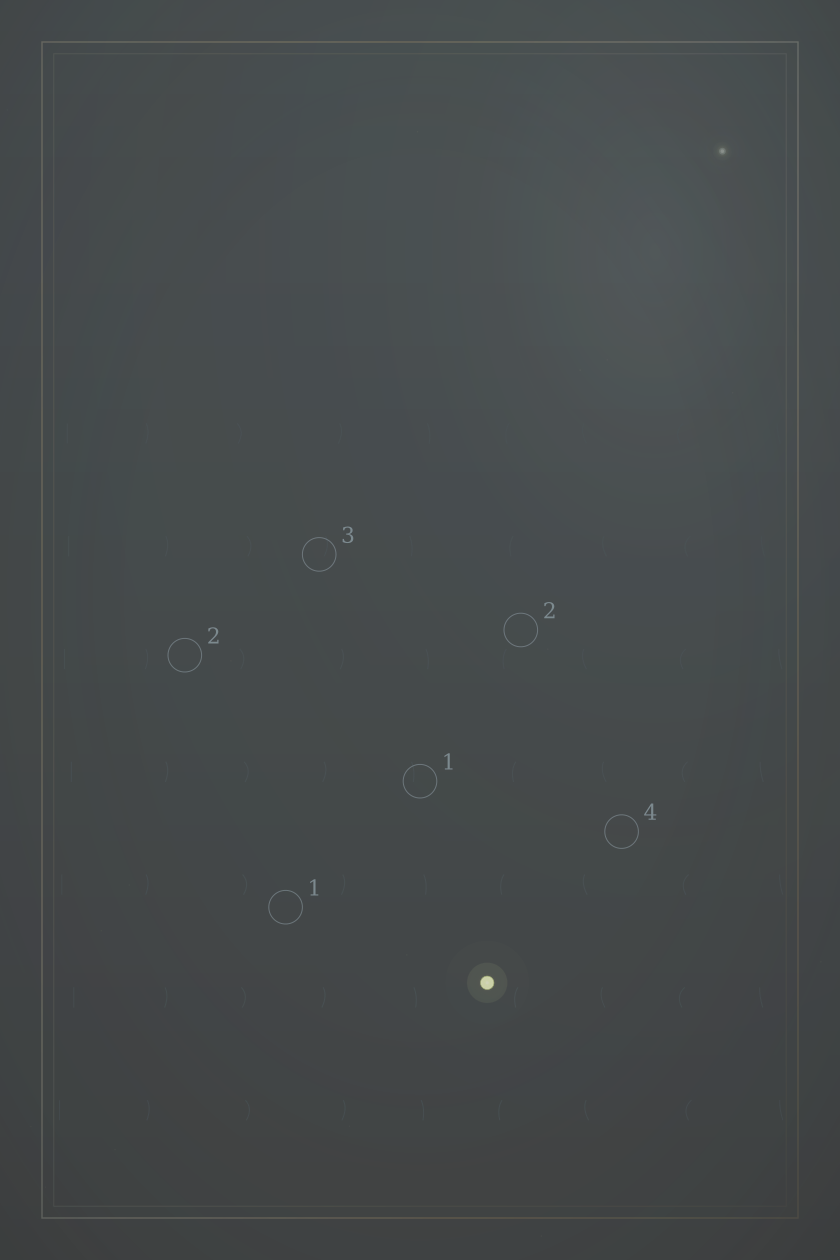
A demonstration of Firefly, played by the computer against itself.
Firefly — playing itself
Ways to play
Alone, against the computer
Your own pace, no arranging anything. Take a move back whenever you like.
Play alone4 opponents, weakest first
- The DreamerSweeps anywhere and flits anywhere, by the seed. 12.3 sweeps an inning, and 150 of 250 lights simply outlived it — the meadow is very dark to a random net.
- The PatrollerThe recency habit: the nearest square to its last sweep that the information set still allows. Cheap, and it works — 126–67 over the Dreamer with 57 dusks tied, 10.3 sweeps an inning. It hides by running from the net.
- The TriangulatorThe heart of the information set — the square that minimises the total distance to every candidate, so the answer tells it something wherever the light actually is. 91–58 over the Patroller with 101 dusks tied, 9.7 sweeps an inning. It hides along the rim, where a catcher has fewer directions to corner from.
- The NighthawkOne step of real lookahead through the same filter: for every square it could sweep it buckets the candidates by the answer they would give, flits each bucket forward to see how large a set that answer would leave, and sweeps the square with the smallest expected set — counting a catch as a set of nothing. 160–28 over the Triangulator, 7.7 sweeps an inning, and only 45 of 250 lights get away from it. Hiding, it reads that filter back and flits into the fattest bucket of the sweep it expects next.
Together, in the same room
2 players. One device goes round the table, or everybody plays off the same screen.
Play in the same roomOnline, at a table
A room code, joinable from anywhere. Pause tonight and pick it up next week from your device.
Play online
About
A five-by-five meadow at dusk, and one firefly on a secret square. Sweep a square and the light answers with its DISTANCE — "the glow is two away" — then flits to a neighbouring square, any of the eight, and never holds still. Catch it in fourteen sweeps or the light is out at fifteen. Two innings, each player hiding once and sweeping once, and both innings run the same way round; the lower count takes the jar. Every answer is at least one flit out of date the moment it is given, so the whole hunt is triangulation against a target that has already moved.
How it feels
- A glow one answer out of date
- Cornering the rim of the meadow
- Fourteen sweeps, then dark
What the design is for
The answer is a ring
A sweep never names a square — it names a DISTANCE, and a distance is the ring of squares at that many king-steps from your sweep. One answer rules out most of the meadow; three good ones corner it; and the catcher who forgets the light moves between them is chasing a ghost.
The light never holds still
After every answer the firefly flits — one square, any of the eight neighbours, standing still not allowed. Every past answer goes one step stale per turn, which is the engine of the whole hunt: information decays exactly as fast as you can gather it.
Two innings, one jar, run the same way round
Each player hides once and sweeps once. The count is the game: fewer sweeps to catch, and an inning that outlives fourteen costs fifteen. When both lights escape the jar ties, and on this meadow that happens often enough to be a plan. The two innings used to differ: the second hider was made to flit before any sweep had been made and the first was not, so one light had already moved once for nothing. They are symmetric now, and a test holds them that way.
The hider sees, the sweeper reads
The hider watches their own glow move and knows everything; the sweeper sees only the marks and answers on the board. The view carries the firefly for the hider alone, and the projection test keeps failing the day that leaks.
Taught sweep by sweep
Six steps: the sweep, the ring, the flit, the catch, the count — and then the whole meadow to yourself. Three of those poses used to show something other than what their text said, including a "catch" step that answered three away from a light that was supposed to be under your hand; every pose is read back by a test now.
- Best at
- 2
- Kind
- Mystery
- Table
- Competitive
- Studio
- Board.game Originals
The opponents
The Dreamer
Sweeps anywhere and flits anywhere, by the seed. 12.3 sweeps an inning, and 150 of 250 lights simply outlived it — the meadow is very dark to a random net.
The Patroller
The recency habit: the nearest square to its last sweep that the information set still allows. Cheap, and it works — 126–67 over the Dreamer with 57 dusks tied, 10.3 sweeps an inning. It hides by running from the net.
The Triangulator
The heart of the information set — the square that minimises the total distance to every candidate, so the answer tells it something wherever the light actually is. 91–58 over the Patroller with 101 dusks tied, 9.7 sweeps an inning. It hides along the rim, where a catcher has fewer directions to corner from.
The Nighthawk
One step of real lookahead through the same filter: for every square it could sweep it buckets the candidates by the answer they would give, flits each bucket forward to see how large a set that answer would leave, and sweeps the square with the smallest expected set — counting a catch as a set of nothing. 160–28 over the Triangulator, 7.7 sweeps an inning, and only 45 of 250 lights get away from it. Hiding, it reads that filter back and flits into the fattest bucket of the sweep it expects next.
Achievements
0 of 5 earned
The Jar Is Yours
Win a dusk of Firefly.
Quick Jar
Catch the light in three sweeps or fewer.
First Light
Catch on the very first sweep of an inning.
Outlived the Hunt
Hide an inning to the full fourteen sweeps.
Not a Single One
Win while the rival light escaped.
Key art
Key art — Board.game art system

More like this
 Board.game Original
Co-operative gothic mystery
The Quiet Hour
The house has been waiting for someone to ask the right question.
1–5 players45–75 minCo-operative
Playable Board.game Original
Original · a memory duel for two
Darkroom
The only thing hidden is where anything is.
2 players2–3 minCompetitive
Playable Board.game Original
Original · two to four players
Tidemark
The sea takes what stands alone.
2–4 players8–15 minCompetitive
Playable Board.game Original
Original · push your luck for two
Kindling
Eight frosts in the deck, and every one of them is yours if you push.
2 players5–15 minCompetitive
Playable Board.game Original
Original · area control for two to four
Wassail
The picking happens the moment a tree is full — not a moment before.
2–4 players5–10 minCompetitive
Playable Board.game Original
Original · a shared-air gamble for three to six
Sump
The air belongs to everybody. The gold belongs to whoever turns back.
3–6 players10–15 minCompetitive
Playable Board.game Original
Original · a pay-to-pass auction for two
Levy
Every pass costs a coin, every take costs a demand, and runs of demands count once.
2 players10–15 minCompetitive
Playable Board.game Original
Original · a divide-and-choose duel for two
Crumb
I split, you choose — and a matched pair split in two is worth nothing extra to either baker.
2 players2 minCompetitive
Playable