Last Stone
Original · a duel for two
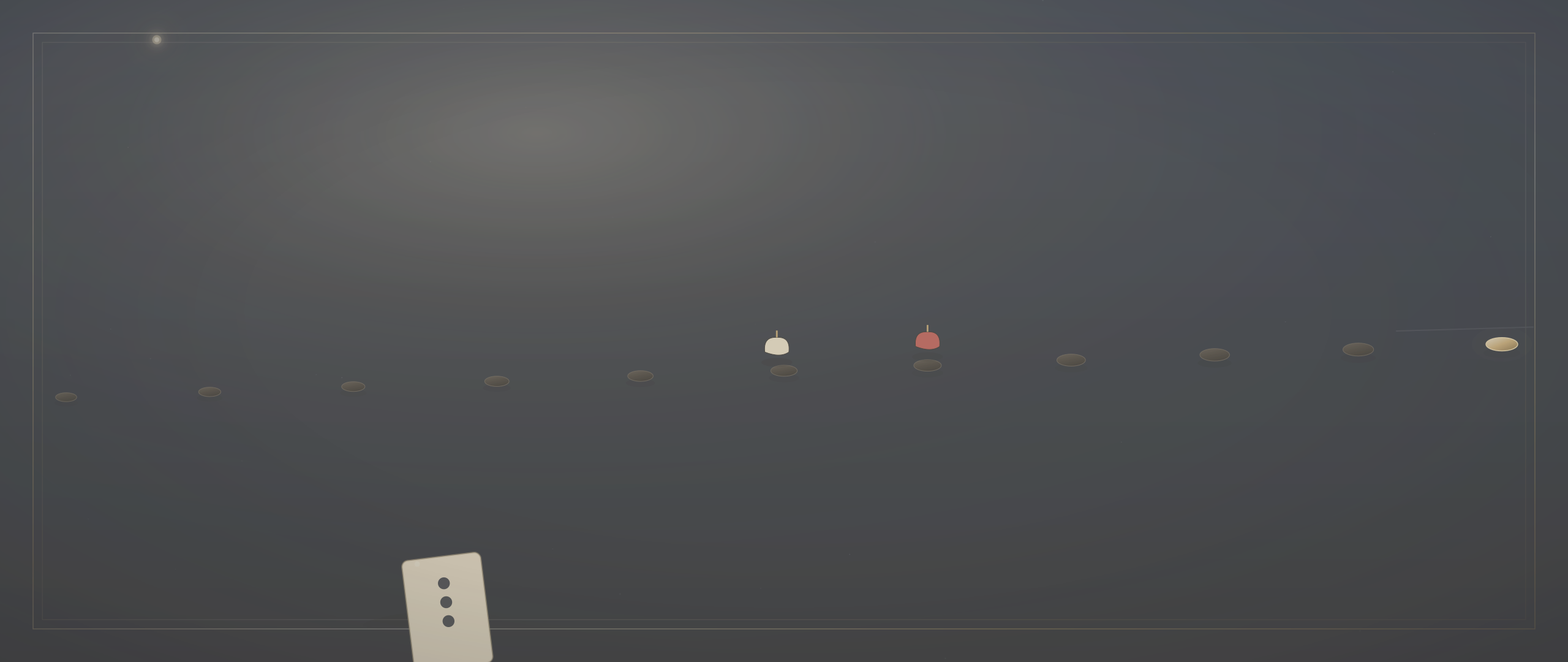
Every stride you will ever take is lying face up between you.
Ready to play now.
A demonstration of Last Stone, played by the computer against itself.
Last Stone — playing itself
Ways to play
Alone, against the computer
Your own pace, no arranging anything. Take a move back whenever you like.
Play alone3 opponents, weakest first
- First CardTakes the first card it touches. No reading at all, and it loses 199 of 200 roads to The Road Reader.
- The ThiefReads the other courier’s stone and never its own: it takes the last stone when it can reach it, and the swap when there is one, because a landing is the only stride that pulls somebody backwards. 150–50 over First Card — and playing itself it is slow, 20.5 strides a road with 49 of 200 roads never reaching the last stone at all.
- The Road ReaderIts lead, and then how well EACH courier is placed against every card still out — because on this road a lead is not a good position, a lead you can finish from is. It denies without being told to: a card that would leave the other courier striking distance from the last stone is a card it takes itself. 197–3 over The Thief, and against itself it takes the last stone in 195 roads of 200.
Together, in the same room
2 players. One device goes round the table, or everybody plays off the same screen.
Play in the same roomOnline, at a table
A room code, joinable from anywhere. Pause tonight and pick it up next week from your device.
Play online
About
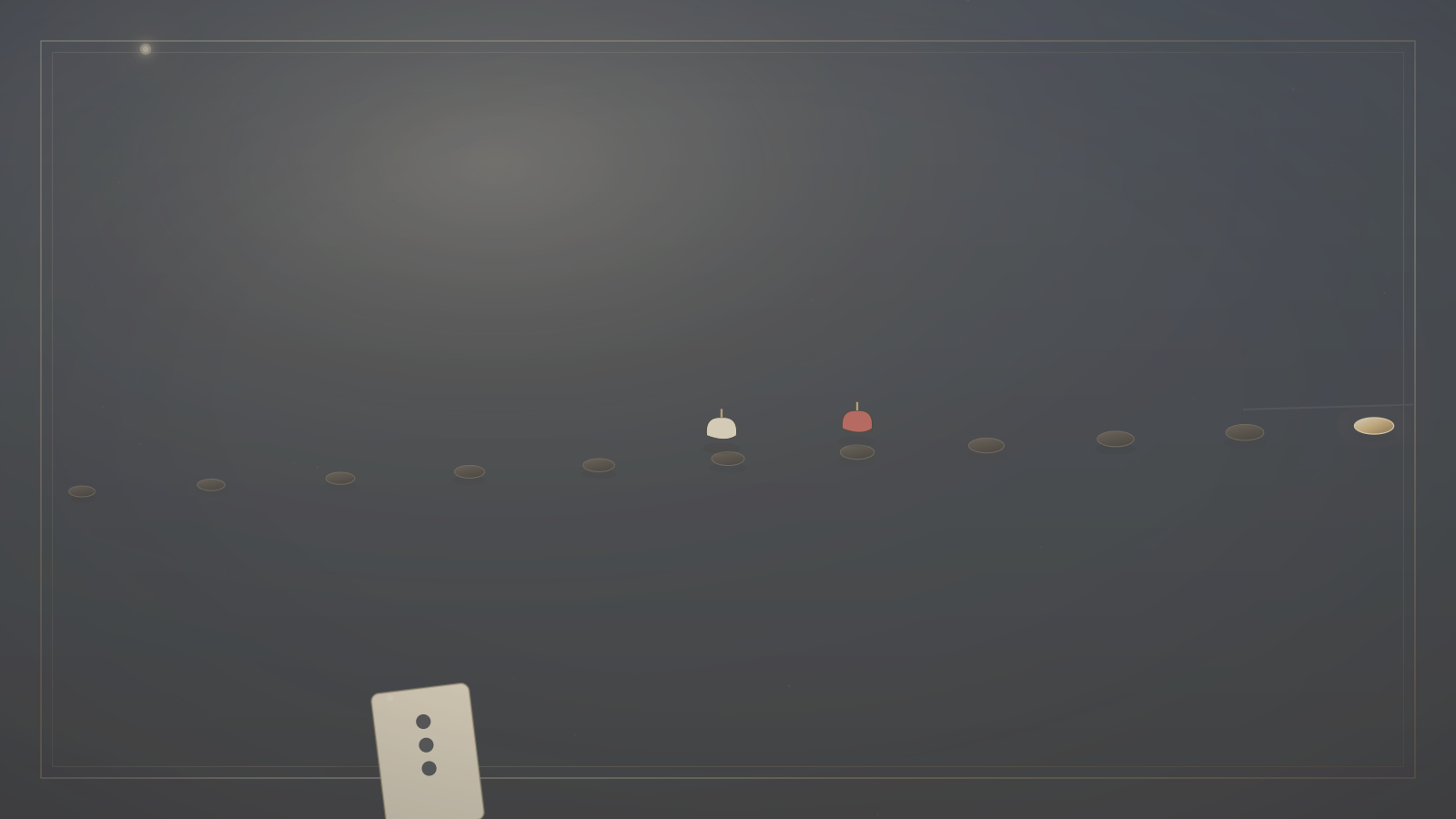
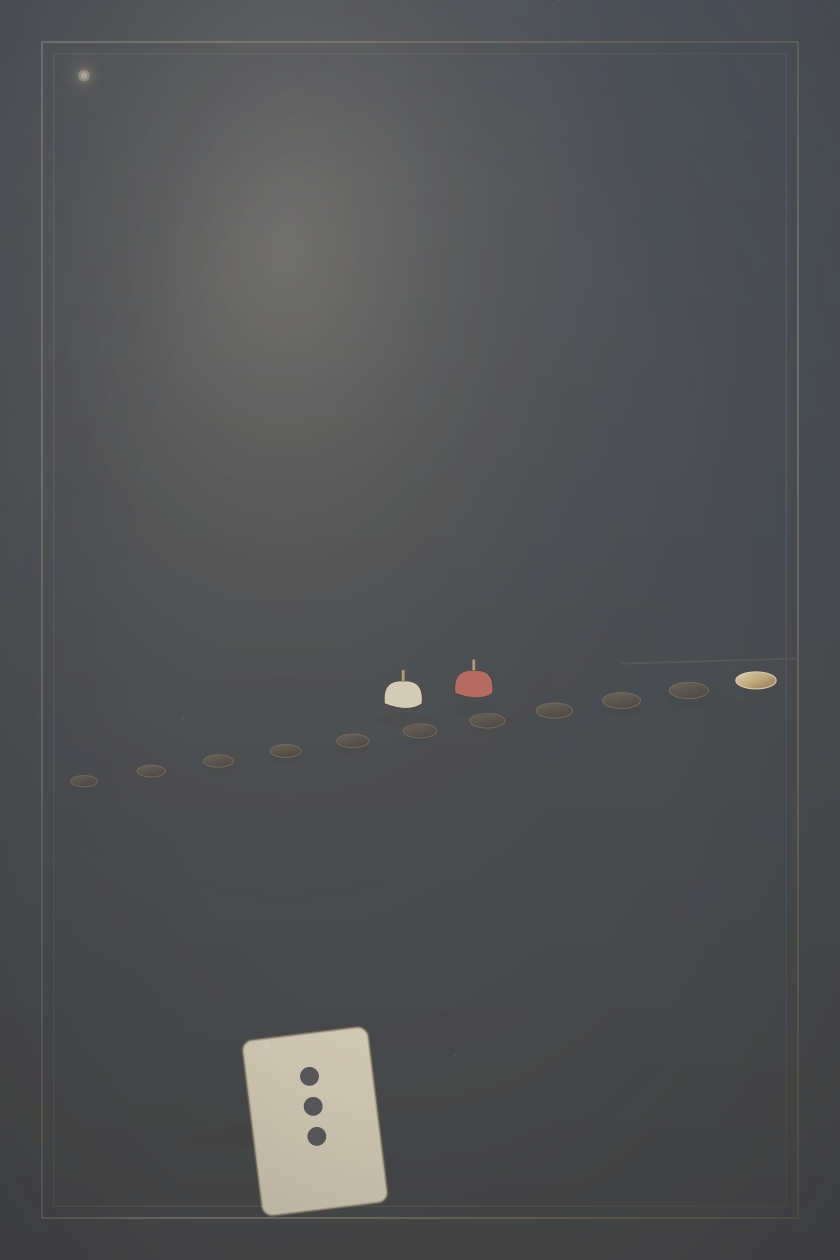
Two couriers, one road of twenty-four stones, and a shared row of stride cards drawn from a finite bag. On your turn you take any card and walk it. The last stone must be taken exactly — stride past it and you bounce back by the excess. Land on the other courier and you take their stone while they take yours. When the bag is spent, whoever stands further along wins the road; there is no dead heat, because two couriers can never share a stone.
How it feels
- Arithmetic you can feel
- A lead you have to defend
- One card you take just to spite them
What the design is for
The row is the hand you both hold
Six cards face up, refilled from a finite bag as they thin. Every card you take is a card they cannot — denial is half the game, and the bag is a countdown anybody can do.
The bounce
The last stone must be taken exactly: stride past it and you come back by the excess. The twenty-fourth stone is exactly as far from the twenty-first as it looks, and the row knows it.
The swap
Land on the other courier and you take their stone while they take yours. A lead you cannot defend is a lead you handed them — and couriers can never share a stone, so a spent road always has a winner.
Nobody knows the next card, including the computer
What is IN the bag is public — subtract the row and the cards already taken and you have it — but the card that comes out of it is drawn at the moment the row refills. That is a rule about fairness as much as suspense: the opponent searches by playing the rules forward, so a bag with an order on it was a bag the computer could read. Now there is no order to read.
The last stone, taken exactly, in about seventeen strides
The probe reports 195 of 200 roads taken on the last stone rather than judged when the bag ran out, at 17.3 strides a road. The bag is finite so that the road ends without anybody deciding to end it — and it almost always ends on the stone the game is named for.
Taught by walking it
Five steps: a first stride, the bounce you walk back from, the swap that takes a lead without walking it, the card you take away from them — and then the whole road to yourself. Each step accepts the stride it teaches by its VALUE: two threes in the row are one idea, and a learner who takes the second one has understood.
- Best at
- 2
- Kind
- Strategy
- Table
- Competitive
- Studio
- Board.game Originals
The opponents
First Card
Takes the first card it touches. No reading at all, and it loses 199 of 200 roads to The Road Reader.
The Thief
Reads the other courier’s stone and never its own: it takes the last stone when it can reach it, and the swap when there is one, because a landing is the only stride that pulls somebody backwards. 150–50 over First Card — and playing itself it is slow, 20.5 strides a road with 49 of 200 roads never reaching the last stone at all.
The Road Reader
Its lead, and then how well EACH courier is placed against every card still out — because on this road a lead is not a good position, a lead you can finish from is. It denies without being told to: a card that would leave the other courier striking distance from the last stone is a card it takes itself. 197–3 over The Thief, and against itself it takes the last stone in 195 roads of 200.
Achievements
0 of 4 earned
The Road Is Yours
Win a match of Last Stone.
Exactly Twenty-Four
Win by taking the last stone exactly.
Never Moved Backwards
Win without ever being swapped off a stone.
From Behind
Win having been behind at the halfway mark.
Key art
Key art — Board.game art system
More like this
 Board.game Original
Original · two to four players
Tidemark
The sea takes what stands alone.
2–4 players8–15 minCompetitive
Playable Board.game Original
Original · an asymmetric duel
Fell Run
Three steps to the water, and something standing in it.
2 players5–10 minCompetitive
Playable Board.game Original
Original · a deduction duel for two
Tumbler
Every pin is public. Only the code is not.
2 players5–15 minCompetitive
Playable Board.game Original
Original · area control for two to four
Wassail
The picking happens the moment a tree is full — not a moment before.
2–4 players5–10 minCompetitive
Playable Board.game Original
Original · a roll-and-write duel for two
Loom
Two threads a round: draft one, and the other is woven by your rival.
2 players10–15 minCompetitive
Playable Board.game Original
Original · an area-majority duel for two
Bailiwick
Seven wards, twelve cubes each, majorities score — and a ward that comes out level answers to whoever walked in first.
2 players10–15 minCompetitive
Playable Board.game Original
Original · a beam-routing duel for two
Lens
One lamp, one bench of mirrors, and a beam that serves whoever bent it last.
2 players4–10 minCompetitive
Playable Board.game Original
Original · a stacking duel for two
Cairn
The stack belongs to its top stone, whatever it is standing on.
2 players1–11 minCompetitive
Playable