Mainspring
Original · a programming duel for two
Three gears wound in secret, a march played in the open — and the rival does not stop you, it MOVES you.
Ready to play now.
A demonstration of Mainspring, played by the computer against itself.
Mainspring — playing itself
Ways to play
Alone, against the computer
Your own pace, no arranging anything. Take a move back whenever you like.
Play alone2 opponents, weakest first
- The TinkerAny three gears, by the seed. It wanders, burns gears on walls and the vise, and loses 150 of 150 to a courier that simply walks — 2.6 winds a match, because the Walker is home before the third.
- The WalkerGears that fit the floor: it turns before the vise, crosses rows when the lane is blocked, and never burns a gear it can spare. 150–0 over the Tinker. Against another Walker it is a standstill in the middle lane — six shoves in the last march, the springs worn out in every match of 150 — and the delivery is judged on nearness. Nothing measured above it: see the ai.ts note for the four searches that tried.
Together, in the same room
2 players. One device goes round the table, or everybody plays off the same screen.
Play in the same roomOnline, at a table
A room code, joinable from anywhere. Pause tonight and pick it up next week from your device.
Play online
About
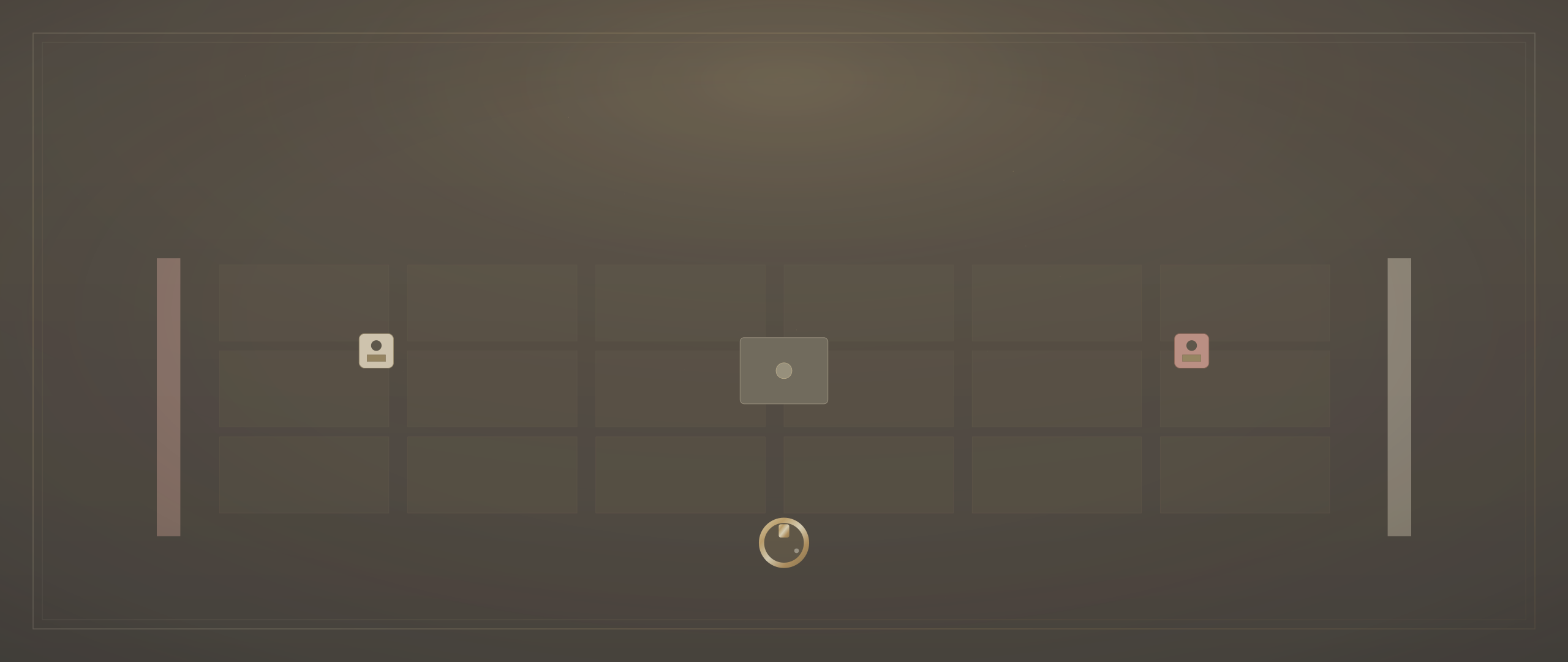
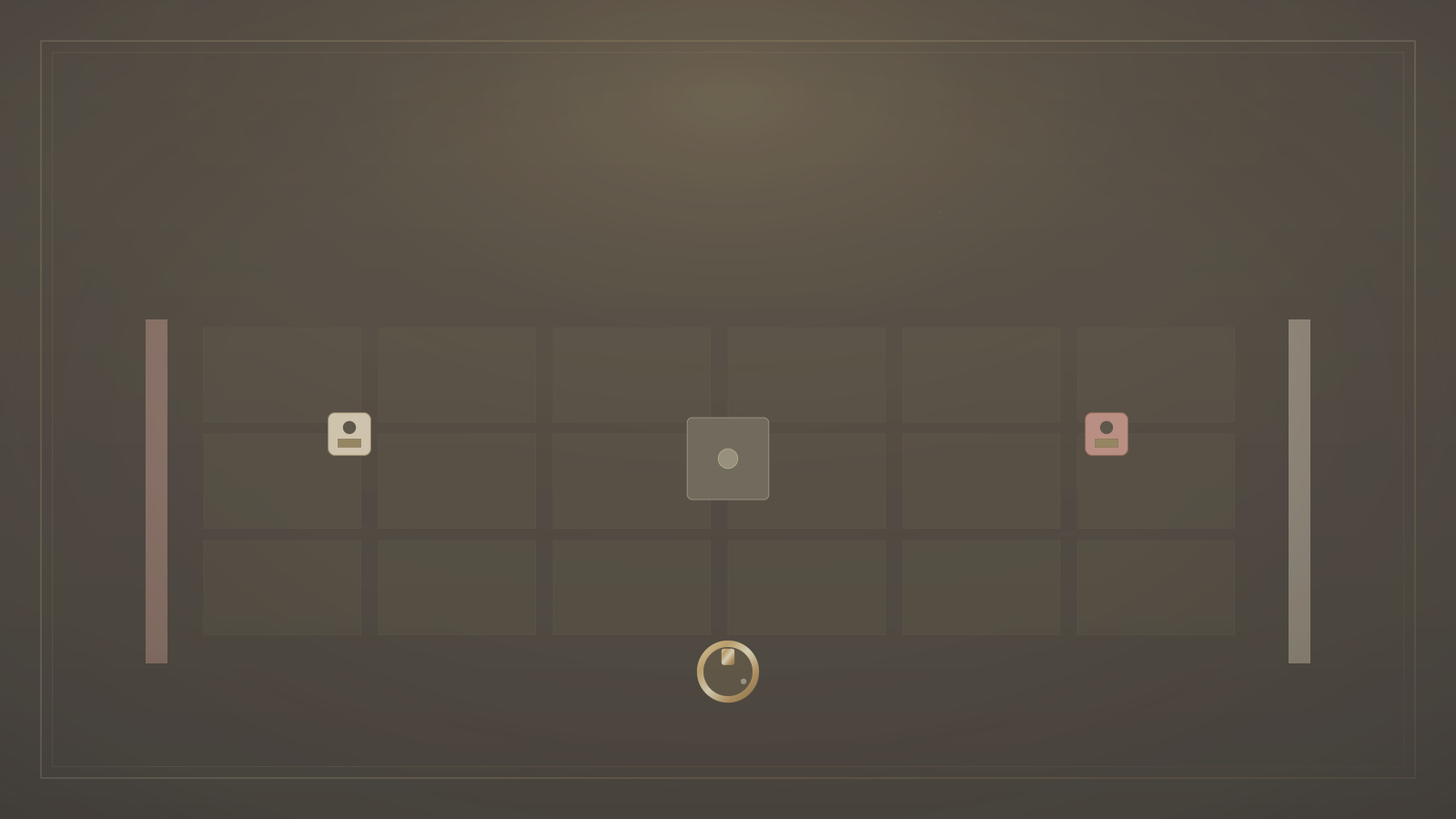
A programming duel for two — the shelf’s only one. A three-by-six workshop floor with a vise bolted shut at c2; two clockwork couriers, Ivory bound right and Coral bound left. Each round both houses WIND three gears in secret (up, down, left or right each); the springs then run down in public, houses alternating one step at a time. Which spring runs down first is drawn when they are let go, and the board says whose it is before the winding. A step into the wall or the vise burns the gear; a step into the rival PUSHES them one square your way and you follow — and a shove onto their own bench delivers for THEM. Reaching your far column wins mid-march; nobody can deliver together, so there is no draw, ever, said plainly.
How it feels
- Reading the march the rival could not hide
- A shove that lands them off their lane
- Three gears that walk it home in one wind
What the design is for
Wound in secret, run in the open
Three gears each, committed blind, then six public steps — the whole game is writing a march you can defend against every march the rival might have wound. The engine hides the rival’s gears until the springs run; a test proves it.
The shove
The rival’s square is not a wall: stepping in pushes them one square your way and you follow. Shoves clear lanes, waste rivals’ gears, and — priced honestly — can push a courier onto its own bench to hand over the game.
The vise at the centre
One cell of the floor is a fixed vise: no march crosses the middle lane, no courier stands there, and no mirror survives it. The detour you plan around the vise is most of the craft.
No draw, ever
One courier steps at a time, so only one can deliver in a round — and if the springs wear out after twelve winds, the nearer courier is judged the delivery, an exact stand-off judged against the march’s lead. Somebody always wins, said plainly. Between two couriers that walk straight at each other it is the wear-out that decides: the probe’s two walkers jammed in the middle lane and ran the springs out in 150 matches of 150, six shoves in the last march of every one.
The lead is drawn, not taken
The lead of the march used to alternate by round, and that made the game solved: a race of equal length is won by whoever steps first in the round it ends, so the winner was a function of the round number. Every strong opponent against every other strong opponent measured exactly 75–75 over a hundred and fifty matches, each winning precisely the matches it was seated for. The lead now comes off the match’s own seed, public before the winding, and replays exactly.
Taught gear by gear
Six steps: the winding, the march home, the burning wall and the vise, the shove, the gift shove to avoid — and then a whole floor to yourself. Every square is named the way the board names it now; four of the steps used to call the top row 1 where the board prints 3, and two asked the player to wind up out of the top row into the wall the step before had taught them never to touch.
- Best at
- 2
- Kind
- Strategy
- Table
- Competitive
- Studio
- Board.game Originals
The opponents
The Tinker
Any three gears, by the seed. It wanders, burns gears on walls and the vise, and loses 150 of 150 to a courier that simply walks — 2.6 winds a match, because the Walker is home before the third.
The Walker
Gears that fit the floor: it turns before the vise, crosses rows when the lane is blocked, and never burns a gear it can spare. 150–0 over the Tinker. Against another Walker it is a standstill in the middle lane — six shoves in the last march, the springs worn out in every match of 150 — and the delivery is judged on nearness. Nothing measured above it: see the ai.ts note for the four searches that tried.
Achievements
0 of 5 earned
Walked It Home
Win a match of Mainspring.
Two Winds
Deliver in two winds — the fewest this floor allows.
Budged
Win after shoving the rival during a march.
The Long Lane
Deliver from the top or bottom row.
Never Moved
Win while the rival never left its starting column.
Key art
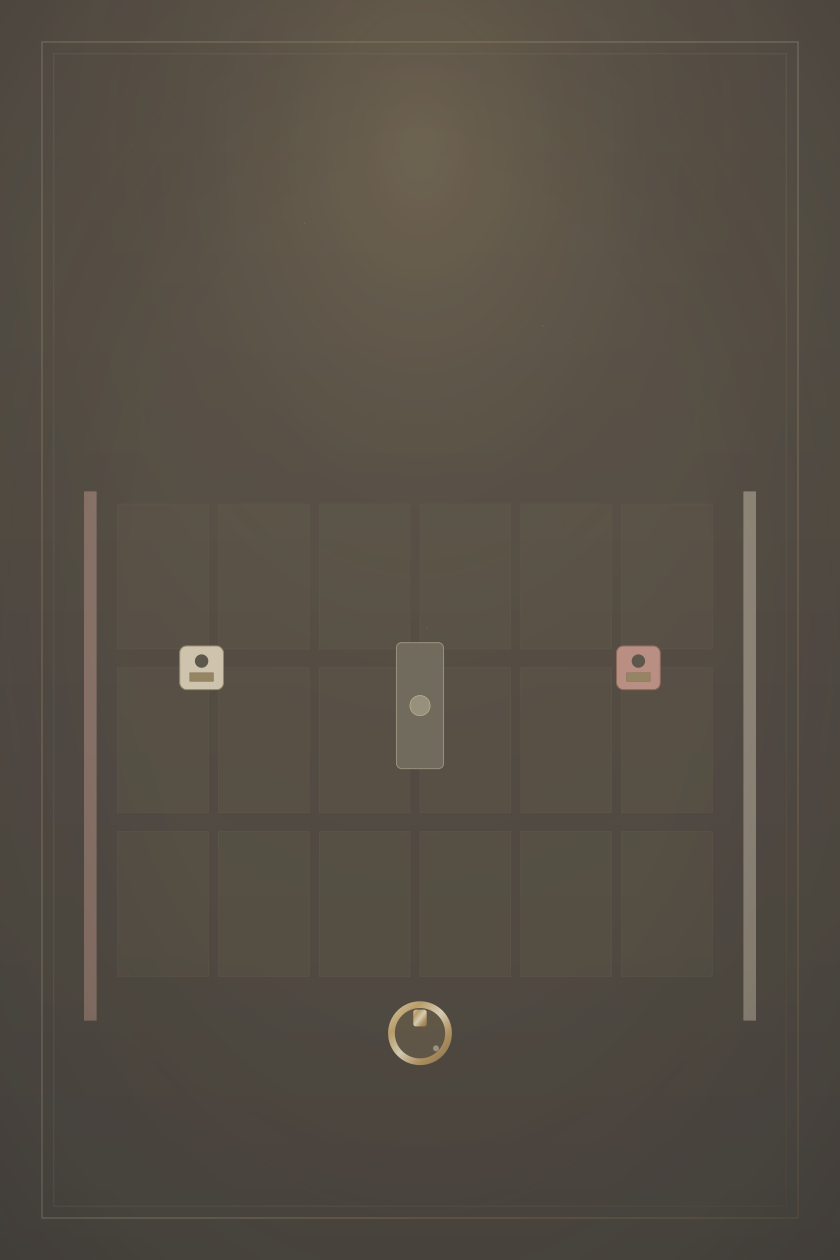
Key art — Board.game art system
More like this
 Board.game Original
Original · a walling duel for two
Drystone
The fourth wall claims the paddock — and pays you one more lay, which you must spend.
2 players5–10 minCompetitive
Playable Board.game Original
Original · a sealed-bid duel for two
Vellum
Both houses act at once, in the dark — and the letters are identical, down to the last 8.
2 players5–10 minCompetitive
Playable Board.game Original
Original · an enclosure duel for two
Quickset
A meadow of sixteen folds — the fourth hedge closes one, and closing never passes the hand.
2 players5–12 minCompetitive
Playable Board.game Original
Original · a pushing duel for two
Cask
Four casks, four chalk rings, and a push needs the square behind you.
2 players1–9 minCompetitive
Playable Board.game Original
Original · a commodity exchange for two
Bellwether
Every buy lifts the chalk for every lot on it — and two coins buys anybody a crash.
2 players5–10 minCompetitive
Playable Board.game Original
Original · a loading duel for two
Quay
One line of crates, both ends open to both ships — and a cargo pays its worth times the margin.
2 players5–10 minCompetitive
Playable Board.game Original
Original · a balance duel for two
Steelyard
Your pan is your ledger — every weight you cannot put on the rival’s, you carry.
2 players5–10 minCompetitive
Playable Board.game Original
Original · a placement duel for two, played for the last light
Beacons
No beacon may stand beside a rival’s — and the keeper who cannot light, loses.
2 players5–10 minCompetitive
Playable