Marquetry
Original · a pentomino duel for two
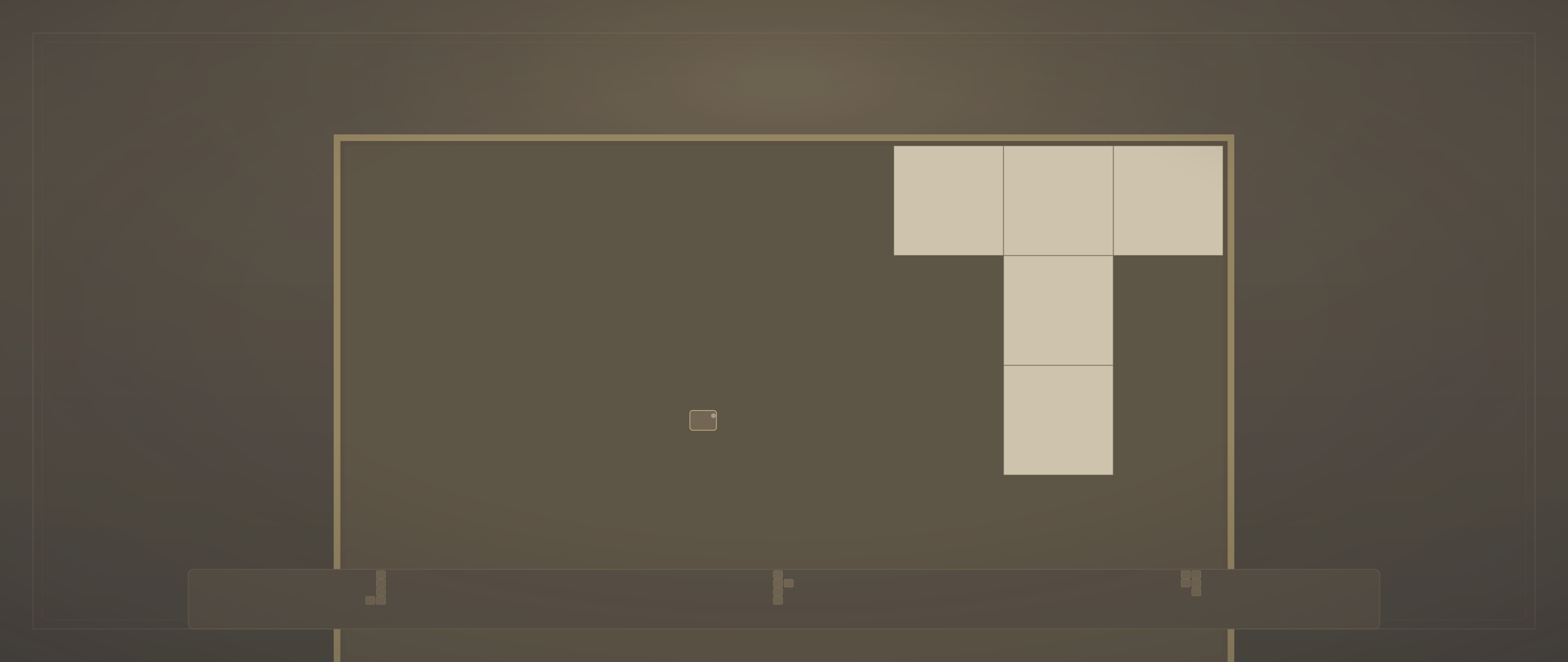
Twelve veneers, five cells each, sixty cells for sixty-four — and every piece lies as drawn, never turned.
Ready to play now.
A demonstration of Marquetry, played by the computer against itself.
Marquetry — playing itself
Ways to play
Alone, against the computer
Your own pace, no arranging anything. Take a move back whenever you like.
Play alone4 opponents, weakest first
- The ApprenticeAny legal glue, by the seed. It strands veneers nobody can use — 23.1 bare squares a panel — and loses 136–40 of the 176 decided to the Cabinet-maker.
- The FitterReads its own inlay. Five cells are five cells, so the only thing left to prefer is grain that joins grain — and the stretch is what breaks a tie of cells. 101–61 over the Apprentice, and the best joined inlay on the ladder at 20.7.
- The MasterReads the rival’s panel too: what a glue caps of their growing stretch, and how many glues they have left once it is down. The bare ground is shaped by choosing the placement that leaves them fewest, and a rival with none at all is ground denied whole. 83–49 over the Fitter of the 132 decided.
- The Cabinet-makerThe Master, and the endgame SOLVED: with six pieces or fewer left, every line of glues is played out to the judgement with alpha-beta and the true margin comes back. 90–58 over the Master. Solving within four pieces measured 73–62, which is nothing — by then the strandings have already happened, and the last four veneers mostly fit nowhere.
Together, in the same room
2 players. One device goes round the table, or everybody plays off the same screen.
Play in the same roomOnline, at a table
A room code, joinable from anywhere. Pause tonight and pick it up next week from your device.
Play online
About
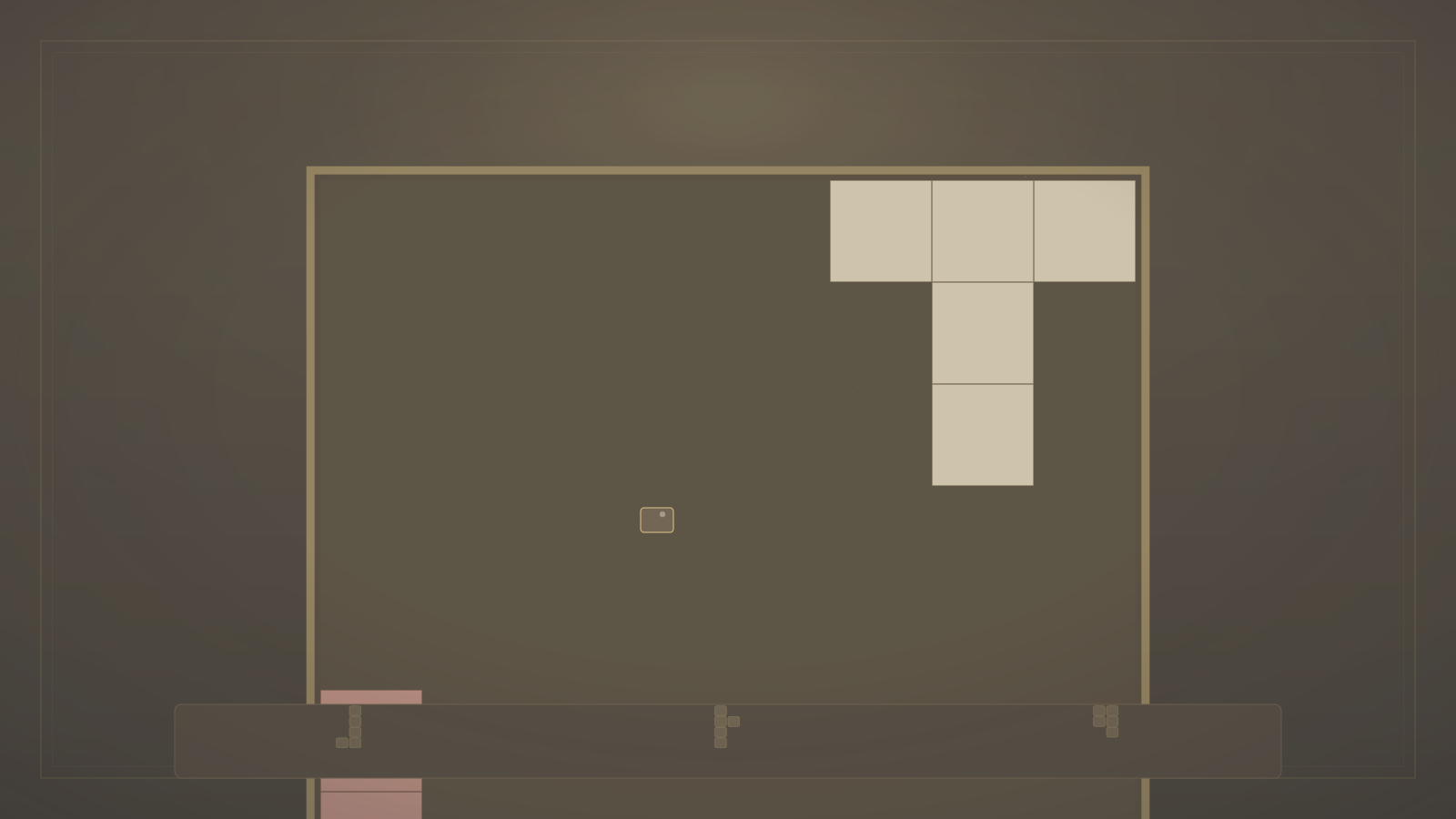
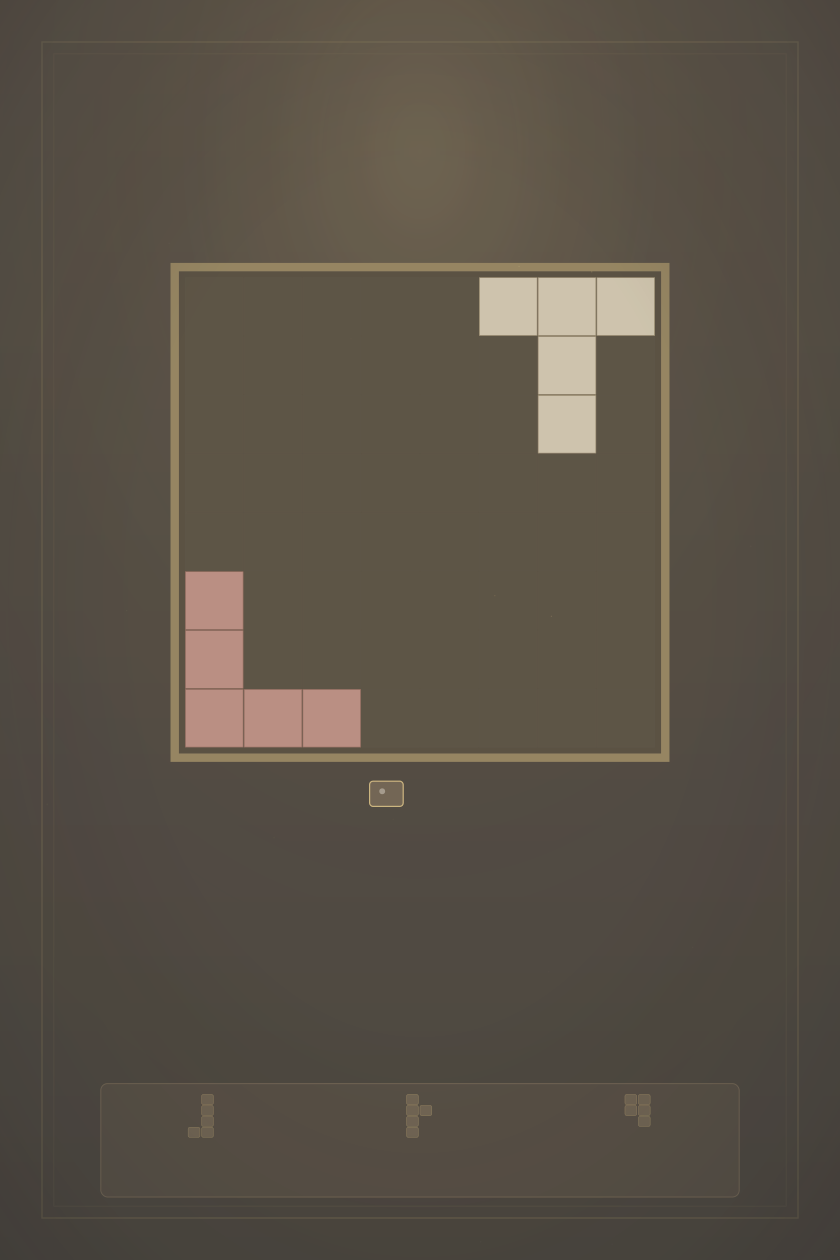
An inlay duel for two. A blank eight-by-eight panel; the twelve classic pentominoes — F, I, L, N, P, T, U, V, W, X, Y, Z — shuffled by lot into an offer of three. On your turn glue ONE offered piece to empty cells AS IT LIES (no rotations, no reflections — the drawer shows one way only, said plainly); the cells become yours. When the offer and bag run dry, or both houses pass with nothing fitting, the panel is judged: most cells wins, a cell tie goes to the larger connected stretch, and an exact tie of both is an even panel, said plainly — which a third of them are.
How it feels
- The one pocket a rival’s last piece cannot enter
- A veneer that caps a growing stretch
- Four bare squares, all yours in effect
What the design is for
As drawn, never turned
The shelf’s first polyomino game, and its sparest law: each of the twelve pieces shows one way only. No rotations, no reflections — the shape you see is the shape you glue, and half the reading is remembering what that costs.
The bare ground, which is most of the panel
Every piece is five cells and there are twelve of them, so four squares must stay bare at the very least — but pieces STRAND. A veneer that lies one way only stops fitting anywhere long before the bag is empty, and the probe measures twenty-two bare squares on a judged panel, not four. Shaping that ground — leaving it where the rival’s remaining shapes fit worst — is the whole endgame, and the card used to promise four.
The stretch breaks ties
Five-cell pieces make cell ties likely: the judgement then goes to the larger connected stretch, and if that is level too the panel reads even. A third of two hundred seeded benches do. Gluing beside your own veneer does double duty — five cells now, a tiebreak later.
An offer of three, by lot
The twelve-piece shuffle is seeded at the deal; the drawer always shows three, refilling as you take. No two benches offer the same order, and the piece you pass is the piece the rival gets.
Taught veneer by veneer
Six steps: the glue, the as-drawn law, the claim, the bare pocket, the stretch — and then a whole panel to yourself.
- Best at
- 2
- Kind
- Strategy
- Table
- Competitive
- Studio
- Board.game Originals
The opponents
The Apprentice
Any legal glue, by the seed. It strands veneers nobody can use — 23.1 bare squares a panel — and loses 136–40 of the 176 decided to the Cabinet-maker.
The Fitter
Reads its own inlay. Five cells are five cells, so the only thing left to prefer is grain that joins grain — and the stretch is what breaks a tie of cells. 101–61 over the Apprentice, and the best joined inlay on the ladder at 20.7.
The Master
Reads the rival’s panel too: what a glue caps of their growing stretch, and how many glues they have left once it is down. The bare ground is shaped by choosing the placement that leaves them fewest, and a rival with none at all is ground denied whole. 83–49 over the Fitter of the 132 decided.
The Cabinet-maker
The Master, and the endgame SOLVED: with six pieces or fewer left, every line of glues is played out to the judgement with alpha-beta and the true margin comes back. 90–58 over the Master. Solving within four pieces measured 73–62, which is nothing — by then the strandings have already happened, and the last four veneers mostly fit nowhere.
Achievements
0 of 5 earned
The Panel
Win a bench of Marquetry.
By the Stretch
Win with cells level and connection decisive.
A Sweep of Grain
Win while the rival holds fifteen cells or fewer.
Unbroken
Win with a connected stretch of twenty cells or more.
The Bare Ground
Win with more of the panel bare than the rival claimed, by five squares or more.
Key art
Key art — Board.game art system
More like this
 Board.game Original
Original · a placement duel for two, played for the last light
Beacons
No beacon may stand beside a rival’s — and the keeper who cannot light, loses.
2 players5–10 minCompetitive
Playable Board.game Original
Original · a cascade duel for two
Sluice
Every gate holds what its neighbourhood allows — and the spill claims whole gates.
2 players5–10 minCompetitive
Playable Board.game Original
Original · a commodity exchange for two
Bellwether
Every buy lifts the chalk for every lot on it — and two coins buys anybody a crash.
2 players5–10 minCompetitive
Playable Board.game Original
Original · a walling duel for two
Drystone
The fourth wall claims the paddock — and pays you one more lay, which you must spend.
2 players5–10 minCompetitive
Playable Board.game Original
Original · a loading duel for two
Quay
One line of crates, both ends open to both ships — and a cargo pays its worth times the margin.
2 players5–10 minCompetitive
Playable Board.game Original
Original · a balance duel for two
Steelyard
Your pan is your ledger — every weight you cannot put on the rival’s, you carry.
2 players5–10 minCompetitive
Playable Board.game Original
Original · a cutting duel for two, misère
Peat
Cut any number from one bank — and whoever cuts the LAST sod of the bog loses.
2 players5–10 minCompetitive
Playable Board.game Original
Original · a push-your-luck dice duel for two
Knuckle
Five faces pay and one burns the whole pot — first tally to forty takes the fire.
2 players5–10 minCompetitive
Playable