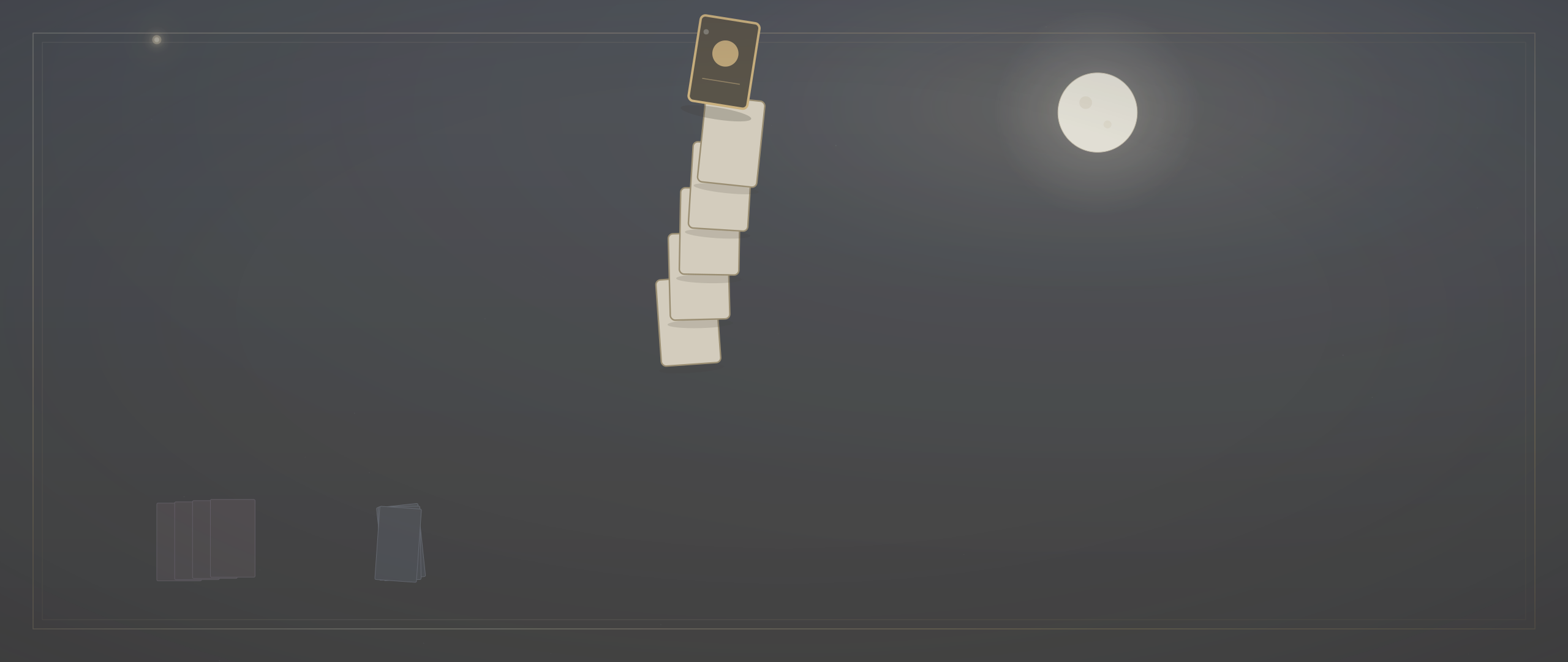
Moonrise
Original · a climbing duel for two
The lead is not dealt. It is bought, at the top of the ladder.
Ready to play now.
A demonstration of Moonrise, played by the computer against itself.
Moonrise — playing itself
Ways to play
Alone, against the computer
Your own pace, no arranging anything. Take a move back whenever you like.
Play alone3 opponents, weakest first
- The ParkerBurns its highest card to park the tower where a pass is the only answer, once the sky is nearly spent. Measured at the bottom, where intentions go: forty-eight of two hundred off Any Card, and twenty-one off the economy. A parked tower costs twice — the card is gone from its own race, and the tower is the one it has to climb next.
- Any CardClimbs with a legal card at random. A hundred and fifty-two to forty-eight over The Parker — randomness beats bad intentions. Against itself the deal is level: the first seat took ninety-eight of two hundred.
- Lowest LegalClimbs with the lowest card that legally climbs, and keeps the moon in hand as insurance against the draw. That is the whole of it — no parking, no timing, no reading — and it is the strongest climber in the night: a hundred and eighty-five to fifteen over Any Card, a hundred and seventy-nine to twenty-one over The Parker. Two rungs were built above it and neither could beat it; the ladder is three rungs and that is the ladder’s lesson.
Together, in the same room
2 players. One device goes round the table, or everybody plays off the same screen.
Play in the same roomOnline, at a table
A room code, joinable from anywhere. Pause tonight and pick it up next week from your device.
Play online
About
A deck of one to twenty-four, twice over. Ten cards dealt to each hidden hand, one card risen face up as the tower, the rest is the sky. Climb the tower with a higher card — any margin — or pass and draw. The twenty-four is the moon: playing it caps the tower, the pile goes onto the table’s ledger, and you lead from any card. When the sky is spent a pass is only a hold, and two holds clear the tower to the last climber. First empty hand takes the night.
How it feels
- A ladder you can feel
- Cards kept like money
- The moon bought early is a mountain left
What the design is for
The moon buys the lead
Playing the twenty-four caps the tower and you lead the next from any card. A pure climbing race is won by whoever leads; here the lead is not dealt — it is sold, at the top of the ladder, to the player willing to spend their ceiling on it.
One card rises with the night
The tower is not empty when the night starts: one card is turned up from the sky, and the first climb is bought at whatever height it set. It was measured into the game. Dealt from an empty tower the first seat led with its cheapest card and took 229 of 400 nights at the top rung — a real edge in the deal, not noise. With the risen card the same probe reads 205 of 400, and the ladder’s own line reads 107 of 200. The moon never rises: a tower at twenty-four is not an opening, it is a stall.
Passing costs and buys
A pass draws a card from the sky: tempo for choice, every time. When the sky is spent a pass is only a HOLD, and two holds clear the tower to the last climber’s lead — the endgame is a conversation with a clock on it.
Hidden hands, public ledger
Your ten cards are yours; the other hand shows its SIZE and never its faces. Every climb is public, so the count of what remains — both copies of every value — is a ledger anybody can keep, and the game keeps it for you: the piles the moon caps and the piles two holds clear go OUT, in the open, and the board shows how many.
The race is the win
No points, no rounds: the first empty hand takes the night, outright and now. Every card climbed with is a card not shed, and the moon bought early is a mountain left to climb with a ladder full of holes.
Taught on the ladder
Six steps: the risen card, the economy of the lowest legal card, the moon, the draw, the hold — and then the whole night to yourself. Two of them pose a night where the taught move is the only legal one, and say so in the text; the other three can be failed, and the step tells you what you did instead.
- Best at
- 2
- Kind
- Cards
- Table
- Competitive
- Studio
- Board.game Originals
The opponents
The Parker
Burns its highest card to park the tower where a pass is the only answer, once the sky is nearly spent. Measured at the bottom, where intentions go: forty-eight of two hundred off Any Card, and twenty-one off the economy. A parked tower costs twice — the card is gone from its own race, and the tower is the one it has to climb next.
Any Card
Climbs with a legal card at random. A hundred and fifty-two to forty-eight over The Parker — randomness beats bad intentions. Against itself the deal is level: the first seat took ninety-eight of two hundred.
Lowest Legal
Climbs with the lowest card that legally climbs, and keeps the moon in hand as insurance against the draw. That is the whole of it — no parking, no timing, no reading — and it is the strongest climber in the night: a hundred and eighty-five to fifteen over Any Card, a hundred and seventy-nine to twenty-one over The Parker. Two rungs were built above it and neither could beat it; the ladder is three rungs and that is the ladder’s lesson.
Achievements
0 of 5 earned
The Moon Is Theirs
Win a night of Moonrise.
Both Moons
Cap two towers with the moon in one night — both copies of the twenty-four. Three was impossible: the deck holds two.
Never Drew
Win without passing while the sky held cards.
Saved It For Last
Win by shedding the moon as your final card.
Before the Sky Ran Dry
Win with five or more cards still in the sky.
Key art
Key art — Board.game art system
More like this
 Board.game Original
Original · a climbing card duel for two
Rung
Match the size, raise the value, or pass — and the first empty hand wins the ladder.
2 players3–6 minCompetitive
Playable Board.game Original
Original · trick-taking with a sealed bid, for three
Jackdaw
Bid what you will take. Take exactly what you bid.
3 players10–20 minCompetitive
Playable Board.game Original
Original · a trick-taking duel for two
Vespers
The rank one, played off-suit, rings the vesper — and steals the trick whole.
2 players10–15 minCompetitive
Playable Board.game Original
Original · an asymmetric duel
Fell Run
Three steps to the water, and something standing in it.
2 players5–10 minCompetitive
Playable Board.game Original
Original · a deduction duel for two
Tumbler
Every pin is public. Only the code is not.
2 players5–15 minCompetitive
Playable Board.game Original
An occult trick-taking game
The Fourteenth Card
Thirteen arcana are documented. Players keep finding a fourteenth.
2–4 players20–30 minCompetitive
Playable
A gentle deckbuilder
Seedlight
Everything you plant lights up eventually. Some of it takes years.
1–4 players40–60 minCompetitive
Playable Board.game Original
Original · an area-majority duel for two
Bailiwick
Seven wards, twelve cubes each, majorities score — and a ward that comes out level answers to whoever walked in first.
2 players10–15 minCompetitive
Playable