Quay
Original · a loading duel for two
One line of crates, both ends open to both ships — and a cargo pays its worth times the margin.
Ready to play now.
A demonstration of Quay, played by the computer against itself.
Quay — playing itself
Ways to play
Alone, against the computer
Your own pace, no arranging anything. Take a move back whenever you like.
Play alone4 opponents, weakest first
- The DrifterEither end, by the seed. The Grabber takes it 185–15 over two hundred quays — random loading on a shared line feeds the rival’s margins, crate by crate.
- The GrabberLoads the dearer end, counting its own gain alone and nothing else. Greed is nearly a strategy here — it racks 15.0 points a quay and 78 sweeps in two hundred against the solved stevedore, and still loses 71–129 to one honest look ahead.
- The ForemanTwo loads of the line looked ahead, every branch priced by the tally it leaves standing. 129–71 over the Grabber, and the best raw tally on the stone — 15.6 points a quay, 83 sweeps in two hundred. It takes more crates than the rung above it and wins fewer quays, which is the whole lesson of the margin.
- The StevedoreThe whole line solved, every loading to the last crate, exact, at six milliseconds a quay. 121–79 over the Foreman and 183–17 over the Drifter. Against itself it splits the two hundred quays 100–100 with none shared — the extra crate the first loader holds buys nothing at all — and it leaves slate even on 79 quays and brick on 87, while rope, copper and oyster are left even on none: the cheap cargoes are the ones worth making worthless.
Together, in the same room
2 players. One device goes round the table, or everybody plays off the same screen.
Play in the same roomOnline, at a table
A room code, joinable from anywhere. Pause tonight and pick it up next week from your device.
Play online
About
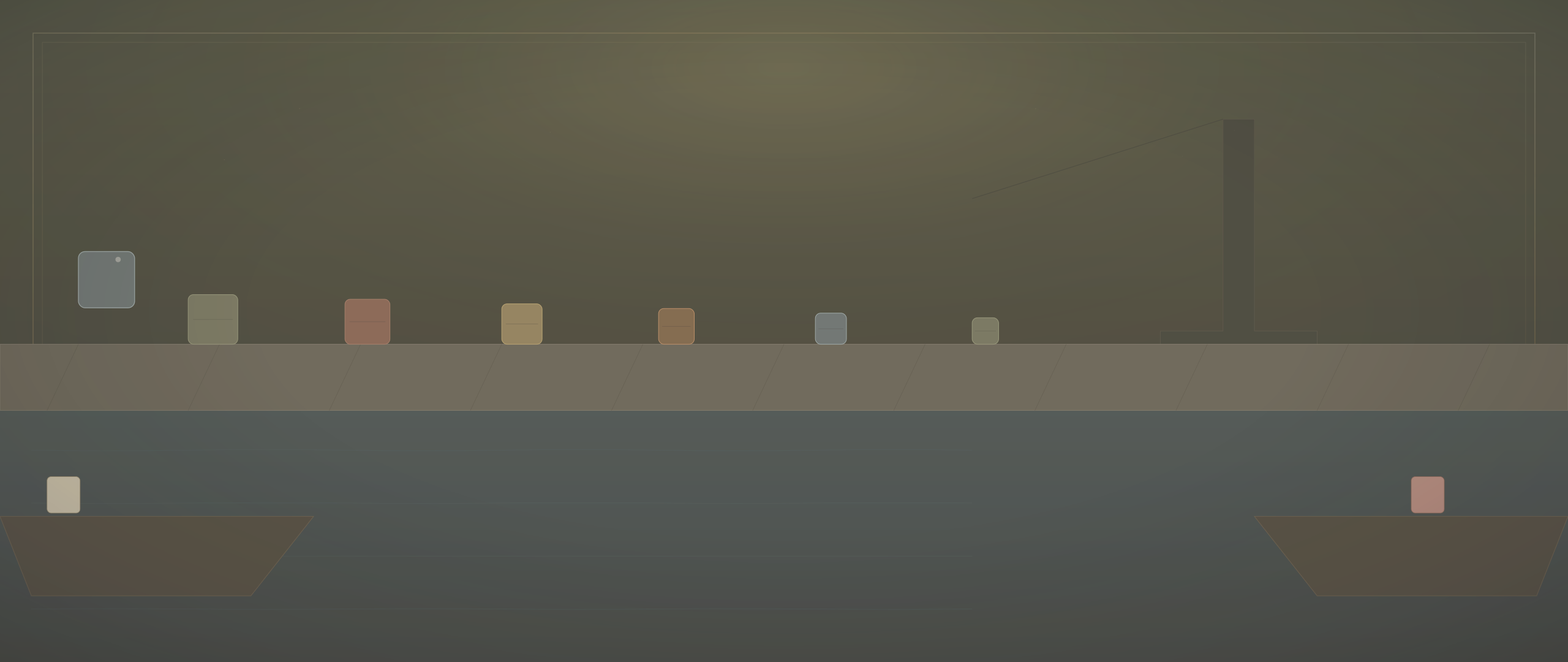
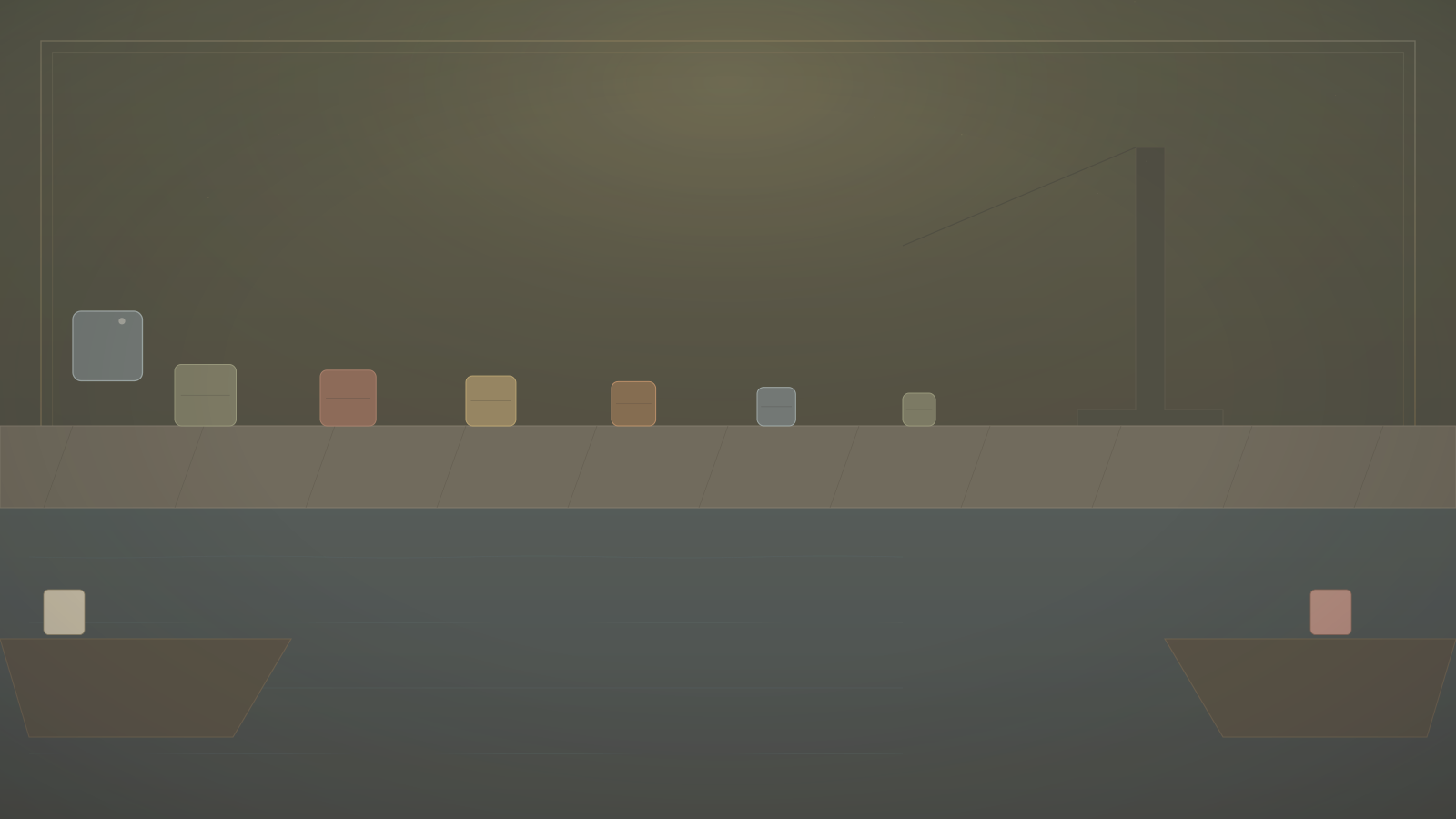
A loading duel for two. Seventeen crates stand in one line along a stone quay — four each of slate (2) and brick (3), three each of rope (4), copper (5) and oyster (6) — dealt from a single seeded shuffle. On your turn, load ONE crate onto your ship from EITHER end of the line; nothing else in the game moves. When the line empties, each cargo pays whoever holds more of it, its worth times the margin — and cargoes held equally pay nobody, which is why forcing an even slate is a weapon. Ivory loads nine, Coral eight; equal tallies stand even, said plainly.
How it feels
- A copper crate stranded one short of the sweep
- Forcing the even slate nobody wanted
- The last two crates, read to the crate
What the design is for
Only the ends are loadable
The whole game is one line both of you can read whole, and every load you make opens the next crate to the rival. Take from the left, take from the right — there is nothing else, and that is the entire depth of it.
A cargo pays its worth times the margin
Two oyster crates to one pay 6; a bare three-to-nothing sweep pays 18. The margin, not the count, is the money — the third crate of a sweep is the dearest single load in the game, and stranding a rival one crate short of theirs is the second dearest.
Even cargoes pay nobody
Cargoes held equally at the reckoning pay nobody, said plainly — and with slate and brick four crates deep, an even split is a live thing to force. Sometimes the right load is the one that makes a cargo worthless to the ship that wanted it.
Nothing hidden, everything counted
Every crate is public from the deal; the view is the state. It is a game of tempo and arithmetic — nine loads to eight, the first mover holding one crate more, the last crates deciding the margins. And the extra crate is not an edge: the solved stevedore against itself, over two hundred quays, split them 100 to the first loader and 100 to the second.
Taught crate by crate
Six steps: the load, the margin, the even cargo, the starvation load, the last two crates — and then the whole quay to yourself. Every number in the lesson is recomputed from the rules in the tests, because three of them used to be doubled: a cargo worth six at a margin of one pays 6, and the step that said 12 taught arithmetic this game does not do.
- Best at
- 2
- Kind
- Strategy
- Table
- Competitive
- Studio
- Board.game Originals
The opponents
The Drifter
Either end, by the seed. The Grabber takes it 185–15 over two hundred quays — random loading on a shared line feeds the rival’s margins, crate by crate.
The Grabber
Loads the dearer end, counting its own gain alone and nothing else. Greed is nearly a strategy here — it racks 15.0 points a quay and 78 sweeps in two hundred against the solved stevedore, and still loses 71–129 to one honest look ahead.
The Foreman
Two loads of the line looked ahead, every branch priced by the tally it leaves standing. 129–71 over the Grabber, and the best raw tally on the stone — 15.6 points a quay, 83 sweeps in two hundred. It takes more crates than the rung above it and wins fewer quays, which is the whole lesson of the margin.
The Stevedore
The whole line solved, every loading to the last crate, exact, at six milliseconds a quay. 121–79 over the Foreman and 183–17 over the Drifter. Against itself it splits the two hundred quays 100–100 with none shared — the extra crate the first loader holds buys nothing at all — and it leaves slate even on 79 quays and brick on 87, while rope, copper and oyster are left even on none: the cheap cargoes are the ones worth making worthless.
Achievements
0 of 5 earned
The Richer Tally
Win a quay.
Taken Whole
Win with a single cargo paying twelve or more.
The Margins Carried It
Win with two cargoes or more split even.
The Last Crate Decided
Win by two points or fewer.
A Shut Quay
Win while the rival’s tally holds nothing.
Key art
Key art — Board.game art system
More like this
 Board.game Original
Original · a commodity exchange for two
Bellwether
Every buy lifts the chalk for every lot on it — and two coins buys anybody a crash.
2 players5–10 minCompetitive
Playable Board.game Original
Original · a walling duel for two
Drystone
The fourth wall claims the paddock — and pays you one more lay, which you must spend.
2 players5–10 minCompetitive
Playable Board.game Original
Original · a balance duel for two
Steelyard
Your pan is your ledger — every weight you cannot put on the rival’s, you carry.
2 players5–10 minCompetitive
Playable Board.game Original
Original · a placement duel for two, played for the last light
Beacons
No beacon may stand beside a rival’s — and the keeper who cannot light, loses.
2 players5–10 minCompetitive
Playable Board.game Original
Original · a cutting duel for two, misère
Peat
Cut any number from one bank — and whoever cuts the LAST sod of the bog loses.
2 players5–10 minCompetitive
Playable Board.game Original
Original · a pentomino duel for two
Marquetry
Twelve veneers, five cells each, sixty cells for sixty-four — and every piece lies as drawn, never turned.
2 players5–10 minCompetitive
Playable Board.game Original
Original · a push-your-luck dice duel for two
Knuckle
Five faces pay and one burns the whole pot — first tally to forty takes the fire.
2 players5–10 minCompetitive
Playable Board.game Original
Original · a tug-of-war for two
Hawser
Lead a card, and the rival answers at sight — the difference moves the knot, and no single pull can reach the mark.
2 players5–10 minCompetitive
Playable