Skiff
Original · a pick-up-and-deliver duel for two
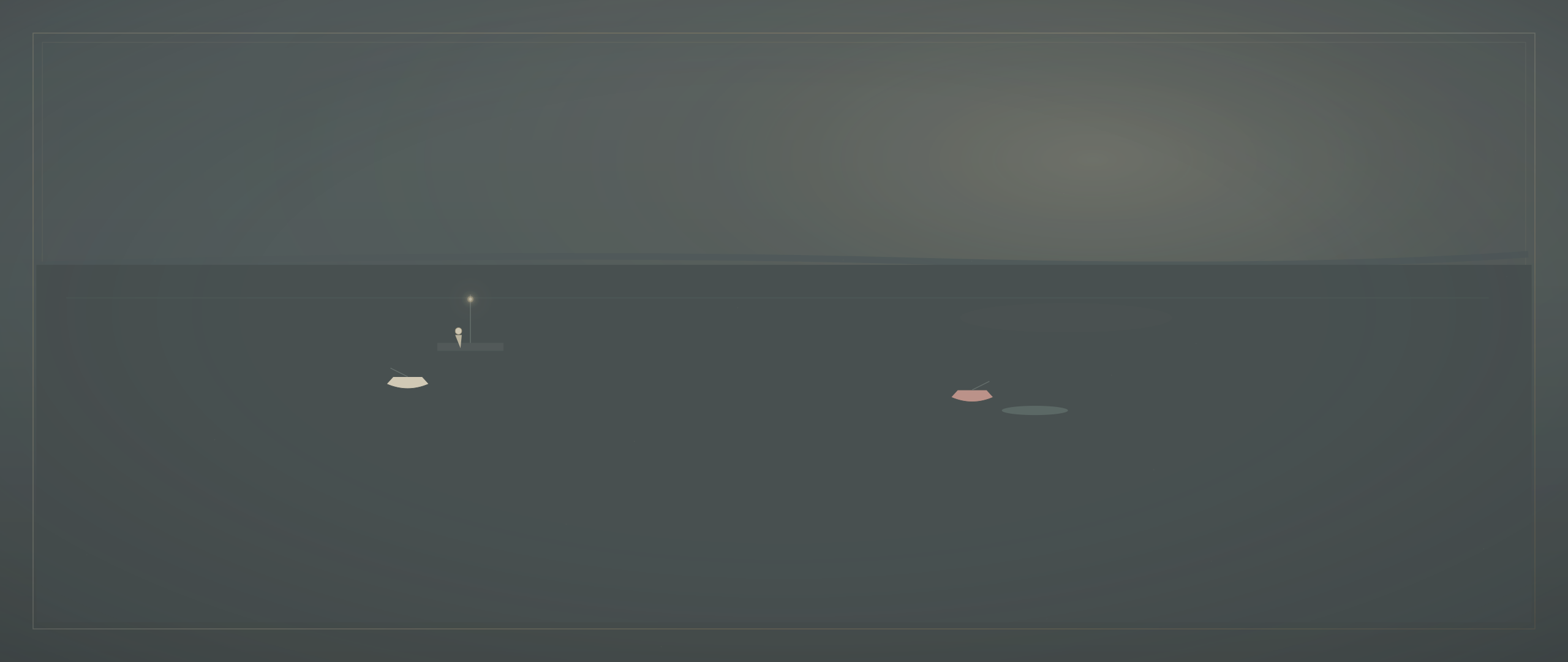
Two skiffs, one lake going dark, and every fare is the distance you row for it.
Ready to play now.
A demonstration of Skiff, played by the computer against itself.
Skiff — playing itself
Ways to play
Alone, against the computer
Your own pace, no arranging anything. Take a move back whenever you like.
Play alone4 opponents, weakest first
- Oar-DriftAny legal stroke, chosen by the seed. 5.9 points of the thirty-five a race and not one win in two hundred against a route — the lake is not kind to drifting.
- The FerrymanLands what it carries, takes what it is beside, and otherwise rows one landing at a time toward the nearest fare it has a berth for. 16.9 points a race, and it wins 70 of 200 against the Route-Maker — a real ferryman with no route at all.
- The Route-MakerScores every stroke by the fare it sets up, less the oars it spends. Sixty-four per cent over the Ferryman, 128–72, 4.0 sigma, and the widest share of the pool the probe measured: 17.7 points a race of the thirty-five.
- The VoyagerScores the TURN rather than the stroke: under this lake’s rule a turn is a leg and the one act the leg reaches, so a row is worth exactly the act at the far end less the oars. Sixty-one per cent over the Route-Maker, 122–78, 3.1 sigma; seventy-eight over the Ferryman, 156–44. Charging three oars a hop instead of one was tried and measured 54%, which is no rung at all.
Together, in the same room
2 players. One device goes round the table, or everybody plays off the same screen.
Play in the same roomOnline, at a table
A room code, joinable from anywhere. Pause tonight and pick it up next week from your device.
Play online
About
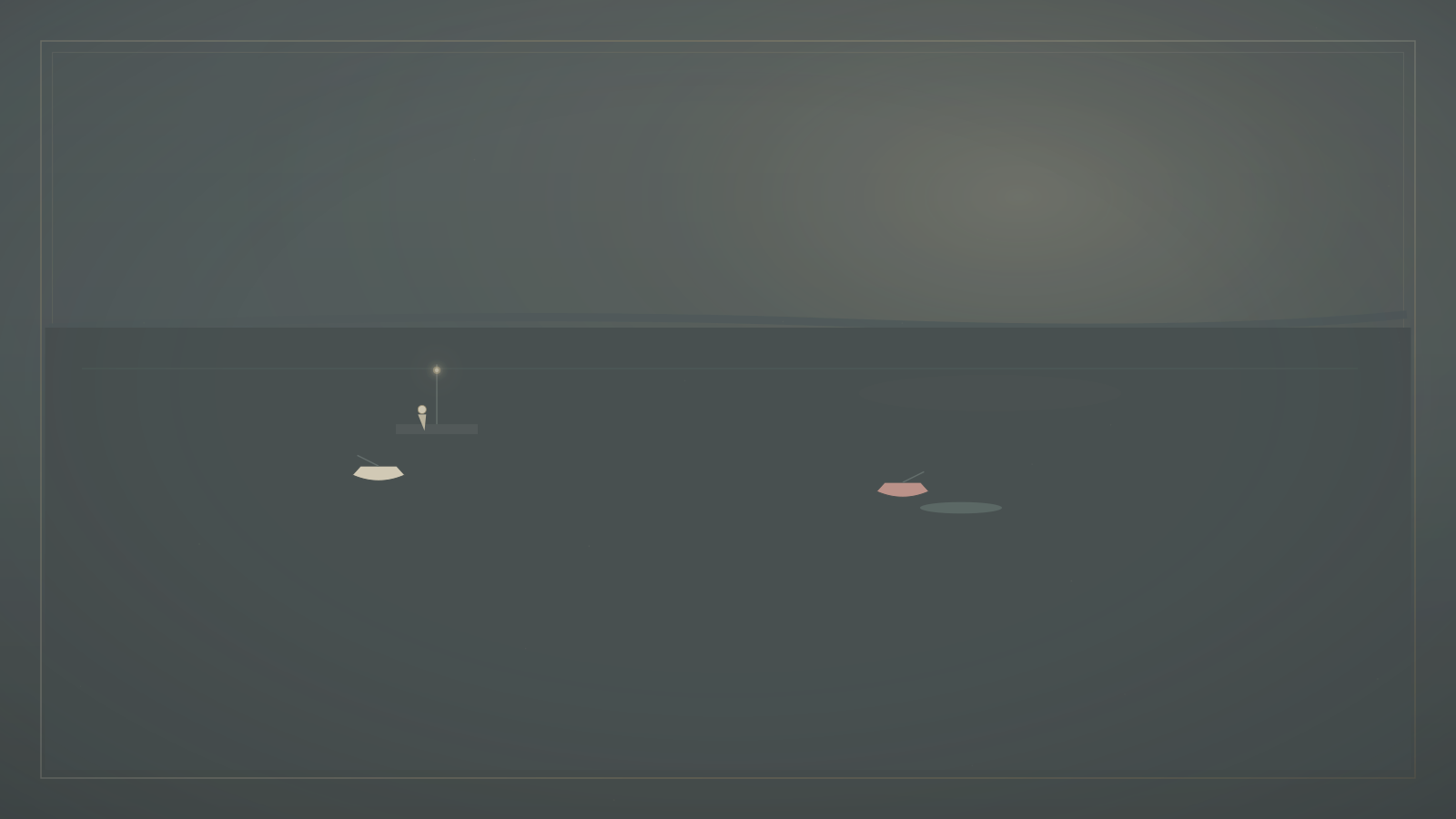
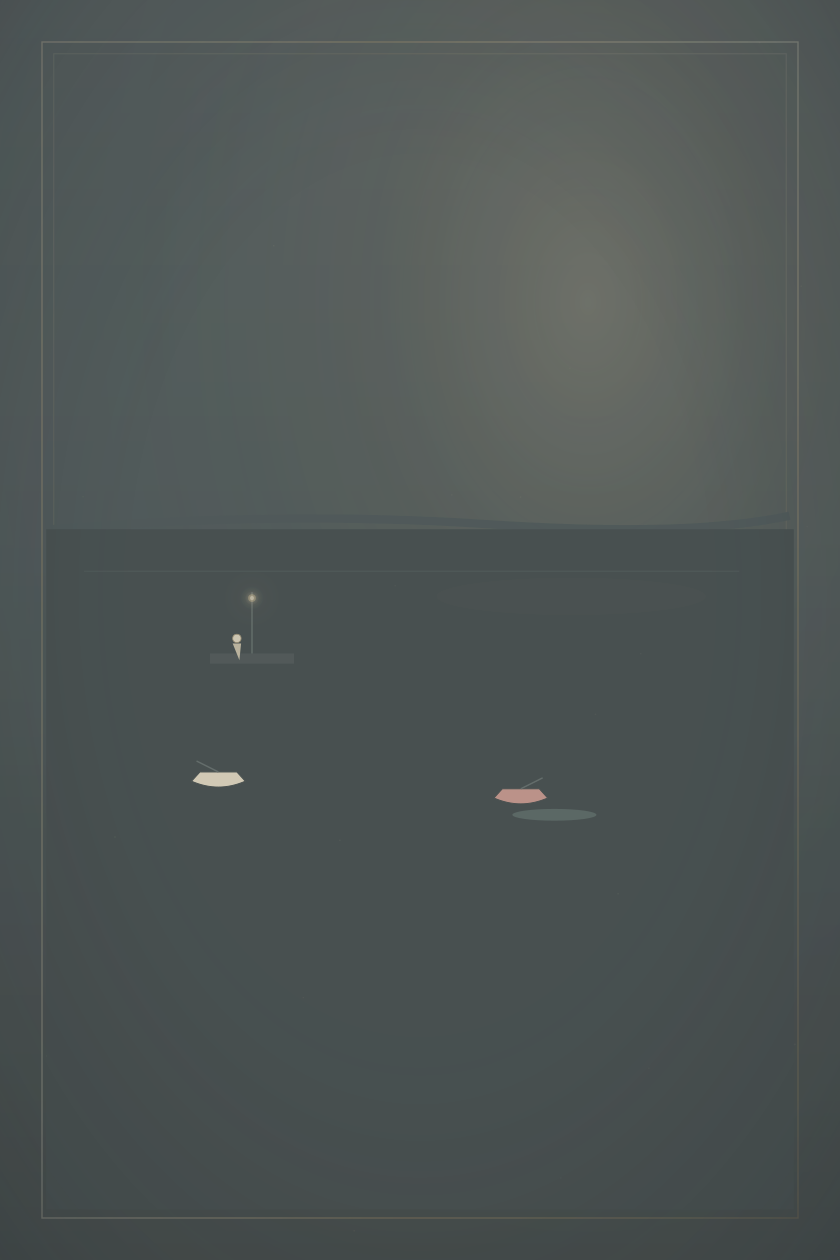
Eight landings around a small lake at dusk, and a passenger at each of them bound somewhere two to four hops away — the hop is the fare. One leg a turn, and the one twist with teeth: a leg that reaches a landing where your skiff can lift or land somebody keeps the turn for that one act. Row, then take. Row, then set down. Twelve passengers, thirty-five points, an odd number — when the last one is ashore, the race has a winner by arithmetic.
How it feels
- Dusk water going still
- A fare worth four hops
- Watching them take your passenger
What the design is for
One leg a turn
A turn is one leg and the one act the leg reaches: row to a landing where your hold has room for somebody waiting, or where somebody you carry is bound, and the turn holds for that act alone. Row somewhere you can do nothing and the water passes. The rule used to be looser and it was a hole — the turn held whenever anything at the landing was worth doing to ANYONE, a passenger you had no berth for included, and nothing capped the legs in a turn, so a loaded skiff could row the ring all evening while the other oar never touched water. The longest run of plies by one seat over a hundred seeded races is now two, which is the rule, and the test measures it.
The fare is the hop
A passenger pays exactly the ring distance they crossed — two, three or four points — and the deal builds every one of them that way, so the long crossings pay double and cost double the oars. A passenger’s worth is geography, not a label beside it; the deal test keeps it so.
The horn feeds everyone
When the waterline runs thin, sound the horn and new passengers come down to their landings — to the WHOLE lake, where the other skiff rows too. It costs your whole turn and refills their water as much as yours, so the question is never whether the lake needs filling but whose oar is nearer when it does.
Thirty-five points, no draws
Twelve fares: 2+2+2+2+3+3+3+3+4+4+4+3 — thirty-five, an odd number, always split between two racks. A race of Skiff cannot be drawn; the flow proves it on a screen by rowing one to the last passenger.
Taught crossing by crossing
Six steps: the leg, the take, the fare, the two fares at one landing, the horn — and then the whole lake to yourself. Five of the six ask for one particular stroke and accept nothing else; the step about choosing your water used to accept a take, the horn, or a row to anywhere at all, which is every stroke the pose allowed.
- Best at
- 2
- Kind
- Strategy
- Table
- Competitive
- Studio
- Board.game Originals
The opponents
Oar-Drift
Any legal stroke, chosen by the seed. 5.9 points of the thirty-five a race and not one win in two hundred against a route — the lake is not kind to drifting.
The Ferryman
Lands what it carries, takes what it is beside, and otherwise rows one landing at a time toward the nearest fare it has a berth for. 16.9 points a race, and it wins 70 of 200 against the Route-Maker — a real ferryman with no route at all.
The Route-Maker
Scores every stroke by the fare it sets up, less the oars it spends. Sixty-four per cent over the Ferryman, 128–72, 4.0 sigma, and the widest share of the pool the probe measured: 17.7 points a race of the thirty-five.
The Voyager
Scores the TURN rather than the stroke: under this lake’s rule a turn is a leg and the one act the leg reaches, so a row is worth exactly the act at the far end less the oars. Sixty-one per cent over the Route-Maker, 122–78, 3.1 sigma; seventy-eight over the Ferryman, 156–44. Charging three oars a hop instead of one was tried and measured 54%, which is no rung at all.
Achievements
0 of 5 earned
The Richer Evening
Win a race of Skiff.
The Four-Hop Fare
Set a passenger down from four hops out.
Both Hands Full
Set a passenger down while still carrying another.
One Long Crossing
Spend your leg reaching a landing and set the fare down on the same turn.
The Lake To Yourself
Win with twenty-five points of the thirty-five.
Key art
Key art — Board.game art system
More like this
 Board.game Original
Original · a dice-placement duel for two
Anvil
Sums take tools, the hammer takes height, the file takes lows — and tied tools hang for nobody.
2 players5–10 minCompetitive
Playable Board.game Original
Original · a commodity exchange for two
Bellwether
Every buy lifts the chalk for every lot on it — and two coins buys anybody a crash.
2 players5–10 minCompetitive
Playable Board.game Original
Original · a walling duel for two
Drystone
The fourth wall claims the paddock — and pays you one more lay, which you must spend.
2 players5–10 minCompetitive
Playable Board.game Original
Original · a sealed-bid duel for two
Vellum
Both houses act at once, in the dark — and the letters are identical, down to the last 8.
2 players5–10 minCompetitive
Playable Board.game Original
Original · a loading duel for two
Quay
One line of crates, both ends open to both ships — and a cargo pays its worth times the margin.
2 players5–10 minCompetitive
Playable Board.game Original
Original · a balance duel for two
Steelyard
Your pan is your ledger — every weight you cannot put on the rival’s, you carry.
2 players5–10 minCompetitive
Playable Board.game Original
Original · a placement duel for two, played for the last light
Beacons
No beacon may stand beside a rival’s — and the keeper who cannot light, loses.
2 players5–10 minCompetitive
Playable Board.game Original
Original · a cutting duel for two, misère
Peat
Cut any number from one bank — and whoever cuts the LAST sod of the bog loses.
2 players5–10 minCompetitive
Playable