Tally
Original · a roll-and-write duel for two
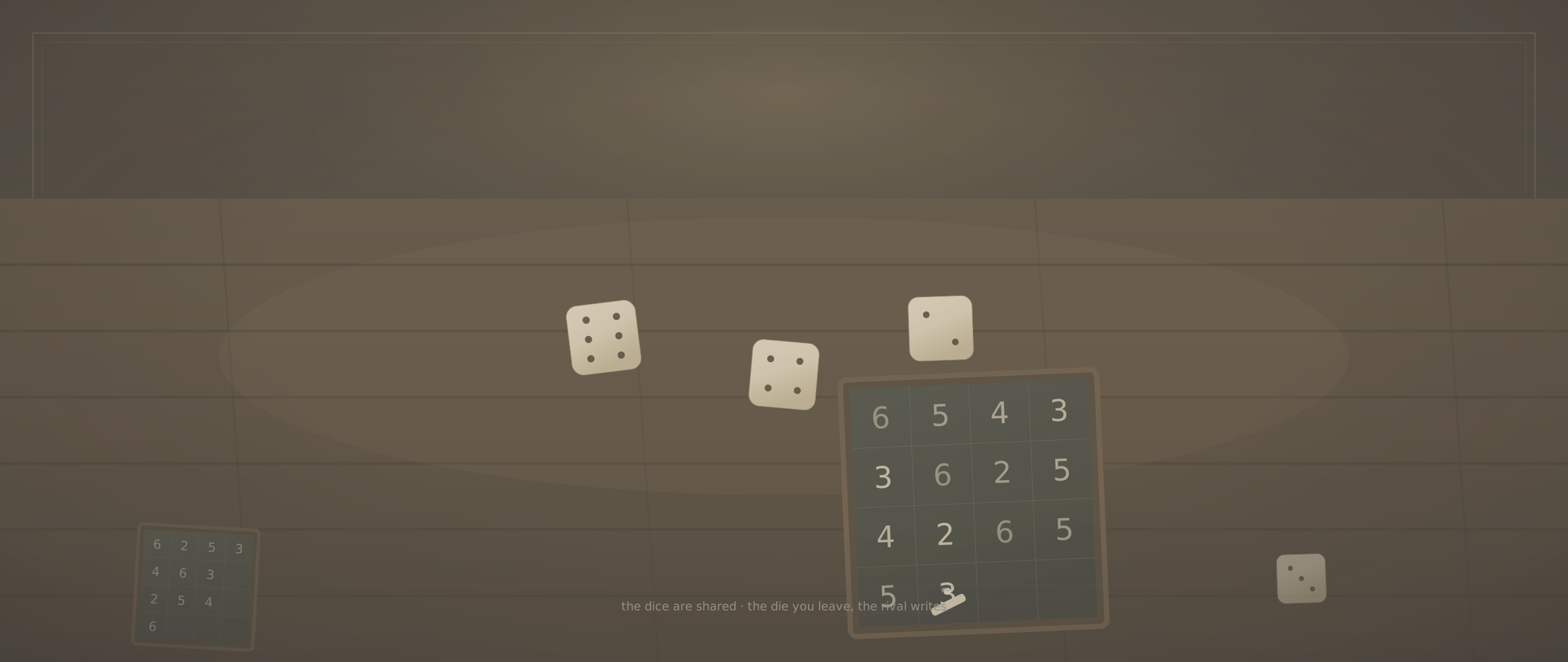
Three dice on the table, one chalk between you — the die you leave, the rival writes.
Ready to play now.
A demonstration of Tally, played by the computer against itself.
Tally — playing itself
Ways to play
Alone, against the computer
Your own pace, no arranging anything. Take a move back whenever you like.
Play alone4 opponents, weakest first
- The GreenhornAny die, any cell, by the seed. 121.9 points and 2.3 distinct lines a slate, 2 of 150 tallies against the Sorter — the Tallyman takes it 145–4, 97% of 149 decided. Random chalk writes a slate nobody reads.
- The TallymanPrices every chalk by its lines — the sum it adds, the bonus it keeps alive, the duplicate it risks. 145–4 over the Greenhorn, and 144.8 points a slate — then 56–85 UNDER the Sorter, quoted: on a shared table the big face beats the bonus arithmetic.
- The SorterTakes the biggest die and writes it where the empty lines pay most — and it measures ABOVE the fine read, 85–56, 60% of 141 decided. 149.1 points and 7.6 high faces a slate: the simple habit, and the ladder’s middle.
- The LedgerThe Sorter’s big face with the duplicate priced and the last eight cells solved outright — margin-aware minimax to the reading. 97–46 over the Sorter (68% of 143 decided) and 149–1 over the Greenhorn, and the richest book on the wall: 158.6 points and 3.1 distinct lines a slate, 100 of 150 tallies taken.
Together, in the same room
2 players. One device goes round the table, or everybody plays off the same screen.
Play in the same roomOnline, at a table
A room code, joinable from anywhere. Pause tonight and pick it up next week from your device.
Play online
About
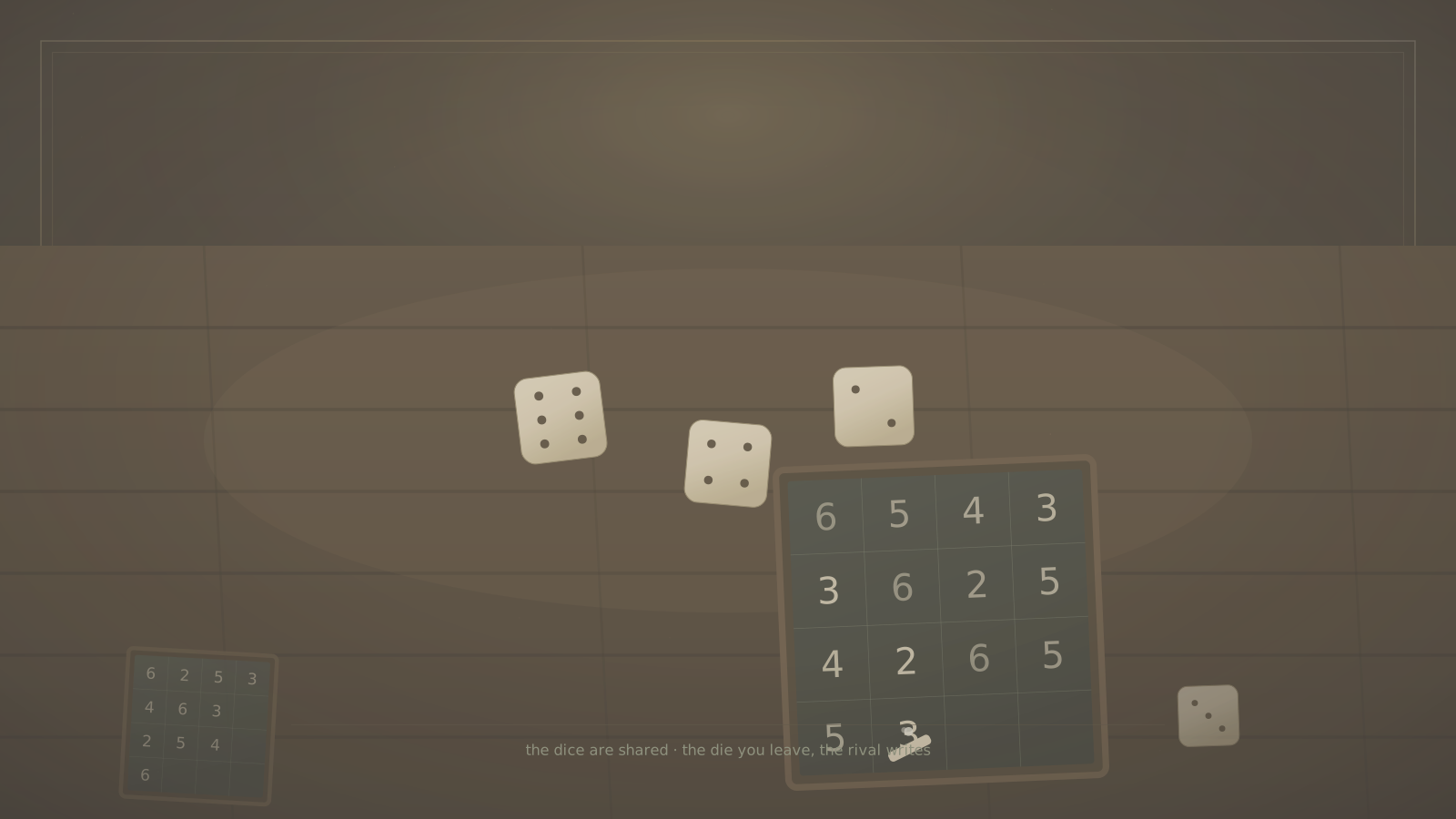
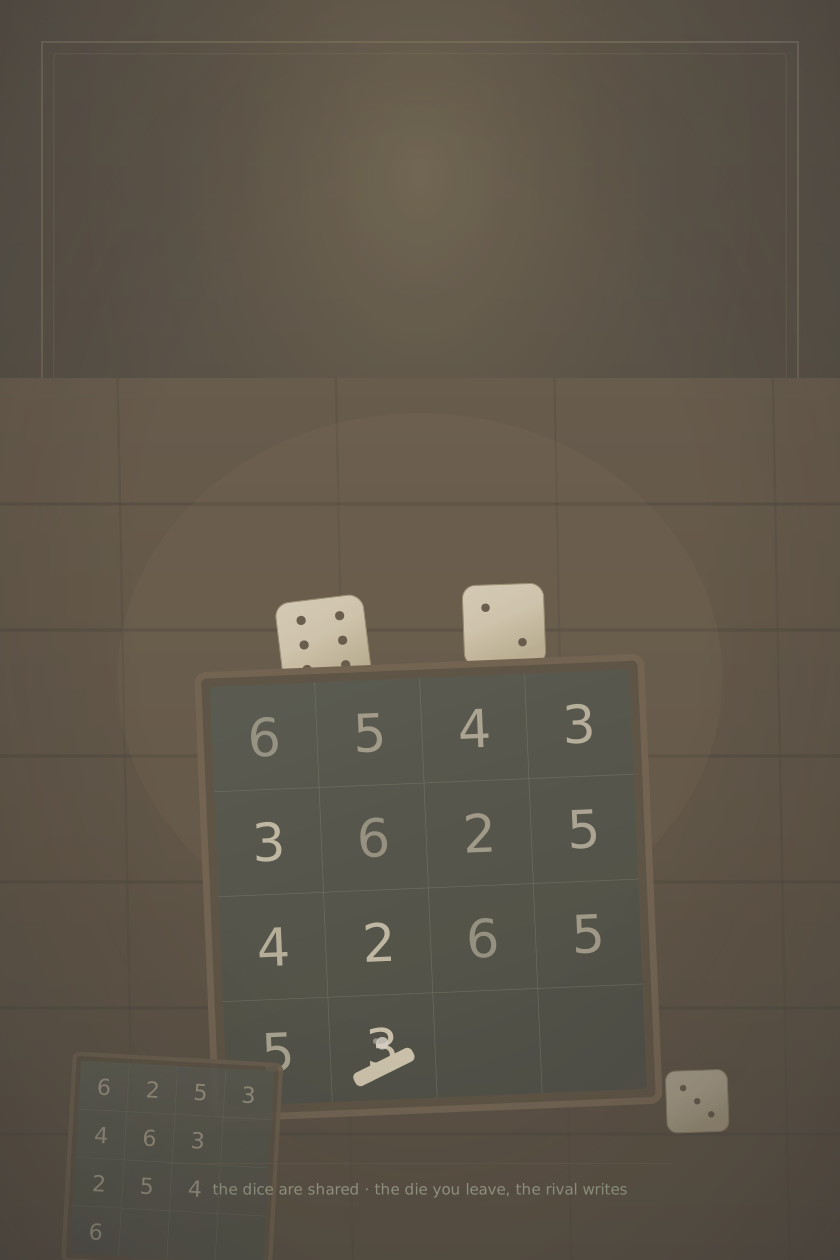
A roll-and-write duel for two — the shelf’s only one. Each round three dice come up public; the clerk with the chalk writes one into any empty cell of their own 4×4 slate, the other takes one of the two that remain, the third is discarded, and the chalk changes hands. Sixteen rounds fill both slates. The lines pay: four rows and four columns, each its sum, plus eight for four different faces — four sixes pay 24, a 6-5-4-3 pays 26. The richer slate takes the tally, and equal slates stand shared, said plainly.
How it feels
- The 6 you leave sitting on the wood
- A row closing 6-5-4-3, eight points banked
- The rival’s slate filling beside yours, cell for cell
What the design is for
The shelf’s first roll-and-write
Shared dice, private slates: the same three faces, written two different ways, every single round. The third die always dies on the wood — the shape of what neither clerk took.
The die you leave
The dice are shared and the choice is cruel: take the 6 and the rival chooses between the 4 and the 2; leave it and the 6 is theirs. Every take is a take and a give.
Every cell pays twice
Each face sits in a row AND a column, and both slates are read at the end — eight lines a slate, every chalk two bets at once. Corners pay into two lines; nothing pays once.
Four different faces pay eight
The distinct bonus turns small dice into the richest lines: quad-6 pays 24, a 6-5-4-3 pays 26. Duplicates tax the bonus dead — and no chalk can bring it back.
Taught chalk by chalk
Six steps: the chalk, the shared table, the double-paying cell, the bonus, the duplicate tax — and then a whole tally to yourself.
- Best at
- 2
- Kind
- Strategy
- Table
- Competitive
- Studio
- Board.game Originals
The opponents
The Greenhorn
Any die, any cell, by the seed. 121.9 points and 2.3 distinct lines a slate, 2 of 150 tallies against the Sorter — the Tallyman takes it 145–4, 97% of 149 decided. Random chalk writes a slate nobody reads.
The Tallyman
Prices every chalk by its lines — the sum it adds, the bonus it keeps alive, the duplicate it risks. 145–4 over the Greenhorn, and 144.8 points a slate — then 56–85 UNDER the Sorter, quoted: on a shared table the big face beats the bonus arithmetic.
The Sorter
Takes the biggest die and writes it where the empty lines pay most — and it measures ABOVE the fine read, 85–56, 60% of 141 decided. 149.1 points and 7.6 high faces a slate: the simple habit, and the ladder’s middle.
The Ledger
The Sorter’s big face with the duplicate priced and the last eight cells solved outright — margin-aware minimax to the reading. 97–46 over the Sorter (68% of 143 decided) and 149–1 over the Greenhorn, and the richest book on the wall: 158.6 points and 3.1 distinct lines a slate, 100 of 150 tallies taken.
Achievements
0 of 5 earned
The Richer Slate
Win a tally.
A Clean Book
Win with six or more distinct lines.
A Heavy Ledger
Win with ninety points or more.
The Last Cell
Win by four points or fewer.
From Behind the Wood
Win after trailing by six at the half.
Key art
Key art — Board.game art system
More like this
 Board.game Original
Original · a push-your-luck dice duel for two
Knuckle
Five faces pay and one burns the whole pot — first tally to forty takes the fire.
2 players5–10 minCompetitive
Playable Board.game Original
Original · a commodity exchange for two
Bellwether
Every buy lifts the chalk for every lot on it — and two coins buys anybody a crash.
2 players5–10 minCompetitive
Playable Board.game Original
Original · a walling duel for two
Drystone
The fourth wall claims the paddock — and pays you one more lay, which you must spend.
2 players5–10 minCompetitive
Playable Board.game Original
Original · a loading duel for two
Quay
One line of crates, both ends open to both ships — and a cargo pays its worth times the margin.
2 players5–10 minCompetitive
Playable Board.game Original
Original · a balance duel for two
Steelyard
Your pan is your ledger — every weight you cannot put on the rival’s, you carry.
2 players5–10 minCompetitive
Playable Board.game Original
Original · a placement duel for two, played for the last light
Beacons
No beacon may stand beside a rival’s — and the keeper who cannot light, loses.
2 players5–10 minCompetitive
Playable Board.game Original
Original · a cutting duel for two, misère
Peat
Cut any number from one bank — and whoever cuts the LAST sod of the bog loses.
2 players5–10 minCompetitive
Playable Board.game Original
Original · a pentomino duel for two
Marquetry
Twelve veneers, five cells each, sixty cells for sixty-four — and every piece lies as drawn, never turned.
2 players5–10 minCompetitive
Playable