Tessera
Original · a tile-laying duel for two
Every edge that agrees with its neighbour pays the setter who placed it.
Ready to play now.
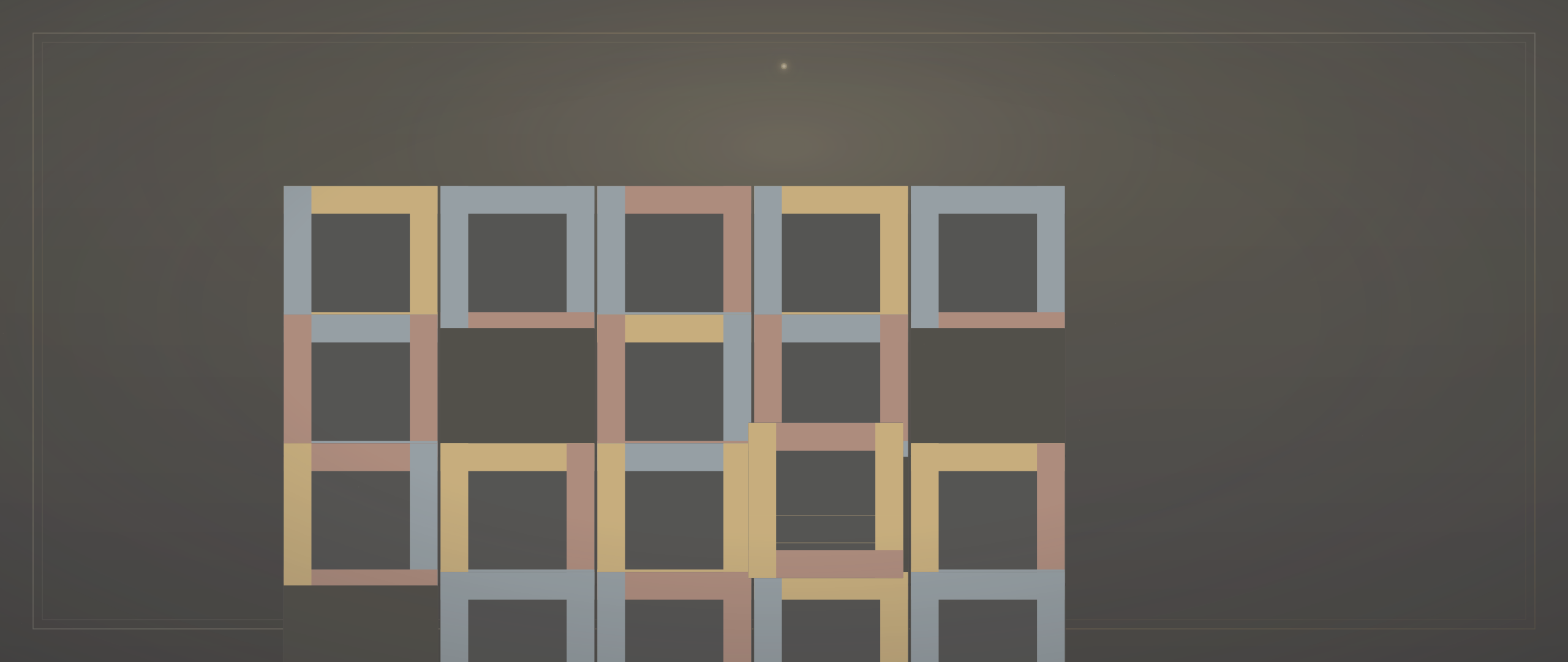
A demonstration of Tessera, played by the computer against itself.
Tessera — playing itself
Ways to play
Alone, against the computer
Your own pace, no arranging anything. Take a move back whenever you like.
Play alone4 opponents, weakest first
- The WandererSets anywhere the seed says. Six points a field and two-tenths of a seal — it did not win one of two hundred against the Matcher, and the Matcher did not drop one.
- The MatcherTakes the most matched edges on the table, nothing else. Two hundred to nil over the Wanderer — this field is not kind to setting at random — and 15.4 points a field, which is most of what there is to get.
- The DenierSubtracts half of whatever its placement hands the other setter, whose hand is open and therefore readable. 148–49 over the Matcher, 75% of 197 decided fields at 7.1 sigma — the first rung that plays the setter rather than the board — and the most points on the table of any rung, 16.0.
- The SealerThe Denier plus the weighing, which is the one thing the Denier cannot see: a seal pays TWO at the end, so it counts the seals a set would close — and the seals it would close for the other setter, because a carefully matched edge can finish somebody else’s tile. 136–52 over the Denier, 72% of 188 decided at 6.1 sigma. Its character is in the shape of its wins: 15.0 points on the table where the Denier takes 16.0, 2.0 tiles sealed where the Denier seals 1.5, and 171 fields of 200 against the anchor where the Denier takes 157.
Together, in the same room
2 players. One device goes round the table, or everybody plays off the same screen.
Play in the same roomOnline, at a table
A room code, joinable from anywhere. Pause tonight and pick it up next week from your device.
Play online
About
A five-by-five field, a bag of twenty-five tiles, and three glazes — gold, slate, rust — on every edge. Both setters hold three tiles in OPEN hand; the bag is the only secret. Set a tile on any empty square that touches the mosaic and score a point for every edge that matches a neighbour. When the field is full, every tile of yours sealed on all four matched sides pays two more; ties go to the setter with more sealed tiles. The whole game is which tiles you spend where, knowing the tile you leave on the table is the one they can see.
How it feels
- A tile that fits four ways
- Leaving them the square you wanted
- The middle of the field sealing shut
What the design is for
The match pays the setter
One point for every edge of your tile that agrees with the neighbour it lands against — paid to YOU, not to the field. The mosaic grows either way; the question every set answers is whose score it grows.
Open hands
Three tiles each, all face up — the bag is the only secret in the game. The tile you leave on the table is the one they can see, so a rich square left unspent is a gift you chose to give, priced in points you can count.
Sealed tiles pay twice
A tile sealed on all four matched sides — interior only, borders never seal — pays two MORE at the weighing, and sealed tiles break ties on points. The endgame is the middle of the field closing shut, one edge at a time.
The keystone
The first tile goes down unclaimed before anyone moves: the mosaic starts itself, and every placement after must touch it, orthogonally, however far the field has grown. Nobody scores the keystone; everybody builds around it.
Taught tile by tile
Five steps: the set, the match, the square worth spending on, the seal — and then the whole field to yourself.
- Best at
- 2
- Kind
- Strategy
- Table
- Competitive
- Studio
- Board.game Originals
The opponents
The Wanderer
Sets anywhere the seed says. Six points a field and two-tenths of a seal — it did not win one of two hundred against the Matcher, and the Matcher did not drop one.
The Matcher
Takes the most matched edges on the table, nothing else. Two hundred to nil over the Wanderer — this field is not kind to setting at random — and 15.4 points a field, which is most of what there is to get.
The Denier
Subtracts half of whatever its placement hands the other setter, whose hand is open and therefore readable. 148–49 over the Matcher, 75% of 197 decided fields at 7.1 sigma — the first rung that plays the setter rather than the board — and the most points on the table of any rung, 16.0.
The Sealer
The Denier plus the weighing, which is the one thing the Denier cannot see: a seal pays TWO at the end, so it counts the seals a set would close — and the seals it would close for the other setter, because a carefully matched edge can finish somebody else’s tile. 136–52 over the Denier, 72% of 188 decided at 6.1 sigma. Its character is in the shape of its wins: 15.0 points on the table where the Denier takes 16.0, 2.0 tiles sealed where the Denier seals 1.5, and 171 fields of 200 against the anchor where the Denier takes 157.
Achievements
0 of 5 earned
The Richer Mosaic
Win a field of Tessera.
Four Way
Match all four edges with a single tile — a square with four neighbours, and the one tile that agrees with every one of them.
Mason
Finish with three or more sealed tiles.
A Field of Seals
Win with five sealed tiles — ten points of the weighing, and the most any measured field has held.
On the Seals
Win a field you were losing on table points: the seals carried it.
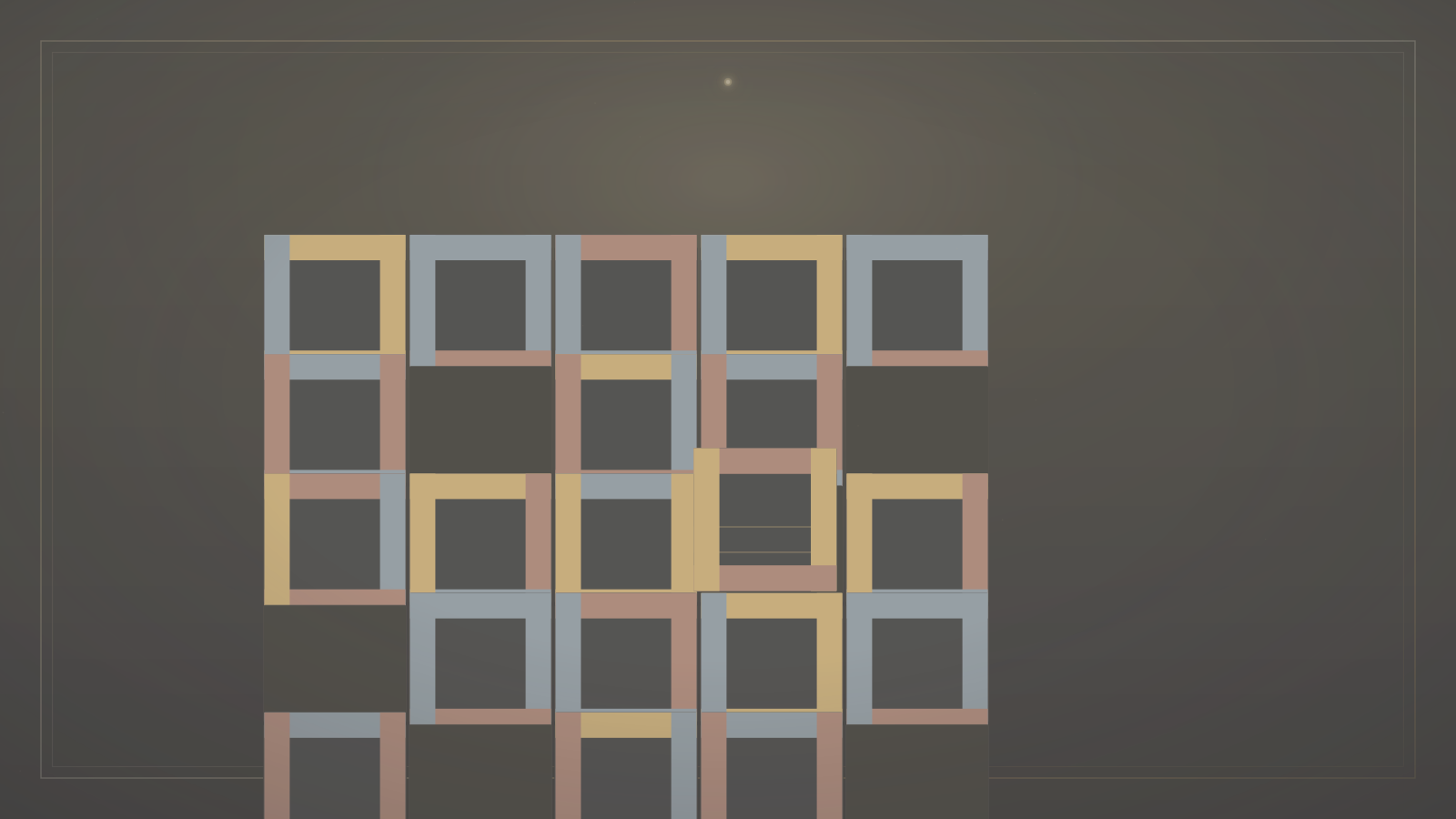
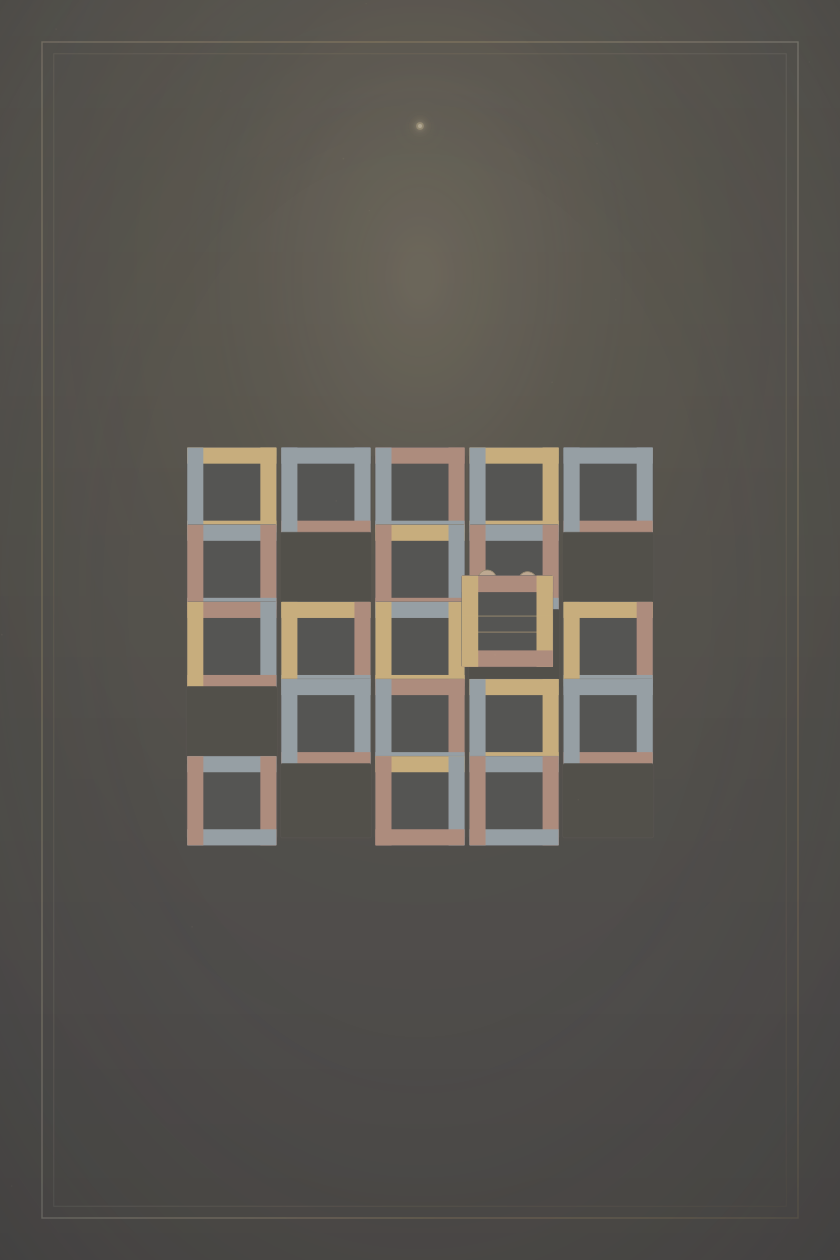
Key art
Key art — Board.game art system
More like this
 Board.game Original
Original · a roll-and-write duel for two
Loom
Two threads a round: draft one, and the other is woven by your rival.
2 players10–15 minCompetitive
Playable Board.game Original
Original · two to four players
Tidemark
The sea takes what stands alone.
2–4 players8–15 minCompetitive
Playable Board.game Original
Original · area control for two to four
Wassail
The picking happens the moment a tree is full — not a moment before.
2–4 players5–10 minCompetitive
Playable Board.game Original
Original · a pick-up-and-deliver duel for two
Skiff
Two skiffs, one lake going dark, and every fare is the distance you row for it.
2 players5–10 minCompetitive
Playable Board.game Original
Original · a placement duel for two
Toll
Every neighbouring pair swings to the heavier bell, and the difference is the score.
2 players5–10 minCompetitive
Playable Board.game Original
Original · a loading duel for two
Quay
One line of crates, both ends open to both ships — and a cargo pays its worth times the margin.
2 players5–10 minCompetitive
Playable Board.game Original
Original · a memory duel for two
Sorts
Every mismatch marks its letters for the whole table — what one compositor has seen, both have seen.
2 players5–10 minCompetitive
Playable Board.game Original
Original · a duel for two
Last Stone
Every stride you will ever take is lying face up between you.
2 players5–10 minCompetitive
Playable