
Third Lantern
Original · three to five players
A paper lantern needs two hands, and nobody will tell you whose.
Ready to play now.
A demonstration of Third Lantern, played by the computer against itself.
Third Lantern — playing itself
Ways to play
Alone, against the computer
Your own pace, no arranging anything. Take a move back whenever you like.
Play alone3 opponents, weakest first
- The RegularA creature of habit and no model of anybody: back to the lantern that paid it, one along from the lantern that left it dark. 6.6 coins a fair at a table of three, a pair at 24% of its bells and dark at 17% — and 61 of 400 fairs won, because a habit is legible and the fair pays for reading one.
- The Errand-RunnerCounts the room seat by seat — the habit above run over every other visitor, added up lantern by lantern — and stands where the expected crowd is exactly ONE, a pair and not a trio. Then the tie: where two lanterns look like the same pair it takes the one it came for, until it has been paid there. 171-55 over the Regular at three seats (7.7 sigma), 110-34 at five (6.3), and 164 of 400 fairs won where the habit won 61.
- The ReckonerThe same two wants, read as the chances they are: what each lantern pays ON AVERAGE across every crowd that could turn up under it, rather than rounding each visitor to one lantern — and the others’ errands read off the ledger, because a visitor paid twice at the same lantern probably came for it. 124-75 over the Errand-Runner at three seats (3.5 sigma), 99-44 at five (4.6), 179-16 over the Regular, and 189 of 400 fairs won at three seats, 138 at five.
Together, in the same room
3–5 players. One device goes round the table, or everybody plays off the same screen.
Play in the same roomOnline, at a table
A room code, joinable from anywhere. Pause tonight and pick it up next week from your device.
Play online
About
A night fair, five bells, three lanterns. Every visitor secretly chooses one, the bell rings, and the lanterns are raised by whoever is standing under them. A paper lantern needs two hands: alone you cannot lift it and it pays nothing, a pair takes three coins each, three share the light for a coin each, and four or more is a crush where nobody is paid and everyone drops a coin in the mud. You cannot be paid alone and you cannot be paid in a mob, so the whole night is a search for exactly one accomplice — and one of the three lanterns is secretly the one you came for, which is worth no coins and every tie.
How it feels
- Looking for one person, not a crowd
- A bell you flinch at
- The lantern you came for, still dark
What the design is for
Everyone chooses at once, in secret
Picks in flight are the game’s only secret: the board shows your own token waiting under your lantern and NOTHING under anyone else’s — not who went where until the bell. Who has chosen is public; where is not.
The ledger is the game
Every bell writes who stood where, in words, permanently — a public record that never says who MEANT to. Reading it is the entire strategy, and the panel beside the board is exactly that record.
Two hands to a lantern
Alone it stays on the ground and pays you nothing; a pair takes three coins each — the best a bell can pay anybody; three share it for one each; four or more is the crush, a coin each to the mud. Being predicted is the one thing that cannot pay.
The errand you came for
One of the three lanterns is secretly yours, dealt when the fair opens. It buys no coins. It buys the TIE: level purses go to the visitor who was paid at their own lantern, and only then to the bells counted back. Two partners cannot both have it, which is the disagreement inside every pair.
A fair that ends
Five bells and the purses are counted — no catch-up mechanic, no sixth bell. A whole fair is ten minutes, and the last bell is worth exactly as much as the first. Fifteen coins is a perfect night: paired at every bell.
Taught by ringing it
Five steps: a first pair, the last choice of a bell, the crush you walk away from, a habit in the ledger to go and meet — and then the whole fair to yourself. Every step accepts only the stand its own text asks for.
- Best at
- 5
- Kind
- Party
- Table
- Competitive
- Studio
- Board.game Originals
The opponents
The Regular
A creature of habit and no model of anybody: back to the lantern that paid it, one along from the lantern that left it dark. 6.6 coins a fair at a table of three, a pair at 24% of its bells and dark at 17% — and 61 of 400 fairs won, because a habit is legible and the fair pays for reading one.
The Errand-Runner
Counts the room seat by seat — the habit above run over every other visitor, added up lantern by lantern — and stands where the expected crowd is exactly ONE, a pair and not a trio. Then the tie: where two lanterns look like the same pair it takes the one it came for, until it has been paid there. 171-55 over the Regular at three seats (7.7 sigma), 110-34 at five (6.3), and 164 of 400 fairs won where the habit won 61.
The Reckoner
The same two wants, read as the chances they are: what each lantern pays ON AVERAGE across every crowd that could turn up under it, rather than rounding each visitor to one lantern — and the others’ errands read off the ledger, because a visitor paid twice at the same lantern probably came for it. 124-75 over the Errand-Runner at three seats (3.5 sigma), 99-44 at five (4.6), 179-16 over the Regular, and 189 of 400 fairs won at three seats, 138 at five.
Achievements
0 of 5 earned
Richest at the Fair
Win a match of Third Lantern.
Read the Room
Stand in a PAIR at three of the five bells — the shape the whole fair is looking for.
Trampled and Richer
Win having been in a crush at least once.
A Perfect Fair
Fifteen coins — a pair at all five bells, never alone and never in a crowd.
A Lean Night
Win a fair where nobody’s purse broke nine.
Key art
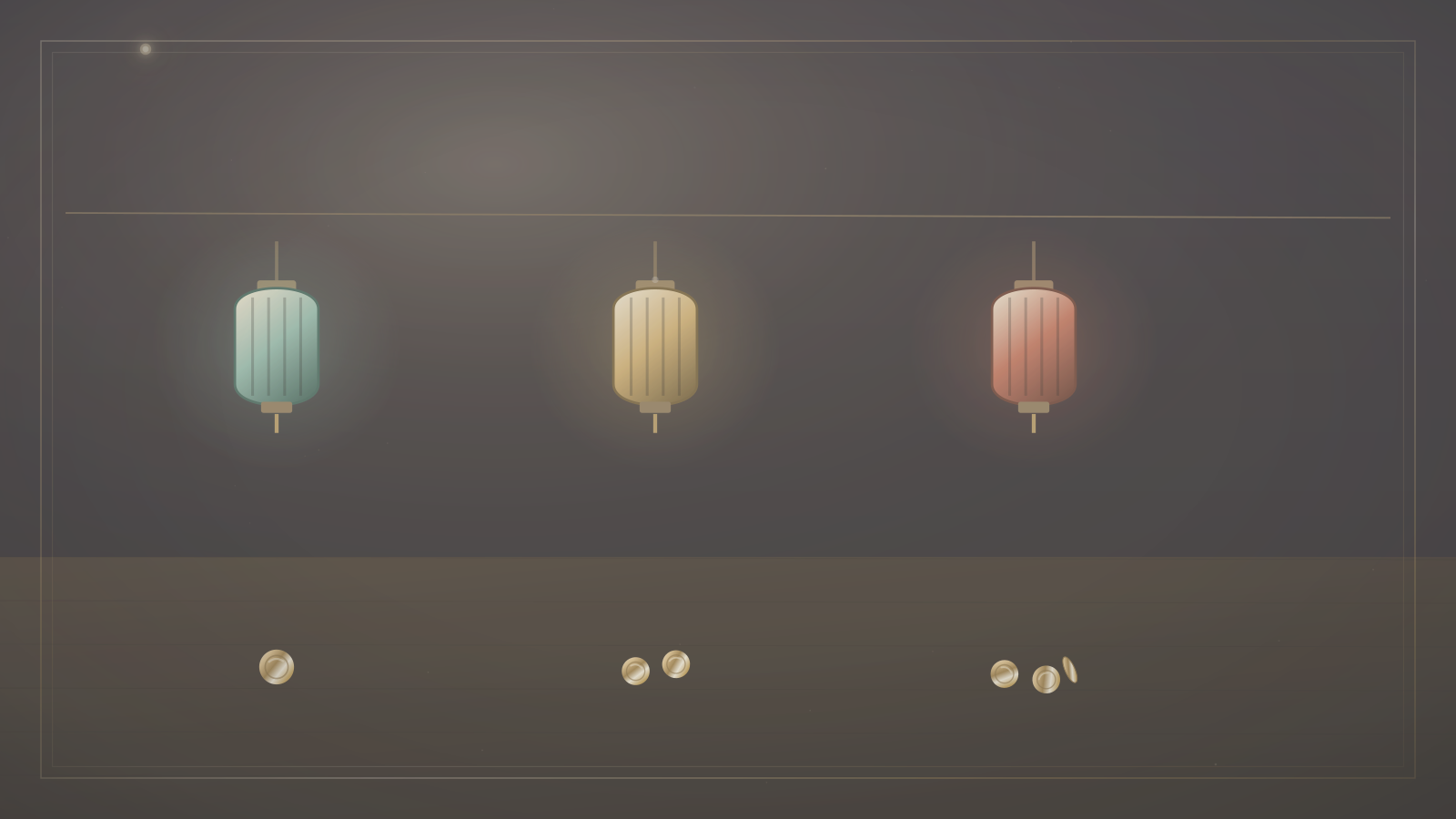
Key art — Board.game art system

More like this
 Board.game Original
Original · a shared-air gamble for three to six
Sump
The air belongs to everybody. The gold belongs to whoever turns back.
3–6 players10–15 minCompetitive
Playable Board.game Original
Original · an auction for three to five
Gavel
Every coin you spend is a point you no longer have.
3–5 players10–20 minCompetitive
Playable Board.game Original
A very loud party game
Paper Crowns
Somebody at this table is about to be crowned for the wrong reason.
4–12 players15–25 minCompetitive
Playable
Fifteen minutes, four people
The Last Tram
One seat. Everyone wants it. The tram is not waiting.
2–4 players10–15 minCompetitive
Playable Board.game Original
Original · push your luck for two
Kindling
Eight frosts in the deck, and every one of them is yours if you push.
2 players5–15 minCompetitive
Playable Board.game Original
Original · a pay-to-pass auction for two
Levy
Every pass costs a coin, every take costs a demand, and runs of demands count once.
2 players10–15 minCompetitive
Playable Board.game Original
Original · a divide-and-choose duel for two
Crumb
I split, you choose — and a matched pair split in two is worth nothing extra to either baker.
2 players2 minCompetitive
Playable Board.game Original
Original · a push-your-luck card duel for two
Bogey
The par is the pin — a stroke for every point you finish short of it, and a stroke for every point past.
2 players5–10 minCompetitive
Playable