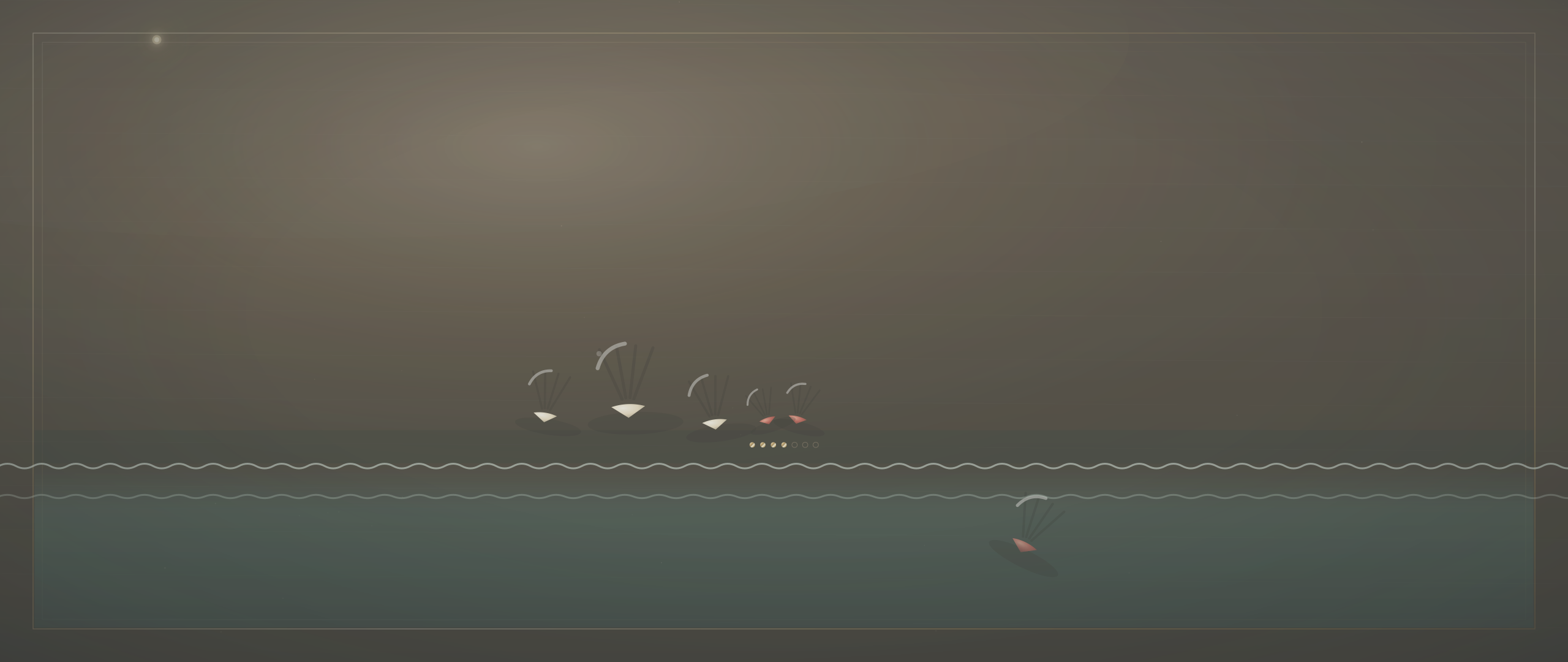
Tide mark
Original · two to four players
The sea takes what stands alone.
Ready to play now.
A demonstration of Tidemark, played by the computer against itself.
Tidemark — playing itself
Ways to play
Alone, against the computer
Your own pace, no arranging anything. Take a move back whenever you like.
Play alone4 opponents, weakest first
- DriftwoodLays a shell on whatever dry sand the dice point at. 149–61 to Wading over two hundred and ten games, every opening from both seats.
- WadingKnows WHICH row the water comes to next and lays beside its own there — where the flood is, with no idea what the flood pays. 149–61 over Driftwood (71% of the decided games, 6.1 sigma), and 81–129 under Tideline.
- TidelineJudges the coming flood. For every legal lay it runs the sea over the dying row as if it rose this instant and takes the lay that pays most — so it can see a shell that saves two of its own at once, and a shell laid one row UP that saves the lone one beneath it. Neither is visible to Wading. 129–81 over it (61%, 3.3 sigma).
- The Long WaveAnswers its own answer: it plays each lay out, lets Tideline reply for the seat that has to reply, and reads the shore that leaves as though the sea finished it in one breath — every row still standing, judged bottom-up. The only rung that can see a lay which pays now and costs next, and the only one that knows the tidemark rule, because it is the only one whose reading reaches the end of the game. 140–70 over Tideline (67%, 4.8 sigma). Against a copy of itself: first seat 100, second 110, nothing drawn of 210 — the shore is even now, and the card no longer has to apologise for the opening.
Together, in the same room
2–4 players. One device goes round the table, or everybody plays off the same screen.
Play in the same roomOnline, at a table
A room code, joinable from anywhere. Pause tonight and pick it up next week from your device.
Play online
About
A shore of wet sand, one shell a turn, and a sea that rises one row every seventh shell. When the water comes to a row it keeps every shell with a neighbour of its own colour and sweeps the rest — and what it kept stays under the water as the reef the next row clings to. Thirty-five pieces of sand, thirty-five shells, five floods: the most kept wins, and a level shore goes to the seat that answered.
How it feels
- Quiet, then ruthless
- A clock you can read
- Foundations, not fights
What the design is for
The sea counts to seven
Seven marks under the shore fill as shells are laid, and the seventh raises the water over the lowest row of sand — wherever that seventh shell was laid. The clock is public, the count is on the board, and the instruction line says it in words.
Cling, or be swept
A shell with a neighbour of its own colour — beside it, above it, or kept on the reef below it — stays when its row floods, and is worth one. A shell standing alone goes with the water. That single rule is the whole of the scoring.
The reef remembers
What the sea keeps stays on the board under the water, visible, and the next row up may cling to it through the glass. The shore is built from the bottom up, and the cheap early rows are the foundations the expensive late ones stand on.
A fair clock, and the tidemark rule
Seven is odd so that the shell which raises the sea alternates between the seats in a duel and goes round the table at three and four. The first SHELL is the one thing the clock cannot neutralise — an opening nucleus everything else answers — so a level shore goes to the seat that answered: the latest of the level seats in the turn order. The probe had measured the first seat taking thirty of thirty-five decided openings with half of all games drawn; with the rule in, it takes 48% and nothing draws at all.
Taught by getting wet
Six steps: a first shell, a pair to keep, three kept with one shell in the middle, clinging down through the water to the reef, the last word before a flood — and then the whole shore to yourself.
- Best at
- 2
- Kind
- Strategy
- Table
- Competitive
- Studio
- Board.game Originals
The opponents
Driftwood
Lays a shell on whatever dry sand the dice point at. 149–61 to Wading over two hundred and ten games, every opening from both seats.
Wading
Knows WHICH row the water comes to next and lays beside its own there — where the flood is, with no idea what the flood pays. 149–61 over Driftwood (71% of the decided games, 6.1 sigma), and 81–129 under Tideline.
Tideline
Judges the coming flood. For every legal lay it runs the sea over the dying row as if it rose this instant and takes the lay that pays most — so it can see a shell that saves two of its own at once, and a shell laid one row UP that saves the lone one beneath it. Neither is visible to Wading. 129–81 over it (61%, 3.3 sigma).
The Long Wave
Answers its own answer: it plays each lay out, lets Tideline reply for the seat that has to reply, and reads the shore that leaves as though the sea finished it in one breath — every row still standing, judged bottom-up. The only rung that can see a lay which pays now and costs next, and the only one that knows the tidemark rule, because it is the only one whose reading reaches the end of the game. 140–70 over Tideline (67%, 4.8 sigma). Against a copy of itself: first seat 100, second 110, nothing drawn of 210 — the shore is even now, and the card no longer has to apologise for the opening.
Achievements
0 of 5 earned
Above Water
Win a match of Tidemark.
A Row of Your Own
Keep seven shells in one match — a whole row’s worth.
Nothing Lost
Win without the sea ever sweeping one of your shells.
The High Water Mark
Win keeping a shell in the very last row the sea takes.
The Only Collector
Win while every other seat kept nothing at all.
Key art
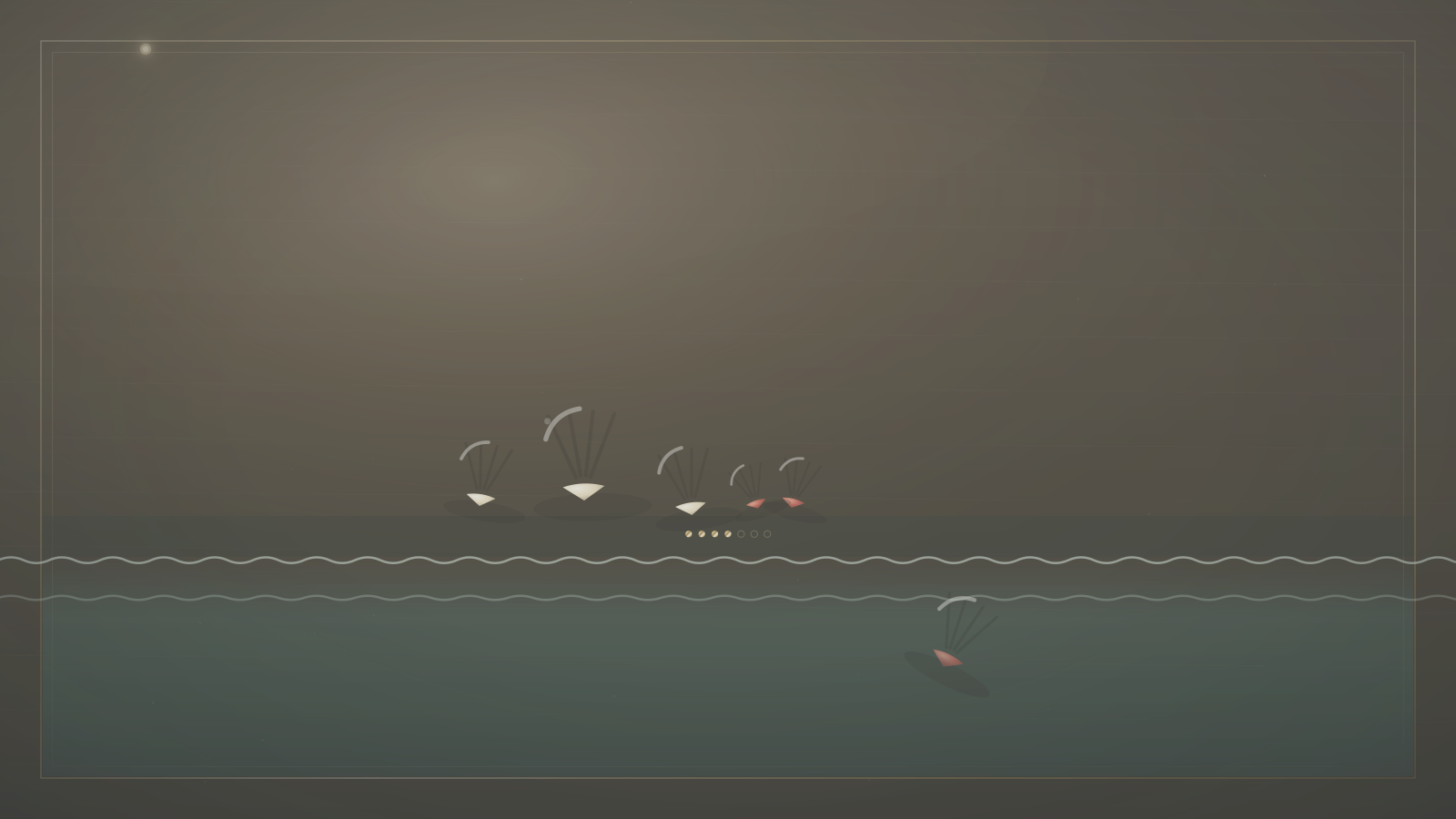
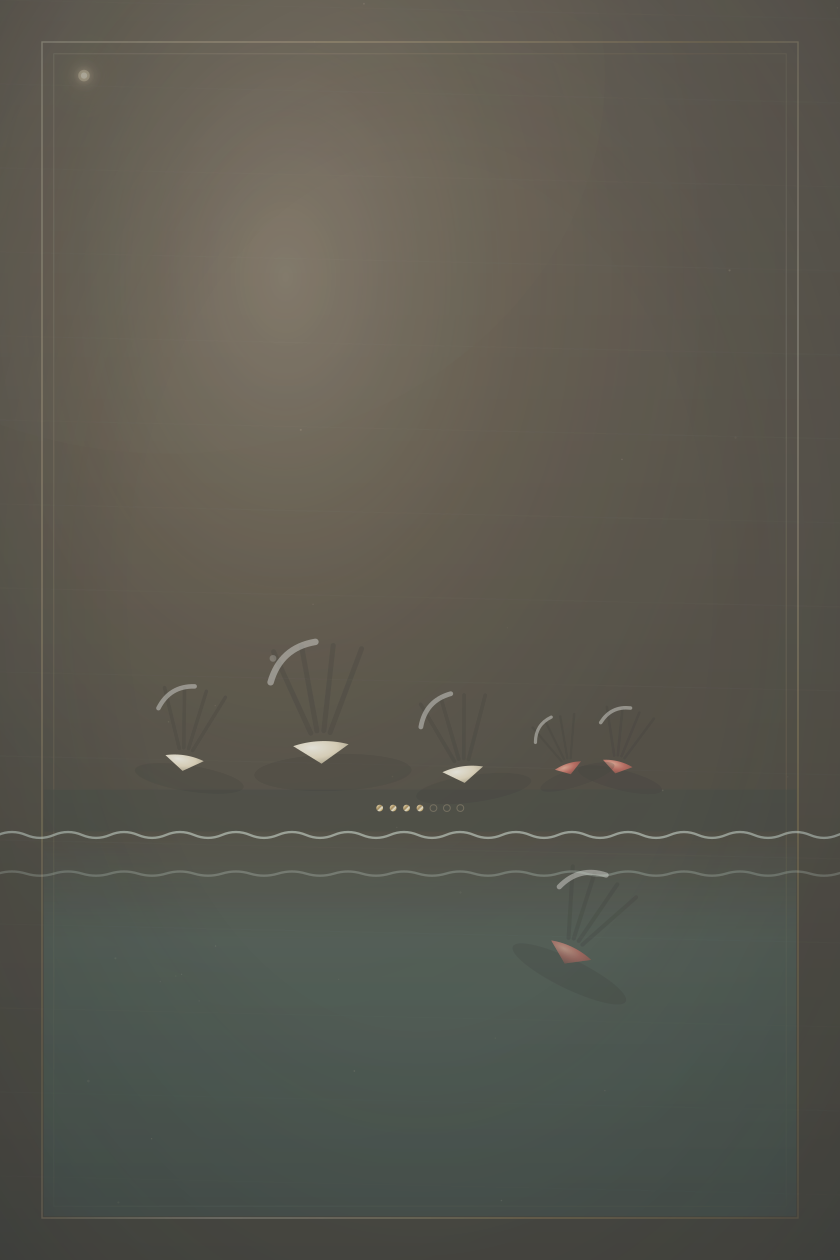
Key art — Board.game art system
More like this
 Board.game Original
Original · area control for two to four
Wassail
The picking happens the moment a tree is full — not a moment before.
2–4 players5–10 minCompetitive
Playable Board.game Original
Original · a duel for two
Last Stone
Every stride you will ever take is lying face up between you.
2 players5–10 minCompetitive
Playable Board.game Original
Original · an asymmetric duel
Fell Run
Three steps to the water, and something standing in it.
2 players5–10 minCompetitive
Playable Board.game Original
Original · a roll-and-write duel for two
Loom
Two threads a round: draft one, and the other is woven by your rival.
2 players10–15 minCompetitive
Playable Board.game Original
Original · a deduction duel for two
Tumbler
Every pin is public. Only the code is not.
2 players5–15 minCompetitive
Playable Board.game Original
Original · a placement duel for two, played for the last light
Beacons
No beacon may stand beside a rival’s — and the keeper who cannot light, loses.
2 players5–10 minCompetitive
Playable Board.game Original
Original · a tile-laying duel for two
Tessera
Every edge that agrees with its neighbour pays the setter who placed it.
2 players10–15 minCompetitive
Playable Board.game Original
Original · a placement duel for two
Toll
Every neighbouring pair swings to the heavier bell, and the difference is the score.
2 players5–10 minCompetitive
Playable