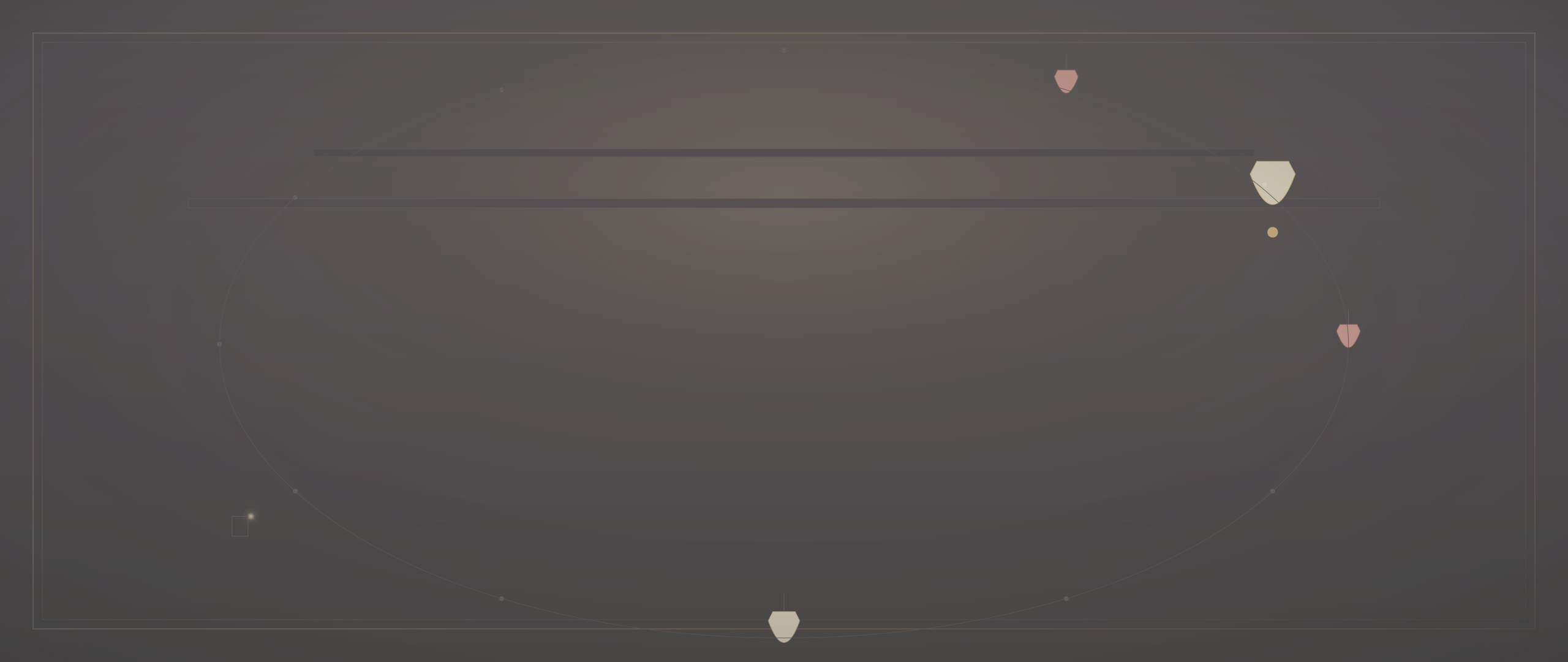
Toll
Original · a placement duel for two
Every neighbouring pair swings to the heavier bell, and the difference is the score.
Ready to play now.
A demonstration of Toll, played by the computer against itself.
Toll — playing itself
Ways to play
Alone, against the computer
Your own pace, no arranging anything. Take a move back whenever you like.
Play alone3 opponents, weakest first
- The WandererHangs anywhere the seed says. A peal of 10.6 against 20.8 over two hundred towers against the Reader, and three towers won — the tower is not kind to hanging at random.
- The SwapperTakes the best swing on the table right now and keeps its heavies home on ties. Beats the Wanderer 196-4 — the largest step on this ladder — and it cannot see an open edge, which the next rung makes expensive.
- The ReaderPrices the open edges beside every hang by what the other hand still holds. Beats the Swapper 147-53 and the Wanderer 199-1, with a peal of 17.7 against 17.5. Nothing built to beat IT has managed to — a reply-aware price and an exactly solved endgame both measured inside a coin of it and were deleted rather than sold. And against itself it shows this game’s one soft spot honestly: the peal rings LEVEL in 172 of 200 towers, and in those the half decides the tower rather than the hanging.
Together, in the same room
2 players. One device goes round the table, or everybody plays off the same screen.
Play in the same roomOnline, at a table
A room code, joinable from anywhere. Pause tonight and pick it up next week from your device.
Play online
About
A tower with thirteen hours in its ring and twelve bells to hang in them — six each, weights dealt from one pool, so the hands match and nobody can blame the deal. Hang one bell a turn on any empty hour; when the last bell goes up the peal goes round: every neighbouring pair swings to the HEAVIER side and scores the difference. One hour is left silent all evening and its two edges never pay anybody, so the last hang is choosing what never gets counted. Put your heavies beside their lights, keep your lights at home, and watch a tower that stayed quiet all evening count everything at once.
How it feels
- A tower quiet all evening
- The six going up next to their one
- One hour that never rings
What the design is for
The difference is the score
An edge pays the heavier side exactly the gap: six over two rings four, and equal bells ring for nobody. A heavy beside an equal is worth nothing — placement is the whole game, and the arithmetic is public from the first hang.
Thirteen hours, twelve bells
One hour stays silent, and the two edges that touch it never swing. The odd hour is not decoration. On an EVEN ring the hands match and every hour has an hour opposite it, so the ringer hanging second can answer every bell at the hour across from it — and the peal then rings dead even by arithmetic rather than by play, which the tests build and demonstrate. Thirteen is odd, and no rotation or reflection of an odd ring pairs off every hour, so that answer does not exist. In its place is a decision: the last hang chooses which hour stays quiet, and a light of yours beside their heavy can be left uncounted.
The half, and no drawn towers
The ringer who hangs second holds half a point before a bell goes up, and a half cannot be tied — so every tower here rings for somebody. It replaced a second count on the swings, which used to tie as well.
Nothing hidden, nothing rolled
No luck past the deal and no secret state — the ring, both hands, whose hang it is. The tower is quiet while it fills, and every argument about what it will count can be had out loud, mid-game, with the bells in view.
Taught hang by hang
Six steps: the hang, the swing, lights at home, heavies abroad, the hour you choose to leave silent — and then the whole tower to yourself.
- Best at
- 2
- Kind
- Strategy
- Table
- Competitive
- Studio
- Board.game Originals
The opponents
The Wanderer
Hangs anywhere the seed says. A peal of 10.6 against 20.8 over two hundred towers against the Reader, and three towers won — the tower is not kind to hanging at random.
The Swapper
Takes the best swing on the table right now and keeps its heavies home on ties. Beats the Wanderer 196-4 — the largest step on this ladder — and it cannot see an open edge, which the next rung makes expensive.
The Reader
Prices the open edges beside every hang by what the other hand still holds. Beats the Swapper 147-53 and the Wanderer 199-1, with a peal of 17.7 against 17.5. Nothing built to beat IT has managed to — a reply-aware price and an exactly solved endgame both measured inside a coin of it and were deleted rather than sold. And against itself it shows this game’s one soft spot honestly: the peal rings LEVEL in 172 of 200 towers, and in those the half decides the tower rather than the hanging.
Achievements
0 of 5 earned
The Tower Rings for You
Win a tower of Toll.
The Five-Swing
Take a single edge worth five points or more.
A Ring of Your Own
Take seven of the eleven swings a full ring can pay.
The Quiet Tower
Win while the other peal scores five or fewer.
By the Half
Win a tower on the half, with the peal itself dead level.
Key art
Key art — Board.game art system
More like this
 Board.game Original
Original · a stacking duel for two
Cairn
The stack belongs to its top stone, whatever it is standing on.
2 players1–11 minCompetitive
Playable Board.game Original
Original · an area-majority duel for two
Bailiwick
Seven wards, twelve cubes each, majorities score — and a ward that comes out level answers to whoever walked in first.
2 players10–15 minCompetitive
Playable Board.game Original
Original · a placement duel for two, played for the last light
Beacons
No beacon may stand beside a rival’s — and the keeper who cannot light, loses.
2 players5–10 minCompetitive
Playable Board.game Original
Original · an asymmetric duel
Fell Run
Three steps to the water, and something standing in it.
2 players5–10 minCompetitive
Playable Board.game Original
Original · a deduction duel for two
Tumbler
Every pin is public. Only the code is not.
2 players5–15 minCompetitive
Playable Board.game Original
Original · two to four players
Tidemark
The sea takes what stands alone.
2–4 players8–15 minCompetitive
Playable Board.game Original
Original · area control for two to four
Wassail
The picking happens the moment a tree is full — not a moment before.
2–4 players5–10 minCompetitive
Playable Board.game Original
Original · a pick-up-and-deliver duel for two
Skiff
Two skiffs, one lake going dark, and every fare is the distance you row for it.
2 players5–10 minCompetitive
Playable